Health Articles
Knowledge
What causes Achilles tendonitis? What are the symptoms like?
SONGWUT THITIBOONSUWAN,M.D.
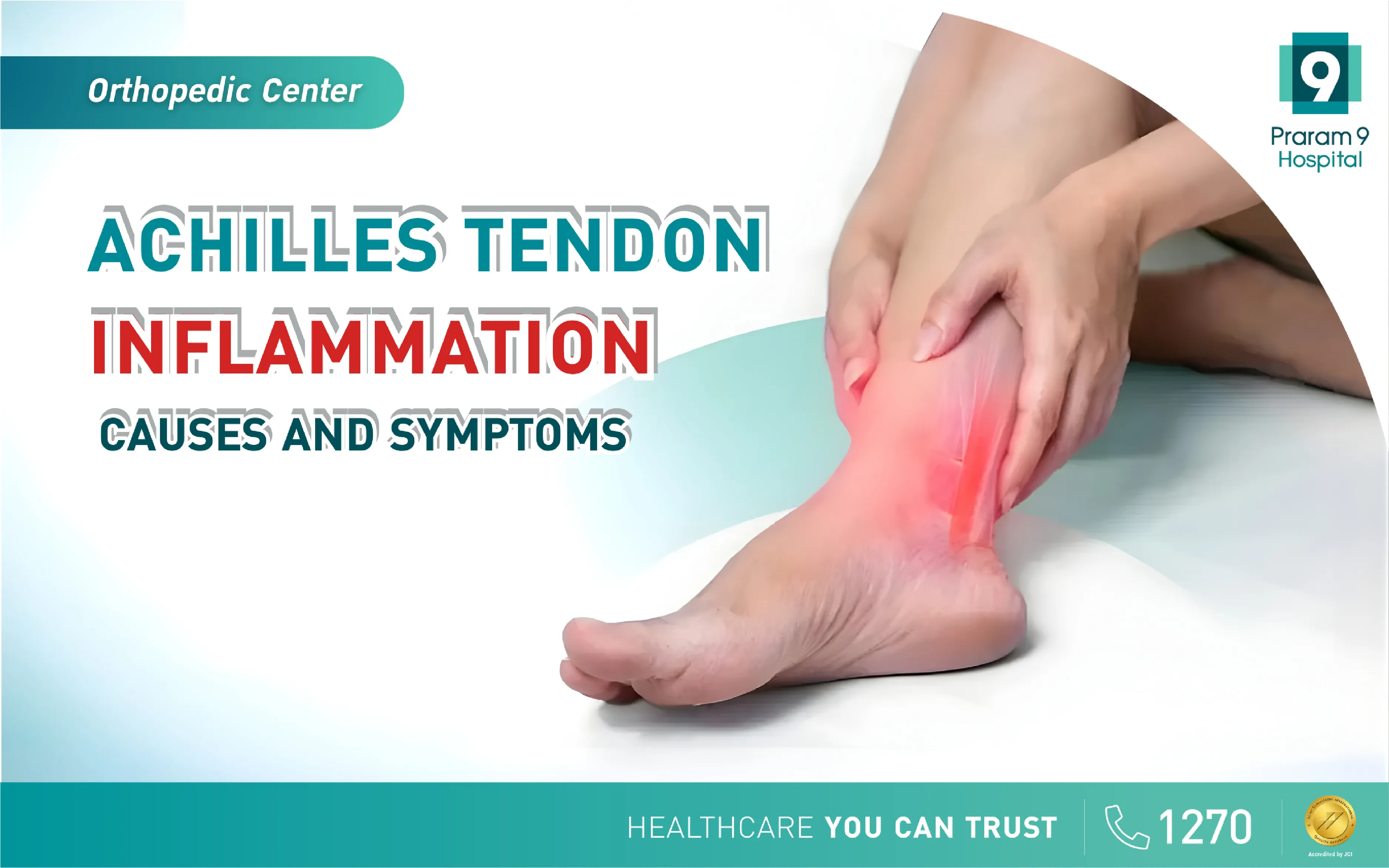
The Achilles tendon is a large tendon that connects the calf muscles to the heel bone. It plays an important role in helping us walk, run, jump, or stand on tiptoe steadily. However, when this tendon becomes inflamed, it inevitably affects movement and may cause pain that interferes with daily activities.
In this article, we will clarify what “Achilles tendonitis” actually is, how it occurs, what the symptoms are like, treatment methods, and effective prevention approaches, so that you can take care of yourself and reduce the risk of chronic injury with confidence.
Key Takeaways
- Achilles tendonitis is a condition in which the tendon at the back of the ankle (which connects the heel bone to the calf muscles) becomes inflamed, resulting in pain, tightness, and affecting movement in daily life.
- Most causes arise from excessive use of the ankle or repetitive activities such as running, jumping, or standing on tiptoe without rest. If left untreated for a long time, it may lead to Achilles tendon rupture.
- Treatment approaches include both non-surgical methods (such as resting the ankle, applying cold compresses, physical therapy, or using medical technology such as shockwave therapy) and, in some cases, surgical intervention to repair the tendon.
- Prevention of Achilles tendonitis can be done by warming up before exercise, choosing shoes that properly support the ankle, avoiding overuse of the foot, and maintaining body weight within a standard range.
What causes Achilles tendonitis?
Achilles tendonitis (Achilles Tendinitis or Tendinosis) is a condition in which the tissue of the Achilles tendon, which connects the calf muscles to the heel bone, becomes inflamed or degenerates, resulting in ankle pain, especially during movement such as walking, running, or jumping.
This condition does not always arise from a single cause, but may involve multiple contributing factors that lead to inflammation of the Achilles tendon, as follows:
- Accidents or acute injuries: such as tripping, falling, or severe ankle sprain, which may cause sudden pulling force on the Achilles tendon. Even if there are no symptoms initially, it may become the starting point of chronic inflammation in the long term.
- Excessive ankle use: activities that involve repetitive force at the ankle, such as prolonged standing or walking, repetitive exercise without rest periods, or increasing activity intensity too quickly, all increase cumulative tension on the Achilles tendon until inflammation occurs.
- Tight calf muscles: not stretching the calf muscles before and after exercise may cause the Achilles tendon to bear excessive pulling force, resulting in unnoticed cumulative injury or inflammation.
- Physical structure of the foot: individuals with flat feet, high arches, or bone spurs at the heel will have imbalanced pulling forces on the Achilles tendon, causing friction and chronic tension until inflammation occurs.
- Excess body weight: excessive weight or obesity causes the ankle to bear more weight than normal, especially during movement, resulting in increased workload on the Achilles tendon and higher risk of inflammation or chronic fatigue.
- Increasing age: when entering middle age or older, tendons naturally lose elasticity, leading to slower recovery and increased risk of injury even during normal activities.
- Patients with underlying musculoskeletal diseases: those with rheumatoid arthritis, gout, or other arthritis conditions often already have systemic inflammation, making tendons such as the Achilles tendon more likely to develop secondary inflammation compared to the general population.
What are the common symptoms of Achilles tendonitis?
Achilles tendonitis often results from excessive use of the tendon at the heel, such as walking, running, or exercising without rest, causing inflammation or injury, which may eventually affect movement ability and daily activities.
Symptoms of Achilles tendonitis in the early stage may not be severe, but if left untreated without proper care, it may develop into chronic inflammation or risk of rupture later. Signs indicating Achilles tendon inflammation include:
- Pain at the back of the ankle or along the Achilles tendon, especially during movement such as walking, running, or sports; symptoms become more pronounced with exertion.
- A feeling of tightness or pain when bearing weight at the heel, such as when standing on tiptoe or going up and down stairs.
- Difficulty moving the ankle, especially when flexing, extending, or attempting to stretch the calf muscles.
- Swelling, redness, or warmth around the Achilles tendon, especially in more severe inflammation.
- Palpable lump or abnormal hardness along the Achilles tendon, which may be fibrous tissue or calcification accumulated from chronic inflammation.
If you examine yourself and find these symptoms, whether during walking, running, exercising, or even standing up from a seated position, it may be a sign of Achilles tendonitis. It is recommended to consult a physician for diagnosis and appropriate treatment planning.
How is Achilles tendonitis diagnosed?
Before entering the treatment process, accurate diagnosis is an important first step, because ankle pain may arise from many causes, not limited to Achilles tendonitis alone.
Consulting a physician for detailed evaluation will help identify the true cause and accurately assess the severity of the inflammation. The general diagnostic process includes:
1. Detailed medical history taking
The physician will ask for information related to symptoms, such as:
- Characteristics and location of pain
- Activities or events that may be the cause, such as intense exercise, falling, or prolonged walking
- Daily ankle usage behavior
- Underlying diseases related to muscles, bones, or joints, such as rheumatoid arthritis or other arthritis conditions
2. Physical examination
The physician will examine the affected area as follows:
- Presence of swelling, redness, or heat at the tendon
- Localized tenderness at the Achilles tendon
- Limitation in ankle movement
- Ability to stand on tiptoe or walk on toes normally
3. Additional investigations with medical tools (if necessary)
If symptoms are complex or uncertain, the physician may recommend additional investigations using medical technology, such as:
- X-ray: helps assess bone abnormalities such as bone spurs or calcification at the tendon insertion
- Ultrasound: evaluates the structure of the Achilles tendon, inflammation, or tendon thickness in real time
- MRI (Magnetic Resonance Imaging): used to accurately assess internal details of the tendon, especially in cases suspected of rupture or chronic inflammation
After diagnosis is completed and the characteristics of Achilles tendonitis are clearly identified, the physician will recommend appropriate treatment approaches in the next step.
What are the treatment methods for Achilles tendonitis? How can they be done?
When diagnosed with Achilles tendonitis, it is important to receive appropriate treatment to restore ankle movement to normal and reduce the risk of chronic inflammation or tendon rupture in the future.
Treatment approaches for Achilles tendonitis can be divided into 2 main methods: non-surgical treatment and surgical treatment. The physician will consider the appropriate method based on the severity of each case.
Non-surgical treatment of Achilles tendonitis
Most patients with mild symptoms can be treated without surgery. Common approaches include:
- Resting the ankle: avoid walking, running, jumping, or heavy exercise temporarily to allow the tendon to recover.
- Cold compress: applied to the ankle to reduce pain, swelling, and inflammation, especially within the first 48 hours of symptoms.
- Use of nonsteroidal anti-inflammatory drugs (NSAIDs): such as Ibuprofen or Naproxen, which help reduce pain and inflammation of the tendon.
- Wearing open-heel shoes: or avoiding shoes with rigid or excessively high heel counters, as they may compress the tendon and aggravate pain, especially during inflammation. Shoes that do not rub against the tendon should be selected to aid recovery.
- Using heel-lift shoes or supportive devices such as heel lift pads: helps slightly elevate the heel to reduce tension on the Achilles tendon, especially during acute inflammation. However, continuous long-term use is not recommended, as it may shorten the tendon and affect its elasticity in the future.
- Stretching exercises: especially for the calf muscles and Achilles tendon to increase flexibility, reduce accumulated tension, and help prevent recurrence.
- Targeted muscle strengthening: such as strengthening the calf muscles and surrounding ankle muscles to improve stability during walking, running, or activities, and reduce the risk of recurrent inflammation or injury.
- Use of adjunct medical technology: such as shockwave therapy, which helps stimulate tissue repair processes and reduce inflammation in patients with chronic symptoms or those who do not respond to initial treatment.
Surgical treatment for Achilles tendonitis
In cases where Achilles tendonitis is severe and does not respond to general treatment, the physician may consider surgery to address the specific affected area depending on the location of inflammation or degeneration. Surgical approaches vary based on diagnostic findings, including:
- Gastrocnemius recession: helps reduce tension on the Achilles tendon, suitable for patients with chronic calf muscle tightness.
- Paratenon debridement: helps reduce friction and inflammation of the tendon.
- Removal of degenerated or chronically inflamed tendon tissue: to prevent recurrent inflammation.
- Removal of bone impinging on the Achilles tendon or excision of bone spurs: such as in patients with Haglund’s deformity or insertional tendinopathy.
- Anchor repair of tendon insertion: in cases where the tendon at the insertion is severely damaged, reattachment with specialized devices may be required.
After surgery, the physician will plan rehabilitation such as physical therapy to restore stable tendon function and reduce the risk of future reinjury.
How can Achilles tendonitis be prevented?
In addition to treatment approaches, preventing Achilles tendonitis from the beginning is preferable, especially for those who exercise regularly or have risk factors such as flat feet, muscle tightness, or excess body weight. The following behaviors should be practiced consistently:
- Warm-up and stretch before and after exercise: especially the calf muscles and ankle to reduce tension on the Achilles tendon and lower the risk of inflammation.
- Strengthen calf muscles and Achilles tendon: several studies have found that eccentric heel drop helps prevent recurrent injury. This can be done by standing on the edge of a step, rising on both toes, then lifting the non-painful foot and slowly lowering the heel of the affected foot. Repeat 10–15 times, twice daily.
- Avoid excessive exercise: maintain a balanced schedule with rest days, and avoid repetitive high-force activities without rest intervals.
- Choose appropriate footwear: select sports shoes that provide good shock absorption, soft soles, proper fit, and suitability for the activity. If pain occurs, avoid shoes with rigid heel counters that may compress or rub the Achilles tendon.
- Use shoes with soft heel counters or choose open-heel shoes: to reduce pressure at the tendon insertion and minimize friction during activities.
- Consider the exercise surface: avoid uneven, sloped, or overly hard surfaces, which may increase impact and risk of injury.
- Listen to body signals: if pain occurs at the ankle or Achilles tendon, stop and apply a cold compress immediately. Do not continue activities that may worsen inflammation.
- Maintain appropriate body weight: to prevent excessive load on the Achilles tendon, especially in repetitive impact activities.
Consistently following these practices will effectively reduce the risk of Achilles tendonitis and benefit overall ankle and muscle health in the long term.
Achilles tendonitis: proper management keeps you away from Achilles tendon rupture
Achilles tendonitis can occur in all genders and ages, especially in those who excessively use the ankle and Achilles tendon, whether from exercise, sports, or ankle injuries. If there is pain, swelling, or discomfort during movement, a physician should be consulted for diagnosis and proper treatment planning from the early stage to prevent progression to Achilles tendon rupture in the long term.
For those experiencing ankle pain or suspecting Achilles tendonitis, it is recommended to undergo evaluation with a specialist physician, especially at the Orthopedic Center, Praram 9 Hospital, which is ready to provide services with an experienced medical team, accurate diagnostic tools, and comprehensive treatment approaches, both surgical and non-surgical, to ensure your Achilles tendon remains strong and functional with confidence in the long term.
For more information
- Facebook: Praram 9 Hospital International & Expats
- Line: @Praram9Hospital
- Tel. 1270