Health Articles
Knowledge
All questions answered: How many types of female sterilization are there, how are they different, and which method should be chosen?
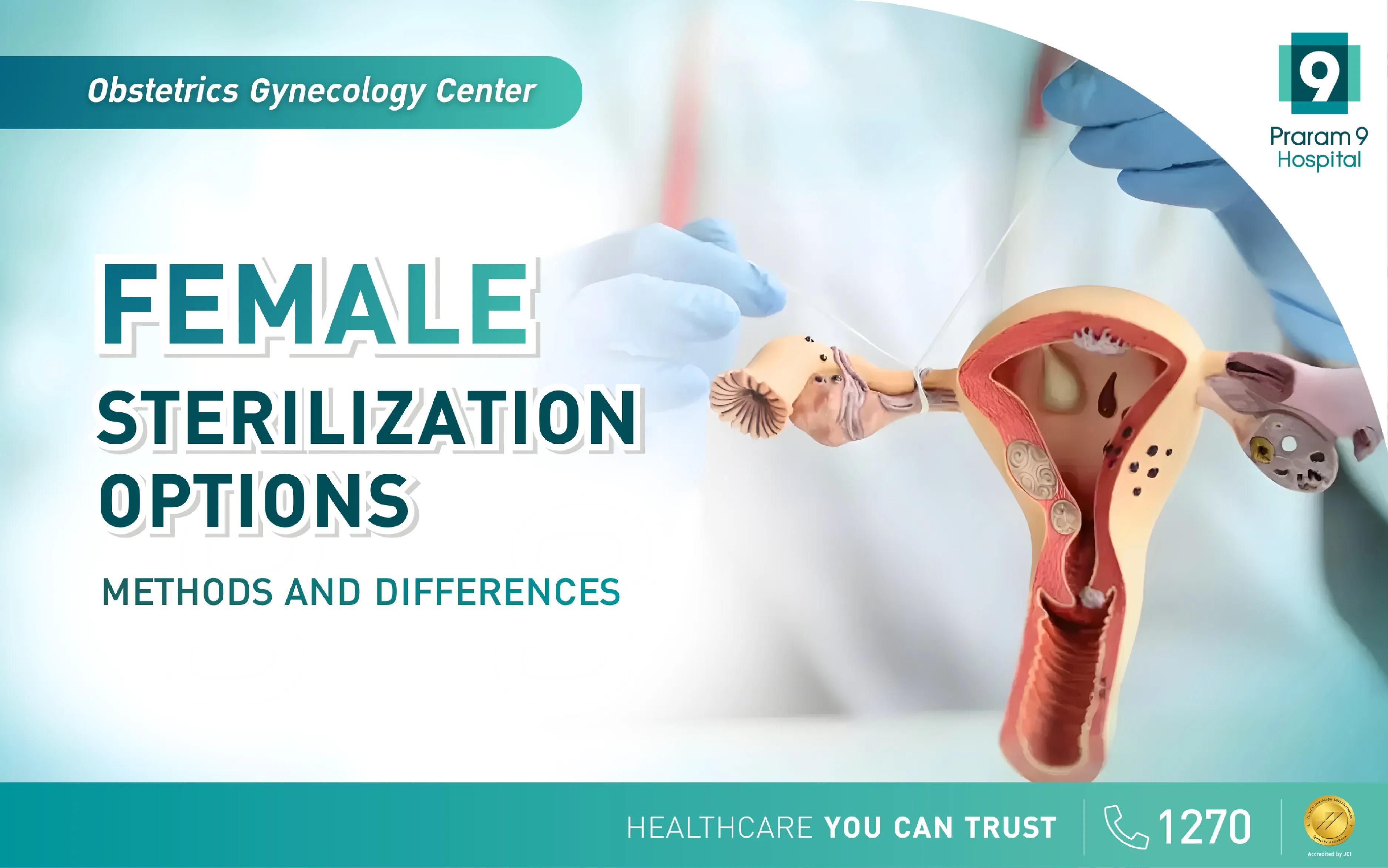
Sterilization is the most effective method of contraception and has the lowest chance of failure leading to pregnancy. In this article, you will be introduced to the benefits of female sterilization, how many types there are, who it is suitable for, how to take care of yourself after the procedure, along with answers to frequently asked questions about female sterilization.
Key Takeaways
- Sterilization is the method of contraception that provides the highest effectiveness in preventing pregnancy compared to other methods.
- Female sterilization only prevents pregnancy and does not affect physical health or sexual health.
- Female sterilization has 2 types: postpartum sterilization and interval sterilization.
What is female sterilization?
Female sterilization (Female sterilization) is one of the contraceptive methods that provides the highest effectiveness compared to other methods. The doctor will cause the fallopian tubes to become blocked by tying, ligating, clipping, or removing part of the fallopian tubes. When the fallopian tubes are not in a suitable condition, sperm cannot move to meet the egg, and fertilization does not occur.
How many types of female sterilization are there and how are they different?
Currently, there are 3 methods of female sterilization, which differ in the procedural steps as follows:
Postpartum sterilization
Postpartum sterilization, or sterilization after delivery, is a method performed within 7 days after childbirth. During this period, the uterus is still enlarged from expansion to support pregnancy and is positioned above the pelvis, allowing the doctor to easily locate the fallopian tubes.
The surgical incision for postpartum sterilization is located below the navel, approximately 2–5 centimeters in length. In cases of cesarean section, if sterilization is desired, the patient can inform the doctor to perform sterilization immediately after delivery, so that another sterilization surgery is not required.
Interval sterilization
Interval sterilization is a standard sterilization method without a time limitation like postpartum sterilization. However, the surgery is slightly more difficult because the uterus is located within the pelvis and has a normal size; therefore, general anesthesia is required before surgery.
Interval sterilization surgery takes approximately 30 minutes. An incision is made above the pubic bone, around 5 centimeters below the navel, or if laparoscopic surgery is used, there may be small incisions of 1–2 centimeters below the navel. The appropriate timing for sterilization is just after menstruation ends to ensure that pregnancy is not present.
Who is female sterilization suitable for?
Female sterilization is the most effective contraceptive method and is suitable for the following individuals:
- Those who want contraception with the highest effectiveness and do not want failure such as pregnancy.
- Those with genetic diseases.
- Those with health problems that are not suitable for pregnancy.
What are the advantages and disadvantages of female sterilization?
Before deciding to use sterilization as a contraceptive method, it is recommended to carefully consider the following advantages and disadvantages.
Advantages of female sterilization
- It is the method that provides the highest effectiveness in preventing pregnancy compared to other contraceptive methods.
- It does not affect sexual performance or sexual intercourse.
- It does not affect hormones in the body.
- If pregnancy is desired after sterilization, medical technology can be used to assist conception, such as in vitro fertilization (IVF) or intracytoplasmic sperm injection (ICSI), because fertilization occurs outside the body and does not require the fallopian tubes.
Disadvantages of female sterilization
- It is a contraceptive method that requires surgery; therefore, surgical complications may occur, such as injury from the surgical wound or side effects from general anesthesia.
- It cannot prevent pregnancy 100%, as there is a possibility of sterilization failure and fertilization leading to pregnancy.
- There is a risk of ectopic pregnancy.
How to take care of yourself after sterilization?
Post-sterilization self-care to prevent side effects or surgical complications can be followed as follows:
- Keep the surgical wound dry for 1 week after surgery or until permitted by the doctor.
- Avoid sexual intercourse for approximately 4–6 weeks or as advised by the doctor.
- Avoid exertion, lifting heavy objects, or strenuous activities until the surgical wound is completely healed to prevent wound separation.
- If abnormal symptoms are observed after sterilization, such as severe lower abdominal pain, abnormal menstruation, or bleeding or pus from the surgical wound, return to see the doctor immediately.
Summary of key points! Is female sterilization good, and which method should you choose?
Female sterilization is another option for those who do not want to have children. It is the method that provides the best effectiveness in contraception and does not affect physical or sexual health. Female sterilization has several forms. Patients can consult and plan together with a gynecologist to choose the most suitable method that aligns with long-term life plans.
Minimally Invasive Surgery Center (MIS), Praram 9 Hospital provides laparoscopic female sterilization services with small incisions, reducing injury to nearby organs, resulting in small wounds, faster recovery, and reduced risk of postoperative infection, allowing patients to return to normal daily life as soon as possible.
For more information
- Facebook: Praram 9 Hospital International & Expats
- Line: @Praram9Hospital
- Tel. 1270
Frequently asked questions about female sterilization
How is female sterilization different from male sterilization?
Female sterilization is more complex and requires a longer recovery time than male sterilization, after which patients can return home and resume light daily activities immediately.
After sterilization, is there a chance of becoming pregnant again?
After sterilization, there is a chance of becoming pregnant again if the tied tubes become untied or the fallopian tubes reconnect by themselves, but the chance is very low.
References
Hazell, T. (2023, May 19). Female sterilisation. Patient. https://patient.info/sexual-health/sterilisation/female-sterilisation
Healthline Medical Network & Gotter, A. (2018, September 27). What Every Woman Should Know About Female Sterilization. Healthline. https://www.healthline.com/health/birth-control-female-sterilization
What is female sterilisation?. (n.d.). NHS. https://www.nhs.uk/contraception/methods-of-contraception/female-sterilisation/what-is-it/