Health Articles
Knowledge
What are the benefits of thoracoscopic lung surgery? Including things to know before deciding to undergo it
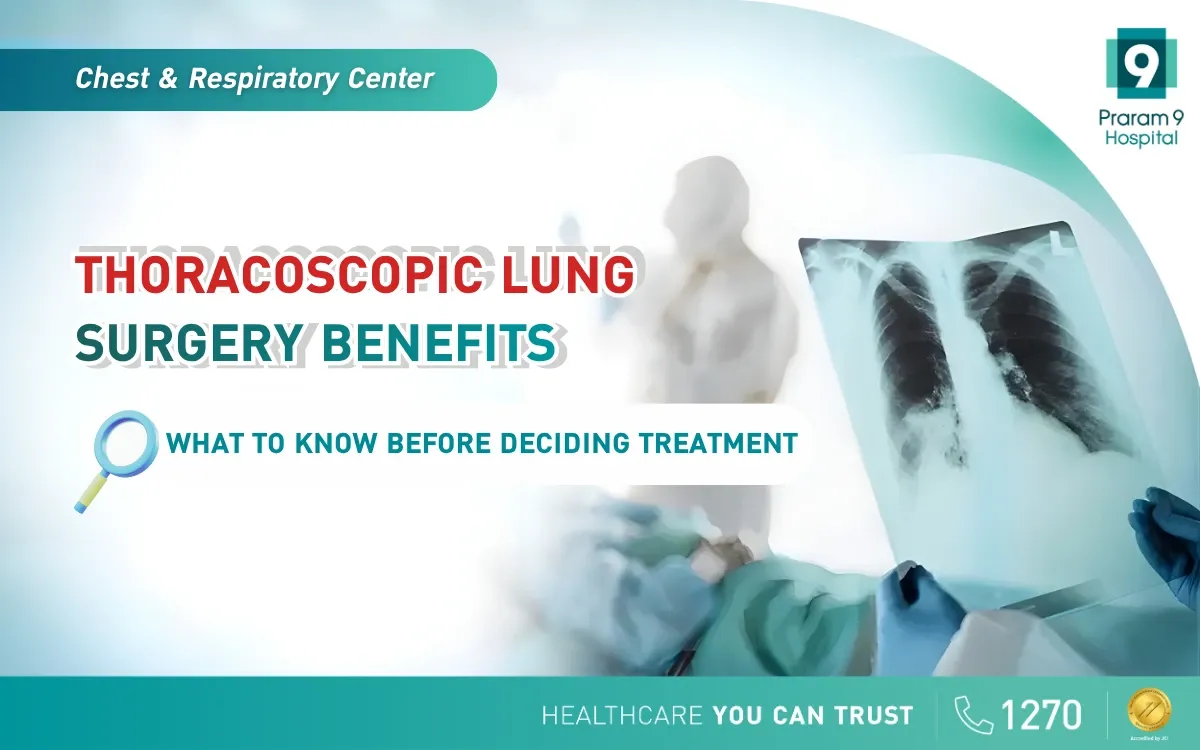
When facing diseases related to the lungs, lung surgery is considered one of the treatment methods that directly targets the removal of tissue or abnormal lesions from the lungs, and it is considered a major surgery that requires the expertise of physicians to achieve good results, and strict self-care after surgery will help recovery to be faster and reduce the risk of severe complications.
In this article, important information related to this surgery will be discussed: how many types there are, what they are, how each type is performed, which diseases they are suitable for treating, along with answering the question of how many days are needed for recovery after lung surgery, in order to find appropriate ways to take care of oneself correctly.
Key Takeaways
- Lung surgery is a treatment approach for patients with lung diseases that require removal of the disease itself, including diseases that do not respond to medication or other methods, therefore it is necessary to undergo surgery to remove tissue that may be harmful to lung health and the body in the future.
- There are 2 methods: open-chest lung surgery (Thoracotomy), which is the traditional method, and thoracoscopic surgery (VATS), which is a modern method that shortens recovery time and also reduces the risk of postoperative complications well.
- It helps treat various lung-related diseases such as early-stage lung cancer, chronic obstructive pulmonary disease, pneumothorax, tuberculosis, including surgery to remove tumors or cysts found in the lungs, both for diagnosis and treatment.
- After surgery, whether open surgery or thoracoscopic surgery, patients can return to normal life if there are no severe complications, and should strictly follow postoperative self-care as advised by physicians.
What is Thoracotomy?
Thoracotomy, or traditional lung surgery, is an open surgery to directly access organs within the thoracic cavity, whether the heart, lungs, esophagus, and diaphragm. This surgical method can help diagnose or treat diseases related to these organs well, such as lung cancer, severe infections, or lung injuries.
Open surgery or thoracotomy is commonly performed using 2 methods: median sternotomy, which involves a long incision along the middle of the chest, with cutting of the sternum and use of a retractor to expand the chest to clearly see internal thoracic organs, and posterior lateral approach or access through the axillary region (Axillary Thoracotomy).
However, this traditional surgery has a large wound size and relatively high side effects, requires a long recovery period, including side effects that may occur after surgery, and proper self-care is required to prevent postoperative complications.
What is thoracoscopic lung surgery, is it painful?
Because traditional lung surgery causes patients to require a long recovery period, currently there is a newer option developed to reduce the risk of postoperative complications and increase patient comfort, namely Video-Assisted Thoracoscopic Surgery (VATS), which uses small instruments and a camera inserted into the chest to perform surgery instead of opening the chest.
Initially, thoracoscopic surgery involved making 3–4 small incisions, but later as medical technology advanced, it involves only a single small incision of 2–3 centimeters (Uniport VATS).
If asked whether thoracoscopic lung surgery is painful, it can be said that it is less painful than traditional surgery, because not only are the wounds smaller, but no rib spreader is used, which helps patients recover faster. At the same time, physicians can perform treatment more precisely because they can clearly see internal organs through the camera.
What are the advantages of thoracoscopic lung surgery?
Thoracoscopic lung surgery is considered a modern treatment option for lung diseases and is very popular at present, with several notable advantages compared to open surgery as follows:
- Physicians can clearly see and access internal organ areas, enabling precise treatment.
- The surgical wound is small, only 3–4 centimeters (depending on the size of the lesion or organ being removed).
- Patients experience less pain because there is only one incision (the number of incisions may increase as appropriate).
- Faster recovery time, allowing a quicker return to normal life compared to traditional surgery.
- Reduced risk of postoperative complications.
For these reasons, thoracoscopic surgery is another option that many patients choose for effective, safe treatment and to save recovery time
What diseases can lung surgery treat?
Lung surgery can be performed by both open surgery with a large incision in the chest and thoracoscopic surgery that allows clear visualization of internal organs with small incisions and helps shorten recovery time. Both methods can be used to treat many lung-related diseases such as:
- Lung cancer, especially in early stages, namely stage 1 and stage 2, where surgery to remove cancerous tissue or part of the lung can help prevent the spread of cancer cells
- Chronic obstructive pulmonary disease (COPD)
- Pneumothorax or air leakage in the pleural space
- Pleural infection
- Lung infection, especially in patients with severe infection that does not respond to medication, requiring surgery to remove tissue
- Emphysema
- Tuberculosis in cases of severe infection not responding to treatment, hemoptysis
- Lung nodules, including tumors or abnormal masses in the thoracic cavity
In addition, this surgery is also suitable for those at risk of certain conditions that may cause future problems to the respiratory system, such as chronic cough, chest pain, those with high-risk behaviors for lung disease such as regular smokers or those working closely with pollutants, and those found to have lung blebs, which are lesions associated with early-stage cancer. These groups need regular lung health check-ups to prevent serious diseases that may occur.
Lung surgery: a treatment approach for lung diseases
Lung surgery is one of the important treatment approaches for various diseases related to the lungs such as lung cancer, pneumothorax, chronic obstructive pulmonary disease. There are 2 commonly used surgical methods: open surgery, which is the traditional method with a large incision and long recovery period, and thoracoscopic surgery with small incisions, resulting in shorter recovery and more precise treatment of lung diseases.
For those who undergo physical examination and find abnormalities, or are in a risk group for lung diseases that require surgery to prevent progression in the future, treatment can be received at the Pulmonary and Respiratory Center, Praram 9 Hospital, because there is a team of experienced physicians who can assess symptoms and provide appropriate treatment, along with modern treatment technology for effective treatment and minimizing the risk of complications.
For more information
Facebook : Praram 9 Hospital International & Expats
Line : @Praram9Hospital
Tel. 1270
Frequently asked questions about lung surgery
When a spot is found in the lung, when is surgery needed?
When undergoing examination by X-ray or CT scan and a spot is found in the lung that appears suspicious or abnormally large, which may be a malignant mass or at risk of being lung cancer
After lung surgery, can one live normally?
After surgery, one can live normally if there are no severe complications. At the same time, one should follow the physician’s recommendations for proper postoperative lung surgery recovery
How long is recovery after lung surgery?
Normally, hospital recovery takes about 2–3 days, and overall condition improves within 1–3 months if there are no complications. This depends on individual recovery
How should one take care of oneself after lung surgery?
It is recommended to strictly follow the physician’s advice, such as taking prescribed medications, regularly cleaning the wound, practicing breathing, frequently getting up to walk, refraining from smoking and drinking alcohol, performing light exercise such as walking or arm swinging, and getting sufficient rest to recover faster and prevent various complications
References
Video-assisted thoracic surgery (VATS). (n.d.). Cleveland Clinic https://my.clevelandclinic.org/health/treatments/17617-video-assisted-thoracic-surgery-vats
Burgess, L. (2023, July 20). Thoracotomy: Use, procedure, and outlook. Medical News Today. https://www.medicalnewstoday.com/articles/320627
Thoracotomy: Procedure, preparation, and recovery. (2023). WebMD. https://www.webmd.com/lung-cancer/thoracotomy-procedure
Video-assisted thoracoscopic surgery (VATS). (2023). University Hospitals Coventry and Warwickshire NHS Trust. https://www.uhcw.nhs.uk/download/clientfiles/files/Patient%20Information%20Leaflets/Trauma%20and%20Neuro%20services/Cardiothoracic/Video-assisted%20thoracoscopic%20surgery%20(VATS).pdf