Health Articles
Knowledge
What type of lower abdominal pain is a warning sign that requires urgent medical attention?
RATCHANIKON LOETWORAWANIT, M.D.
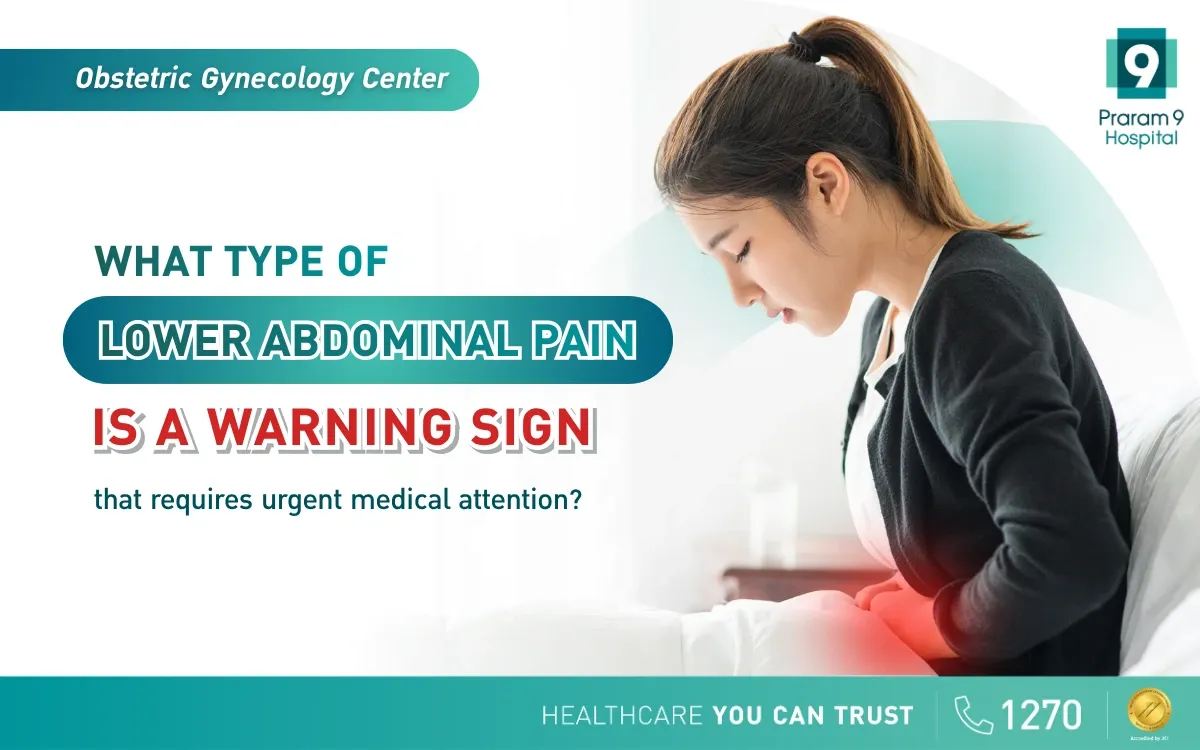
Lower abdominal pain is a symptom that can be found in all genders and all ages. The causes of lower abdominal pain range from common conditions that can resolve on their own or are not difficult to treat, to severe conditions that may be warning signs of abnormalities and require prompt medical care. If there is lower abdominal pain, symptoms should be observed regularly. In cases where there are other abnormal accompanying symptoms, a doctor should be consulted promptly to receive appropriate treatment.
Key Takeaways
- Lower abdominal pain is pain in the area below the navel, caused by abnormalities of organs in the pelvic region. It may be general pain or severe pain that may indicate a health problem requiring treatment.
- The location, characteristics, and accompanying symptoms should be closely observed, such as radiating pain, abnormal urination, fever, nausea, or abnormal bleeding, because these help indicate the severity and possible cause.
- If symptoms do not improve or there are abnormal accompanying symptoms, a doctor should be consulted promptly for appropriate diagnosis, prevention of complications, and targeted treatment by specialist physicians.
What is lower abdominal pain like?
Lower abdominal pain is pain that occurs in the area below the navel. The characteristics of lower abdominal pain may vary depending on the location of the pain and the cause.
Left lower abdominal pain
The left lower abdomen is the location of the left uterine adnexa, left ovary, left ureter, and distal colon. The characteristics of left lower abdominal pain may include the following:
- Cramping pain, spasmodic pain, or dull pain in the abdomen
- May feel sharp pain in the left lower abdomen, especially when moving or pressing on the left lower abdomen
- Pain may radiate to the back and hip
- May have other accompanying symptoms such as foul-smelling vaginal discharge, nausea, vomiting, fever, constipation, or diarrhea, etc.
Central lower abdominal pain
The central lower abdomen is the location of the uterus and bladder. The characteristics of central lower abdominal pain may include the following:
- Twisting pain, spasmodic pain, or dull pain in the abdomen
- Tightness in the abdomen, feeling uncomfortable
- Pain may radiate to the back and hip
- Lower abdominal pain with abnormal urination, such as painful urination, blood in urine, frequent urination in small amounts
- The pain may be related to certain events, such as dull central lower abdominal pain during menstruation, pain when bending or lifting heavy objects
Right lower abdominal pain
The right lower abdomen is the location of the right uterine adnexa, right ovary, right ureter, and appendix. The characteristics of right lower abdominal pain may include the following:
- Sharp pain or dull pain in the abdomen
- May have cramping pain, tenderness in the right lower abdomen
- May feel discomfort, abdominal tightness
- May have other accompanying symptoms such as high fever, foul-smelling vaginal discharge, difficulty in defecation, etc.
The lower abdominal pain mentioned above may be a single symptom or more than one symptom. These symptoms may roughly indicate the location of organs that may have abnormalities. If there are symptoms suspected to be associated with a dangerous disease, a detailed examination may be required to determine the true cause.
Common causes of lower abdominal pain
Lower abdominal pain may be caused by the following:
- Menstrual pain: commonly found in women of reproductive age, caused by uterine contractions to expel menstrual blood
- Endometriosis: endometrial cells that should shed during menstruation flow backward and grow outside the uterus, causing abnormalities at the sites where they implant, commonly found in the ovary, or chocolate cyst (Chocolate Cyst)
- Uterine fibroids: tumors may range from small to very large, affecting compression of nearby tissues or organs, causing lower abdominal pain, and may cause severe pain in cases of torsion
- Uterine or pelvic infection: caused by bacterial infection in reproductive organs, resulting in lower abdominal pain with foul-smelling vaginal discharge
- Pelvic organ prolapse: caused by weakened pelvic muscles that cannot support pelvic organs normally
- Urinary tract infection or cystitis: more common in women than men because the female urethra is shorter
- Appendicitis: caused by obstruction of the appendix by food debris or feces, allowing bacteria to grow and cause inflammation, resulting in severe right lower abdominal pain
- Hernia: occurs when the intestine protrudes from its normal position through a weak opening in fascia or muscle. In severe cases, the hernia cannot return to its original position, which may cause intestinal obstruction and ischemia. If untreated, it may cause intestinal necrosis
- Kidney stones: caused by crystallization of substances in urine forming hard stones. If kidney stones obstruct the urinary tract, it may cause urine retention and infection in the urinary system, leading to pyelonephritis
Lower abdominal pain can occur in multiple systems, including the reproductive system, urinary system, digestive system, and excretory system. Therefore, accurate initial screening helps patients receive targeted treatment.
Diagnosis of lower abdominal pain
Initial diagnosis of lower abdominal pain includes history taking and physical examination by a physician to assess the characteristics and duration of pain and whether there are accompanying symptoms. The physician will then consider further investigations as follows:
- Ultrasound examination to detect abnormalities of organs in the lower abdomen
- Pelvic examination and transvaginal ultrasound to detect abnormalities within the uterus
- Computed tomography (CT scan) or magnetic resonance imaging (MRI) to detect abnormalities within the abdomen with greater detail and accuracy
- Colonoscopy to detect abnormalities in the colon and rectum
Treatment of lower abdominal pain
Treatment depends on the cause and severity of symptoms. Treatment approaches include the following:
- Medication: used in cases where lower abdominal pain is caused by inflammation or infection, including oral and injectable medications
- Surgery: in cases where lower abdominal pain is caused by tumors, endometriosis, appendicitis, hernia, or kidney stones, surgery is often required, as leaving it untreated may become more dangerous
Complications that may occur from lower abdominal pain
If lower abdominal pain is caused by a serious condition and is not treated promptly, it may lead to severe complications, for example:
- Appendiceal rupture in cases of appendicitis without prompt surgery
- Intra-abdominal adhesions, often caused by chronic inflammation of organs
- Kidney damage, untreated kidney stones may reduce kidney function
- Infertility if lower abdominal pain is caused by reproductive system diseases such as endometriosis or adnexal inflammation
- Sepsis in cases of pelvic infection without appropriate treatment
Care and prevention of lower abdominal pain
Although some causes of lower abdominal pain may be difficult to prevent, risk factors can be reduced and worsening of symptoms can be prevented as follows:
- Drink sufficient water to support urinary system function and reduce the risk of stones
- Avoid holding urine frequently to reduce the risk of urinary tract infection
- Eat high-fiber and easily digestible foods to support bowel function and reduce abdominal pressure during straining
- Exercise regularly to support blood circulation, stimulate the digestive system, and strengthen muscles
- Observe abnormal symptoms such as severe menstrual pain, painful urination, or lower abdominal pain that interferes with daily life. If these abnormalities are found, consult a doctor promptly
- Undergo health check-ups and annual pelvic examinations to detect abnormalities early and receive timely treatment
Do not let lower abdominal pain interfere with daily life. Find the cause and receive treatment at Praram 9 Hospital
Lower abdominal pain may be a general symptom that resolves on its own without treatment, or it may be a warning sign of an abnormality that requires urgent treatment. Therefore, lower abdominal pain should not be neglected, and a doctor should be consulted for diagnosis. If it is a serious disease, treatment can be received in time
Lower abdominal pain may not be just a general symptom. At Praram 9 Hospital, examination and diagnosis of the causes of lower abdominal pain are provided by the Obstetrics and Gynecology Center and other related specialty centers for the most targeted treatment
For more information
- Facebook : Praram 9 Hospital International & Expats
- Line : @Praram9Hospital
- Tel. 1270
Frequently asked questions about lower abdominal pain
When should lower abdominal pain require seeing a doctor?
When lower abdominal pain is severe, or accompanied by high fever, vomiting, diarrhea, blood in urine or stool, or vaginal bleeding
What can cause lower abdominal pain that radiates to the anus?
Intestinal tumors, endometriosis, ovarian tumors, uterine fibroids, etc.
References
Lower Abdominal Pain. (2022, December 22). Cleveland Clinic. https://my.clevelandclinic.org/health/symptoms/24530-lower-abdominal-pain
Pelvic Pain. (2022, June 20). Cleveland Clinic. https://my.clevelandclinic.org/health/symptoms/12106-pelvic-pain
Nall, R. (2023, March 8). What’s Causing Your Abdominal Bloating and Lower Abdominal Pain? Healthline. https://www.healthline.com/health/abdominal-bloating-and-lower-abdominal-pain