Health Articles
Knowledge
RSV Vaccine Prevents Respiratory System in Both Children and Adults
MUENPRAE JANTANAKUL,M.D.
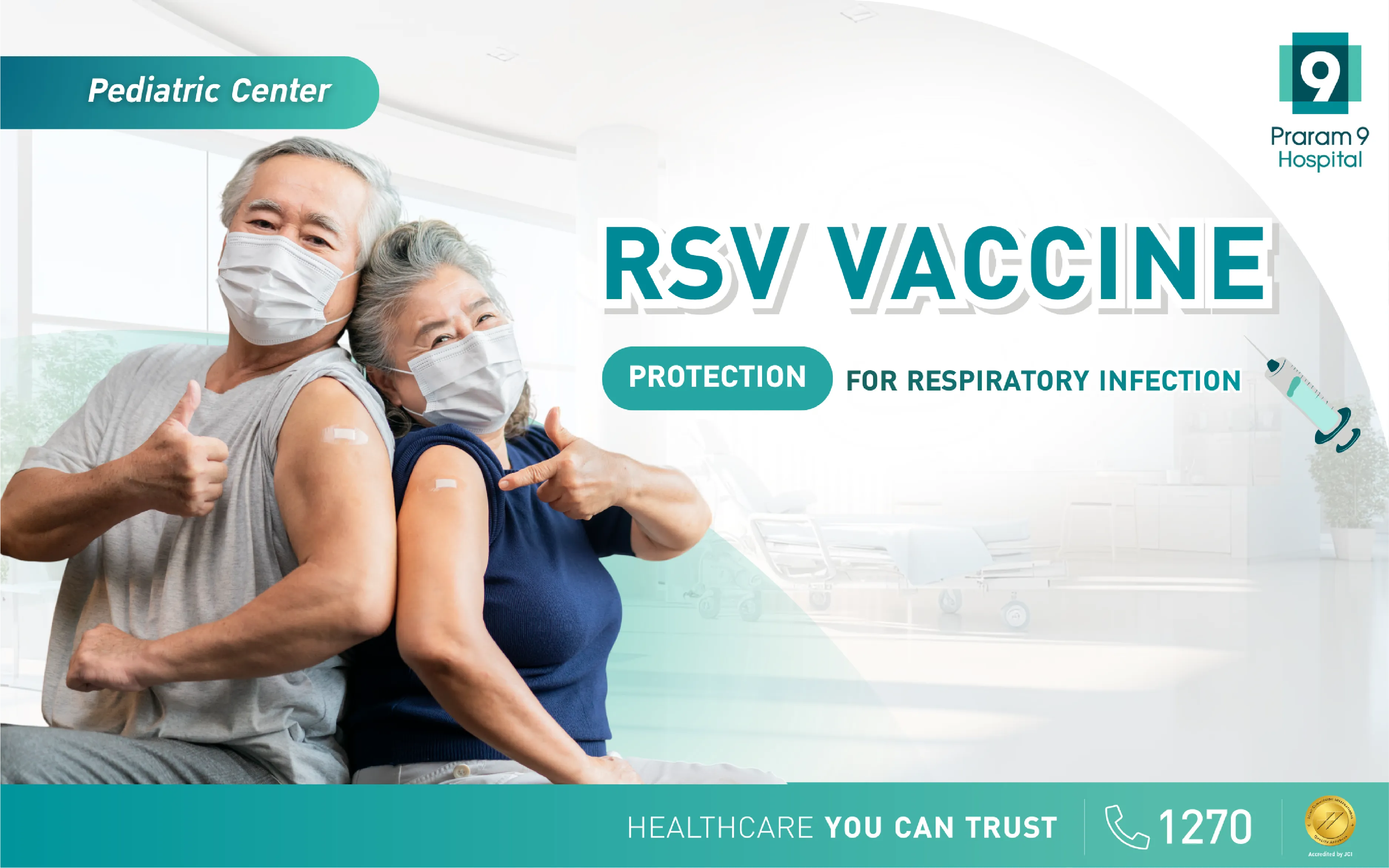
The RSV vaccine is becoming another important option in healthcare, especially during periods when respiratory infections tend to increase in both children and adults. Knowing and understanding the RSV vaccine is therefore something that should not be overlooked.
This article will introduce the importance, benefits, and essential information about RSV prevention, so that you can prepare and protect your loved ones with confidence.
Key Takeaways
- RSV infection often presents symptoms similar to a common cold, such as fever, cough, runny nose, and difficulty breathing. In some cases, it may become severe and lead to bronchitis or pneumonia.
- Young children, especially from birth to 2 years old, have a high risk of severe RSV infection and may require hospitalization.
- The RSV vaccine is recommended for newborns to 2 years old to prevent RSV infection during the first two epidemic seasons of life, when children do not yet have sufficient immunity.
- The RSV vaccine helps reduce the risk of infection, decrease the chance of severe illness, and reduce the costs associated with treating children with RSV.
- Inform the doctor if there is a history of vaccine allergy, high fever, or previous vaccinations, for safety and proper consideration.
What are the symptoms after RSV infection?
RSV (Respiratory Syncytial Virus) is a contagious respiratory disease commonly found in young children and the elderly. After RSV infection, the body will begin to show various symptoms, which can be divided as follows:
- Upper respiratory symptoms such as cough, runny nose, nasal congestion, rhinitis, and may also include red eyes.
- Lower respiratory symptoms such as bronchitis or pneumonia. If RSV reaches the lungs, it may cause frequent coughing, difficulty breathing, or easy fatigue.
- Airway hyperresponsiveness symptoms. Some patients may experience wheezing and shortness of breath even without a prior history of bronchitis, often triggered by environmental factors such as humid air, dust, or smoke.
- Cardiac-related symptoms. In some cases with underlying disease or weakened immunity, severe complications may occur such as myocarditis, heart failure, or ischemic heart disease.
Because RSV can cause severe symptoms in both infants and adults, prevention with the RSV vaccine is another option that helps reduce the chance of infection and severity from this virus.
How effective is the RSV vaccine in preventing disease?
The RSV vaccine is a passive immunity, Nirsevimab, developed to help reduce the risk of RSV infection in young children. With rapid onset after injection, it helps create protection effectively during the epidemic season.
The RSV vaccine can greatly reduce the chance of RSV infection, including significantly reducing the risk of severe illness requiring hospitalization or intensive care unit (ICU) admission. It can also protect infants for up to 5 months, covering the period when RSV most commonly spreads, helping reduce concerns about the child’s health.
At what age should children receive the RSV vaccine? At how many months should it be given?
Doctors recommend vaccination during June–November, which is the epidemic season. Newborns to 2 years old are the risk group. The Pediatric Society of Thailand has clearly recommended the age ranges for receiving the RSV vaccine, divided into the first and second seasons as follows:
First season (age birth – 12 months)
During the first year of life, infants have a high risk of RSV infection. Doctors therefore recommend that all infants from birth to 12 months receive the RSV vaccine, especially those with additional risk factors such as prematurity, congenital heart disease, or chronic lung disease. Infants born during the epidemic season can receive the vaccine immediately after birth.
Second season (age 12 – 24 months)
For children aged 12–24 months, although immunity is increased, if the child has underlying disease or risk factors for severe RSV infection, doctors may consider recommending additional RSV vaccination to enhance immunity for greater safety in the following season.
Benefits of RSV vaccination for children
Early prevention is one of the best ways to care for young children’s health. The RSV vaccine plays an important role in reducing the risk of RSV infection, especially in infants and young children whose immunity is not yet fully developed. The benefits of RSV vaccination are as follows:
- Long-term protection of the respiratory system. Even if RSV infection is treated, some cases may face future health problems such as airway hyperreactivity, asthma, or impaired lung function. The RSV vaccine helps reduce these risks.
- Reduce treatment costs. If children under 5 years old are infected with RSV, they may need to be hospitalized for several days, especially in severe cases such as myocarditis. In addition to medical expenses, there are other costs such as parental leave from work. Prevention helps reduce both economic and emotional burden on the family.
- Can be used safely with other vaccines. The RSV vaccine can be administered together with other vaccines without spacing and does not interfere with the immune response of other vaccines, making child healthcare easier and more comprehensive.
In addition to children, adults can also be infected with RSV. Receiving the RSV pneumonia prevention vaccine (for adults) is therefore equally important, especially for high-risk groups such as the elderly and those with existing health problems.
Precautions for RSV vaccination to be aware of
Although the RSV vaccine plays an important role in preventing RSV infection in young children, there are some precautions that parents should know before receiving the service as follows:
- Possible vaccine allergy. If the child has a history of severe allergic reaction to other vaccines, inform the doctor in advance for careful risk assessment before receiving the RSV vaccine.
- High fever or infection. Wait until the child has recovered before vaccination.
- Bleeding disorders or easy bruising. Since the RSV vaccine is administered intramuscularly, it may increase the risk of bruising or bleeding. A doctor should evaluate before administration.
- Always inform the doctor if other vaccines were recently received. Although the RSV vaccine can be given with other vaccines, providing prior vaccination information helps the doctor plan appropriately.
RSV vaccine for protecting your child at Praram 9 Hospital
The RSV vaccine is an important option to help protect children from RSV infection, which may be severe enough to require hospitalization. Early prevention helps reduce the risk of both short-term and long-term complications, allowing children to grow stronger and safer.
Choose long-term health protection for your child with the passive immunity package for RSV virus prevention (for children) at Praram 9 Hospital, with a pediatric medical team providing close care and guidance. Parents can receive consultation and plan vaccination with confidence for better child health care.
For more information
- Facebook: Praram 9 Hospital International & Expats
- Line: @Praram9Hospital
- Tel. 1270
Frequently asked questions about the RSV vaccine
What side effects may occur after RSV vaccination?
The RSV vaccine may cause mild swelling, redness, or pain at the injection site in some cases. Some may have low-grade fever or fatigue, which are usually temporary and resolve on their own. If severe symptoms occur, consult a doctor immediately.
Can adults receive the RSV vaccine?
Currently, RSV vaccines used in Thailand focus on prevention in young children, especially newborns to 2 years old. For adults or the elderly, there is an RSV pneumonia prevention vaccine (for adults) available at Praram 9 Hospital.
References
Respiratory syncytial virus (RSV). (2024, August 30). U.S. Department of Health & Human Services. Centers for Disease Control and Prevention. https://www.cdc.gov/rsv/about/index.html
RSV (Respiratory Syncytial Virus). (2025, May 7). Cleveland Clinic. https://my.clevelandclinic.org/health/diseases/rsv-respiratory-syncytial-virus
Respiratory syncytial virus (RSV). (2024, July 5). National Health Service. https://www.nhs.uk/conditions/respiratory-syncytial-virus-rsv/
RSV vaccine. (2024, September 1). National Health Service. https://www.nhs.uk/vaccinations/rsv-vaccine/