Health Articles
Knowledge
What is ASD? What are the symptoms of a leaky heart septum and how is it treated?
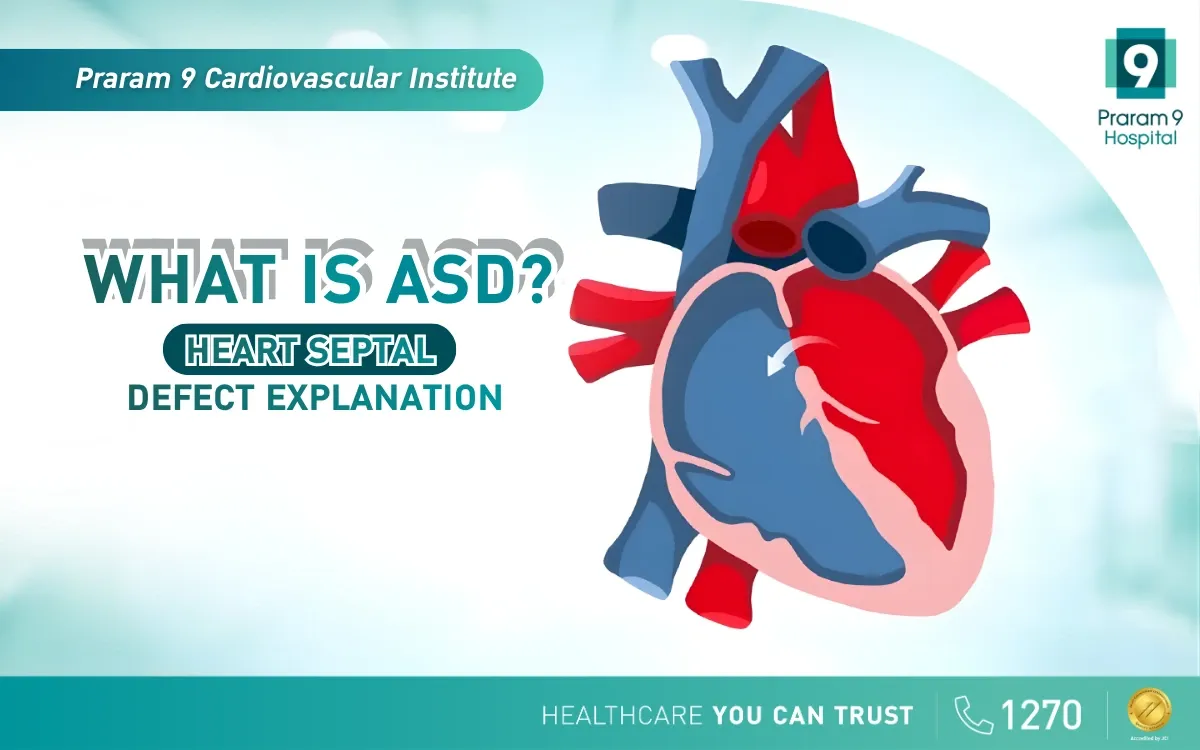
ASD, or atrial septal defect, is a condition caused by an abnormality of the wall separating the heart chambers, resulting in abnormal blood circulation. ASD is a congenital disease. Some individuals may not show clear symptoms, but if left untreated, it may affect heart health in the long term and become life-threatening. Therefore, let us better understand how dangerous this condition is and what treatment options are available.
Key Takeaways
- ASD, or atrial septal defect, is a congenital heart disease caused by a hole between the left and right atria, resulting in abnormal blood flow and increased workload on the heart.
- Important warning signs of ASD include easy fatigue, palpitations, rapid breathing, frequent respiratory infections, and in severe cases, leg swelling or darkened skin in certain areas of the body.
- Diagnosis of ASD can be done by several methods, with echocardiogram being the most commonly used, as it allows doctors to clearly see the location and size of the hole.
- Treatment for ASD includes various methods, most commonly cardiac catheterization to close small defects and open-heart surgery in cases of large defects.
What is a leaky heart septum or ASD? Understanding before seeking treatment
Atrial septal defect (ASD) is a type of congenital heart disease that occurs from birth and is relatively common. The cause of ASD is a hole in the wall separating the atria, leading to abnormal blood flow within the heart.
This abnormality causes oxygenated blood (red blood) from the left atrium to flow through the hole into the right atrium (deoxygenated blood), instead of flowing into the left ventricle as normal. As a result, the heart must work harder to pump blood to the body sufficiently, which may lead to heart failure or other types of heart disease.
What are the symptoms of ASD? Check warning signs before it is too late!
Atrial septal defect (ASD) presents with varying symptoms in each individual. Some may not show clear symptoms in the early stage, but as the hole becomes larger or over time without proper treatment, symptoms will become more apparent. Important warning signs of ASD include:
- Abnormal easy fatigue, especially during exertion or activities that require energy, even light activities such as climbing stairs or doing household chores. Patients may feel more tired or exhausted than normal people.
- Arrhythmia or palpitations are common symptoms, as the heart must work harder to compensate for the leaking blood. Patients may feel a rapid or irregular heartbeat.
- Shortness of breath or dyspnea, especially when lying flat. Some patients may need to use a high pillow to breathe more comfortably or experience nighttime breathlessness.
- Frequent respiratory infections due to abnormal blood circulation affecting the lungs, making infections easier, especially pneumonia or bronchitis.
- Leg swelling, especially after prolonged standing, resulting from the heart’s inability to pump blood efficiently.
- Cyanosis (bluish lips or skin), found in severe cases, caused by low-oxygen blood (deoxygenated blood) mixing back into oxygenated blood in large amounts.
If you or someone close to you has these symptoms, especially if multiple symptoms consistent with atrial septal defect are present, you should consult a doctor promptly for diagnosis. Early diagnosis and treatment help prevent serious complications in the future, such as cardiomegaly or pulmonary hypertension.
How is ASD diagnosed? What options are available?
Accurate diagnosis of atrial septal defect (ASD) is key to effective treatment. Currently, there are various diagnostic methods to confirm the presence of a heart defect and to assess the size of the hole for appropriate treatment planning for each patient.
Diagnosis of ASD begins with medical history taking and physical examination. The doctor will ask about symptoms, family history, and listen to the heart. In ASD patients, a characteristic heart murmur is often heard.
When the doctor confirms a risk of ASD, further diagnostic tests are performed, such as:
- Echocardiogram : the most important and commonly used test, as it provides real-time images of heart function, allowing the doctor to clearly see the location and size of the defect, including evaluating blood flow through the hole.
- Electrocardiogram (EKG) : helps assess heart rhythm and heart muscle function, especially in patients with palpitations or arrhythmia.
- Chest X-ray : shows the size and shape of the heart, including blood flow in the lungs, where abnormalities may be more clearly seen in ASD patients.
- Cardiac MRI : provides detailed images of heart structure and blood flow, suitable for treatment planning in complex cases.
What treatment options are available for ASD?
Atrial septal defect can be treated by various methods. The doctor will consider the most appropriate treatment for each patient based on factors such as age, size of the defect, location of the defect, and possible complications. Common treatment methods include:
- Supportive management: suitable for patients with small defects (less than 5 millimeters). The doctor will schedule regular follow-ups and may prescribe medication to control certain symptoms, such as heart rhythm control drugs. Patients must attend follow-up appointments to monitor changes in the defect.
- Transcatheter ASD closure: a non-surgical method that does not require opening the chest. The doctor uses a special device resembling a thin tube the size of a spaghetti strand, inserted through blood vessels to close the defect. It requires less treatment and recovery time than surgery (patients can return home within 1–2 days). Suitable for medium-sized defects with uncomplicated locations.
- Open-heart surgery: suitable for large defects or locations not appropriate for catheter-based treatment. The surgeon opens the chest to directly access the heart, then uses special material or the patient’s own tissue to close the defect. This method requires a hospital stay of about 5–7 days and close follow-up to prevent infection.
Is ASD or a leaky heart septum dangerous?
Atrial septal defect (ASD), although a common congenital heart disease, with current medical advancements, has more effective and safer treatment options. Patients can live normally if diagnosed and treated at the appropriate time.
If you or someone close to you has concerns about atrial septal defect, you can consult and receive treatment at the Heart and Vascular Institute, Praram 9 Hospital. We have a team of doctors and modern equipment ready to provide comprehensive care, ensuring that you receive the most effective and safest treatment.
For more information
- Facebook: Praram 9 Hospital International & Expats
- Line: @Praram9Hospital
- Tel. 1270
Frequently Asked Questions about ASD (atrial septal defect)
Can ASD heal on its own? Is surgery necessary?
ASD can resolve on its own, with more than an 80% chance that the defect will close within the first year after birth or around 18 months, especially in small defects (less than 3–4 millimeters). However, larger defects usually cannot close on their own and require medical treatment.
Is ASD a genetic disease?
ASD is partially related to genetics, but it does not mean that descendants of patients with ASD will always have the disease. However, if there is a family history of congenital heart disease, it should be reported to the doctor for appropriate pregnancy monitoring.
Can ASD patients exercise?
Patients with atrial septal defect can exercise, but should consult a doctor to assess limitations and suitability of exercise types. Generally, light to moderate exercise is recommended, and strenuous or high-intensity activities should be avoided for safety.
References
Kathy Meyer, RN. (2024, April). Atrial Septal Defects (ASD). Cincinnati Children’s. https://www.cincinnatichildrens.org/health/a/asd
Lee B. (2023, April). Atrial Septal Defects (ASD). MSD Manual. https://www.msdmanuals.com/professional/pediatrics/congenital-cardiovascular-anomalies/atrial-septal-defect-asd#Treatment_v1096211
Mayo Clinic Staff. (2024, January 23). Atrial Septal Defects (ASD). Mayo Clinic. https://www.mayoclinic.org/diseases-conditions/atrial-septal-defect/diagnosis-treatment/drc-20369720