Health Articles
Knowledge
Recognize the warning signs of hyperthyroidism that may be dangerous to all systems
THANYAWAT SASANAKIETKUL,MD
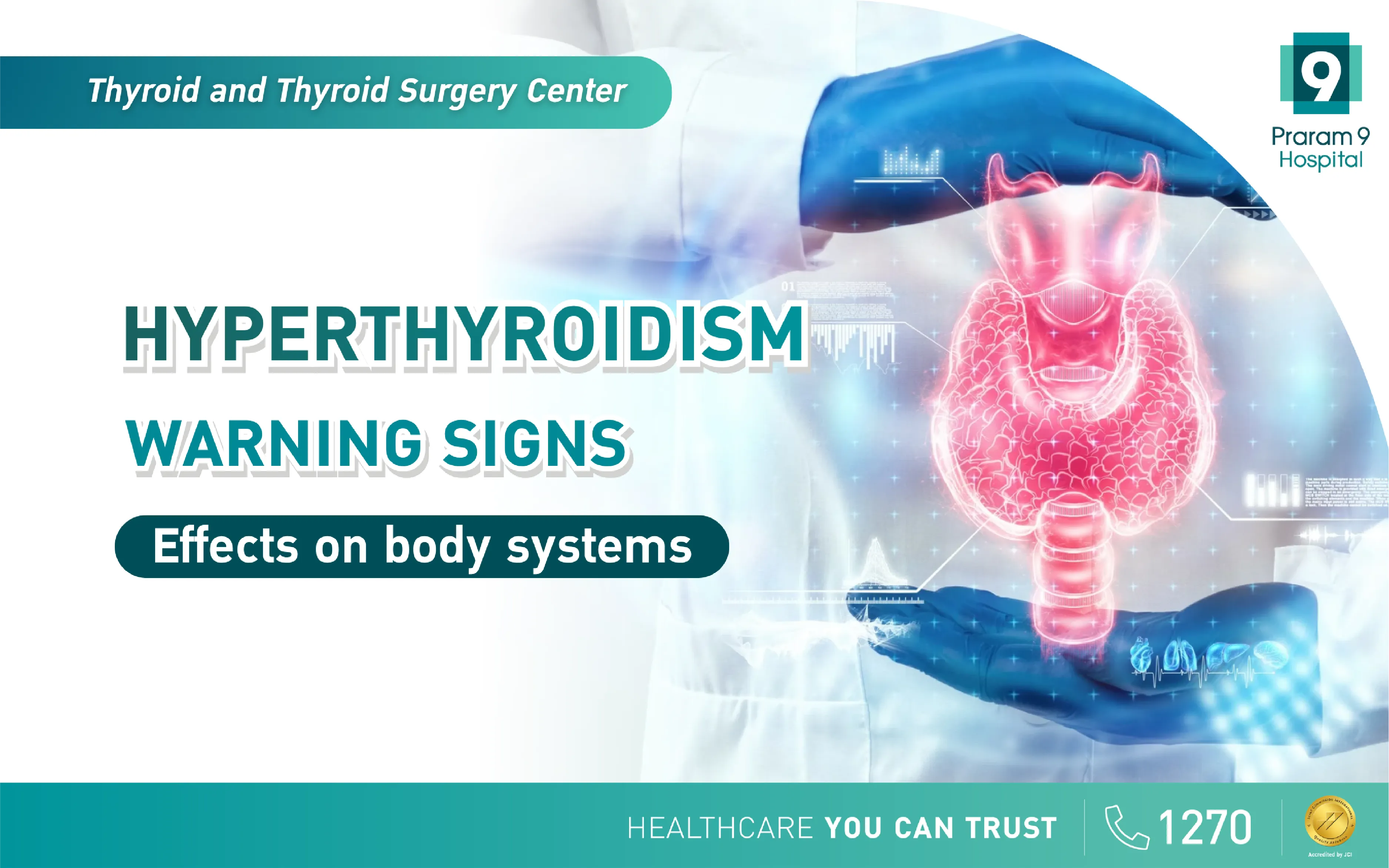
The thyroid gland is an organ of the endocrine system that is the largest in the body, located in the front of the neck in front of the trachea. Its function is to produce thyroid hormones that affect the process of energy metabolism and the growth of the body. But when the thyroid hormones are excessive, it may cause a condition of ‘hyperthyroidism’, which affects many systems in the body and may be severely dangerous if the thyroid hormone levels cannot be controlled to an appropriate level
Key Takeaways
- The thyroid gland has the function of producing thyroid hormones, which affect the control of metabolism and the functioning of other systems in the body
- Hyperthyroidism is a condition in which the level of thyroid hormones in the blood is higher than necessary, causing various systems to work faster than normal, such as rapid heartbeat, weight loss, easy sweating, restlessness, etc.
- Treatment of hyperthyroidism can be done by using antithyroid drugs, iodine ingestion, and surgery
Understanding hyperthyroidism: what is it
Hyperthyroidism
Hyperthyroidism, or hyperthyroidism (Hyperthyroidism), is a condition in which the thyroid gland produces thyroid hormones (Triiodothyronine, T3 and Thyroxine, T4) more than necessary
Normally, thyroid hormones affect the energy metabolism system of cells, help control temperature, control heart rate, and almost every other system. But when there is too much, it causes various systems to work more than normal and manifests as symptoms such as arrhythmia, weight loss, excessive sweating, diarrhea, irritability, etc. In addition, having high levels of thyroid hormones in the blood for a long time can also cause long-term health problems
There are many causes of hyperthyroidism, whether from abnormal functioning of the immune system that stimulates the thyroid gland to produce more hormones than normal, leakage of thyroid hormones from thyroid inflammation, or it may be caused by tumors that can produce thyroid hormones by themselves without stimulation from TSH (Thyroid Stimulating Hormone) secreted from the pituitary gland. In addition, there are other external factors that can stimulate hyperthyroidism, such as excessive iodine intake or excessive use of thyroid hormone medication, etc.
Hyperthyroidism is 10 times more likely to occur in women than in men, in the age range of 20–40 years, and has the possibility of hereditary transmission
Hypothyroidism
Conversely, if the thyroid gland works less than normal, resulting in thyroid hormone levels in the blood being too low, it is called ‘hypothyroidism’, which has the opposite effect of hyperthyroidism, meaning that systems in the body work less than normal, for example weight gain, feeling cold, easily chilled, slow heart rate, fatigue, diarrhea, etc.
What are the symptoms of hyperthyroidism
When the body has excessively high levels of thyroid hormones, it can affect many systems. The symptoms of hyperthyroidism that may be found are as follows
- Rapid weight loss even though food intake has increased
- Palpitations, rapid heartbeat, or arrhythmia
- Easily fatigued more than normal
- Frequent hunger
- Diarrhea
- Easy sweating
- Hand tremor, muscle weakness
- Mood swings, easily irritable
- Insomnia
- Thin hair, hair loss
- Enlarged thyroid gland
- Protruding eyes
- Scanty menstruation, missed menstruation
Diagnosis of hyperthyroidism
Diagnosis of hyperthyroidism can be done by the following methods
- Medical history taking and basic physical examination by a physician
- Blood test to measure the level of thyroid hormones in the blood
- Ultrasound to view the size and shape of the thyroid gland to determine whether there are abnormalities
Methods of treating hyperthyroidism
Treatment of hyperthyroidism has 3 main methods as follows
- Treatment with medication
In the initial period, the physician will prescribe antithyroid drugs to inhibit hormone production from the thyroid gland, helping to reduce thyroid hormone levels in the blood and relieve symptoms caused by excessive thyroid hormones. The physician will have the patient use the medication for approximately 1–2 years and may require continuous use
- Iodine ingestion
This uses radioactivity to destroy thyroid gland cells, causing the thyroid gland to become smaller and produce less thyroid hormones
- Thyroid surgery
There are both partial thyroidectomy and total thyroidectomy, used in cases where other treatment methods have not been effective. Surgery is a treatment method that provides rapid results and high efficiency
Hyperthyroidism, early detection, treatable, not as frightening as thought
Thyroid hormones have an important role in the functioning of various systems in the body. But when thyroid hormone levels are too high, it may cause hyperthyroidism that affects overall health. Diagnosis and appropriate treatment will help patients better manage the symptoms of hyperthyroidism
However, if other treatment methods have been tried and symptoms do not improve, the physician will consider solving the problem at the cause by removing the thyroid gland. At the Thyroid and Thyroid Surgery Center, Praram 9 Hospital, there are services for treating hyperthyroidism with endoscopic surgery through the axilla or through the mouth by a team of specialist physicians, reducing the occurrence of obvious scars, increasing precision, for effective recovery, allowing patients to return to normal life quickly
For more information
Facebook : Praram 9 Hospital International & Expats
Line : @Praram9Hospital
Tel. 1270
Frequently asked questions about hyperthyroidism
What precautions should be taken when receiving treatment with thyroid hormone-lowering medication?
The use of thyroid hormone-lowering medication must be under the supervision of a physician. Do not reduce or stop the medication by yourself, as it may cause the symptoms to recur
If diagnosed with hyperthyroidism, how should one behave?
Medication should be taken completely as prescribed by the physician. Avoid drinking beverages containing caffeine. Be cautious with exercise; do not overexert until the symptoms are controlled. And if treated with iodine ingestion, avoid seafood that is high in iodine for the time being
References
Hyperthyroidism. (n.d.). Medlineplus. https://medlineplus.gov/hyperthyroidism.html
Hyperthyroidism (Overactive Thyroid). (n.d.). National Institute of Diabetes and Digestive and Kidney Diseases. https://www.niddk.nih.gov/health-information/endocrine-diseases/hyperthyroidism
Mayo Clinic Staff. (2022, November 30). Hyperthyroidism (overactive thyroid). https://www.mayoclinic.org/diseases-conditions/hyperthyroidism/symptoms-causes/syc-20373659