Health Articles
Knowledge
What is uterine rupture and how dangerous is it?
PLOYNIN PUTTAPITAKPONG
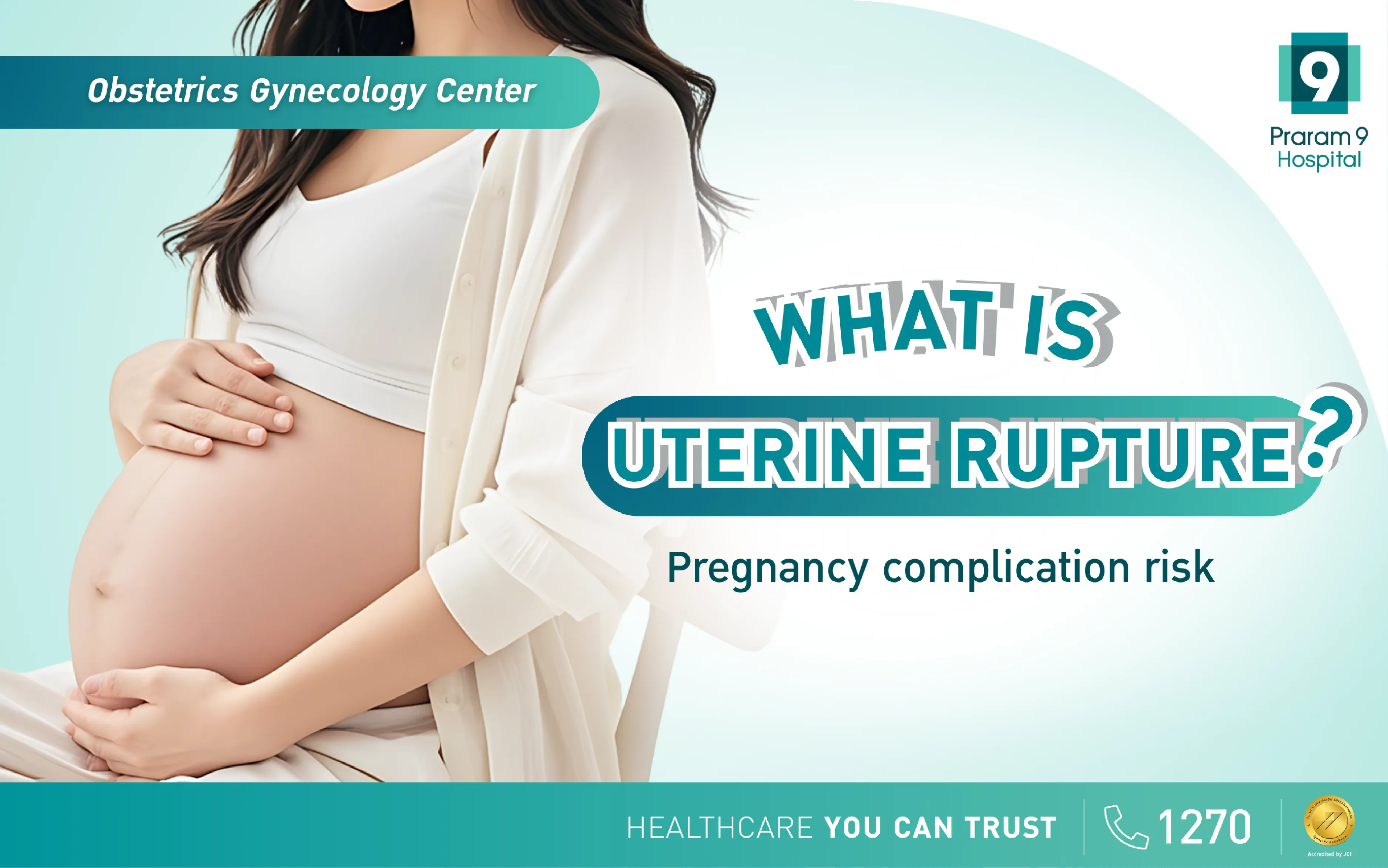
Uterine rupture (Uterine Rupture) is a condition in which the uterine wall tears through all layers, causing the fetus, blood, or placenta to possibly come out of the uterine cavity. It is considered an obstetric emergency that is severely dangerous to the life of both the mother and the fetus, and requires urgent treatment.
Warning signs of uterine rupture
- Sudden severe abdominal pain or pain different from normal labor pain
- Heavy vaginal bleeding
- Abnormal uterine contractions or sudden cessation
- Abnormally rapid maternal pulse, low blood pressure, or shock
- Abnormal fetal heart rate, such as slowing or absence of fetal heartbeat
Common causes
- Previous cesarean section, especially a uterine incision, which may be a weak point and rupture during labor
- Excessive use of uterine contraction-stimulating drugs
- Obstructed labor or prolonged labor duration longer than normal
- Severe trauma to the uterus, such as an accident
- Thin or abnormal uterine wall, such as prior uterine surgery or previous uterine tear
Treatment
Uterine rupture requires urgent treatment, in which the doctor will perform
- Immediate emergency cesarean section
- Suturing repair of the uterus or hysterectomy in cases of severe bleeding that cannot be controlled
- Administration of blood and fluids to prevent shock and maintain stable blood pressure
Risk groups for uterine rupture
- Those with a history of cesarean section in a previous pregnancy, especially a vertical uterine incision
- Those undergoing vaginal delivery after a previous cesarean section
- Those receiving labor-inducing drugs
- Those with multiple pregnancies
Is it common?
Uterine rupture is not common, but when it occurs it is considered a severe and dangerous condition. Urgent surgery is required to save the lives of both the mother and the fetus. However, if currently pregnant, with a history of cesarean section or risk factors, antenatal care should be attended regularly and consultation with the attending obstetrician-gynecologist is recommended to assess risk and plan a safe delivery.