Health Articles
Knowledge
What causes a stye, a pus-fille d bump near the eyelid?
CHAYATA LIUMSIRIJARERN,MD.
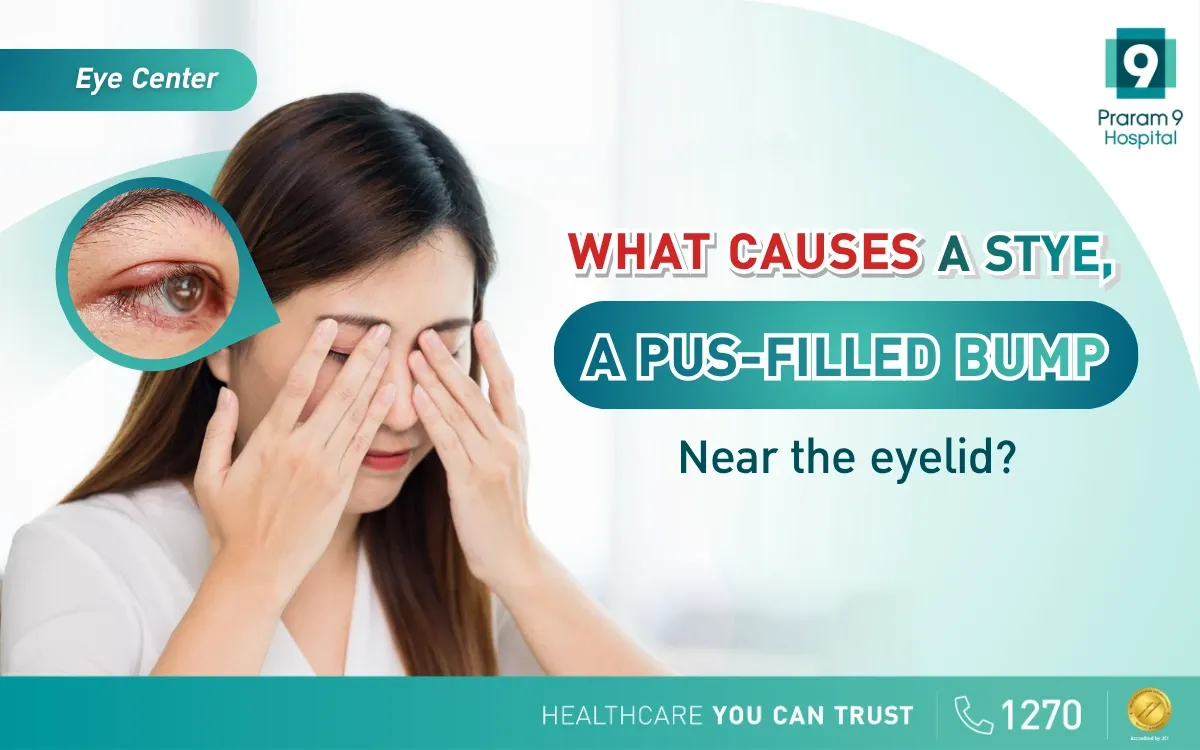
A stye is a condition commonly found in people of all genders and ages. Although most cases are not severe, it can significantly affect daily life. In addition, if not properly treated, it may lead to recurrent infections or complications that may be harmful to the eyes. Understanding the causes, symptoms, and appropriate treatment approaches is therefore key to maintaining eye health and preventing styes.
Key Takeaways
- A stye is an inflammation of the sebaceous glands in the eyelid, usually caused by infection with the bacterium Staphylococcus aureus or by blockage of the sebaceous glands.
- Early symptoms of a stye can be observed as a swollen, red, painful bump, and there may be pus. Most cases can resolve on their own if properly managed.
- Treatment for a stye depends on the severity, ranging from warm compresses, use of antibiotics, to incision and drainage by a physician in cases where symptoms do not improve.
What is a stye? Understanding the inflamed lump on the eyelid
A stye (Hordeolum or Stye) is an inflammation of the sebaceous glands in the eyelid, usually caused by infection with the bacterium Staphylococcus aureus, which is commonly found on the skin. However, when certain factors allow this bacterium to enter the sebaceous glands at the base of the eyelashes or inside the eyelid, it causes blockage and inflammation, resulting in a swollen, red, painful bump that may contain pus.
What causes a stye? What causes and risk factors can lead to a stye?
A stye is caused by a bacterial infection of the eyelid, to which the body responds with localized inflammation, resulting in swelling of the eyelid. Subsequently, dead cells from the inflammatory process accumulate as pus.
The infection of a stye is often associated with other factors that increase the likelihood of developing a stye, such as:
- Touching the eyes without washing hands: Dirty hands are a source of germs that can easily enter the sebaceous glands.
- Improper removal of makeup or use of expired cosmetics: Residual dirt or irritation can block pores and sebaceous glands in the eyelid area.
- People with oily eyelids or excessive sebum: More likely to have blockage of the sebaceous glands.
- Wearing contact lenses without proper hygiene: Contaminated contact lenses may unknowingly introduce bacteria into the eyes.
- Insufficient rest and weakened immune system: The body is less able to fight infection, increasing the risk of infection.
How many types of styes are there?
Styes can be divided into 2 types: non-infectious styes and infectious styes. These two types differ in causes, symptoms, and treatment as follows:
1. Non-infectious stye (Chalazion)
A non-infectious stye (Chalazion) is caused by blockage of the sebaceous glands inside the eyelid, preventing the discharge of sebum and leading to accumulation forming a hard lump under the skin. It is usually not painful or red and swollen, and the location is typically on the inner eyelid.
Treatment can be done with regular warm compresses to help dissolve the blocked sebum. However, if the lump is large or does not resolve on its own, incision or curettage by an ophthalmologist may be necessary.
2. Infectious stye (Hordeolum)
An infectious stye (Hordeolum) is caused by bacterial infection, especially Staphylococcus aureus, which enters the sebaceous glands in the eyelid, causing inflammation, swelling, redness, and pus. Infectious styes can occur in two forms:
- External Hordeolum: Infection on the outer eyelid, where a pus-filled bump at the eyelid margin can be easily seen.
- Internal Hordeolum: Infection on the inner eyelid, which is more difficult to observe than the external type.
Treatment of infectious styes usually requires antibiotics to control the infection, and if there is a large amount of pus, incision and drainage may be necessary.
What symptoms indicate a stye? Recognize early before it becomes severe
Recognizing a stye from the early stage allows appropriate care and treatment before it becomes severe. Common symptoms when having a stye include:
- Swollen, red, painful eyelid, especially when blinking
- Irritation or a sensation of a foreign body in the eye
- A lump or raised bump at the base of the eyelashes or inside the eyelid
- In some cases, a white pus head similar to acne may be present
- In some cases, there may be tearing or incomplete eyelid closure
Which stye symptoms require urgent medical attention
If the following symptoms occur, an ophthalmologist should be consulted promptly to prevent complications and spread of infection:
- Severe eyelid swelling to the point of being unable to open the eye
- Severe eye pain or deep orbital pain
- Fever with facial swelling and redness
- Blurred vision or double vision
- A stye that does not resolve within 1–2 weeks or recurs frequently
- Pus discharge from the lesion or rupture without complete healing
How to treat a stye effectively and reduce recurrence
There are several methods for treating a stye, depending on the severity and symptoms of the patient. Treatment approaches include:
- Warm compress: Helps stimulate the sebaceous glands to drain more easily. Use a warm compress on the eyelid 2–4 times daily for about 10–15 minutes each time or as advised by a physician.
- Medication: Includes eye drops, eye ointments, and oral medications. These are usually antibiotics to control infection and reduce inflammation.
- Incision of the stye: In severe cases with significant pus, a physician may perform incision and drainage under sterile conditions to help the stye resolve faster.
A stye should not be squeezed or incised by oneself, as it may cause the infection to spread and inflammation to worsen. Consulting an ophthalmologist helps ensure safe and appropriate care and reduces the risk of future complications.
After incision of a stye, how should one take care to recover quickly and reduce the risk of complications
After incision of a stye, although symptoms may improve, proper self-care remains important to allow the wound to heal, reduce the risk of recurrent infection, and prevent complications. The following recommendations should be followed:
- Avoid touching or rubbing the eye area to reduce the chance of reinfection from hands. After treatment, a protective eye covering is usually applied until the physician allows its removal.
- After removing the eye covering, gently clean the eye using cotton soaked in saline or clean water to wipe the eyelid. Avoid using cloth or tissue that may contain dust and easily cause irritation.
- Use medications strictly as prescribed to relieve symptoms, control infection, and promote faster healing.
- Temporarily avoid makeup, skincare products, and contact lenses until the wound is fully healed and approved by the physician.
- Monitor for abnormal symptoms such as increased pain, swelling, redness, or recurrent pus discharge. If these occur, return to see a physician immediately.
How to prevent a stye
A stye may seem minor, but frequent recurrence can be bothersome and affect daily life. Prevention is not difficult; it requires attention to hygiene and proper eye care in daily life as follows:
- Maintain facial cleanliness, especially around the eyes, to reduce accumulation of dirt that may cause infection.
- Remove makeup thoroughly every time to prevent blockage of the skin around the eyes and trigger inflammation or infection.
- Avoid rubbing the eyes and always wash hands before touching the face and eye area, as hands are a common source of germs and dirt.
- Do not share makeup tools, cosmetics, or skincare products with others, especially items used near the eyes.
- Clean contact lenses every time after use and choose lenses that do not irritate the eyes.
- Apply warm compresses around the eyes to reduce the chance of sebaceous gland blockage, one of the causes of styes.
- Consult an ophthalmologist promptly if there are symptoms such as red eyes, itching, or irritation to receive advice before inflammation develops.
A stye is not a cause for alarm; with proper care, it can resolve
A stye is caused by bacterial infection or blockage of the sebaceous glands in the eyelid, resulting in a hard lump forming as an inflamed bump on the eyelid. Normally, this lump develops into a pus-filled swelling that can rupture and resolve on its own. With proper self-care, recovery from a stye can be achieved safely. However, if the pus does not fully drain or care is inadequate, there is a risk of recurrent infection or complications.
To ensure effective treatment and prevent long-term effects, it is recommended to be examined by a specialist for appropriate treatment. At the Eye Center, Praram 9 Hospital, services are provided for general and specialized eye diseases by specialist ophthalmologists from various fields to ensure patients receive appropriate, safe care and confident recovery.
For more information
- Facebook : Praram 9 Hospital International & Expats
- Line : @Praram9Hospital
- Tel: 1270
Frequently asked questions about styes
1.Can a stye resolve on its own?
A stye can resolve on its own within a few weeks after the pus on the eyelid ruptures, with proper self-care to reduce complications.
2.What is the difference between a stye and blepharitis?
A stye appears as a localized hard lump or pus-filled bump on the eyelid, mostly caused by infection. Blepharitis is inflammation of the entire eyelid, often accompanied by symptoms such as red eyes, dry eyes, blurred vision, sensitivity to light, etc., and may or may not have raised bumps.
References
Grayland-Leech, B. (2024, October 30). What is the difference between a stye and blepharitis? MedicalNewsToday. https://www.medicalnewstoday.com/articles/blepharitis-vs-stye#causes
Willmann D, Guier CP, Patel BC, et al. Hordeolum (Stye) [Updated 2024 Dec 11]. In: StatPearls [Internet]. Treasure Island (FL): StatPearls Publishing; 2025 Jan-. Available from: https://www.ncbi.nlm.nih.gov/books/NBK459349/
Stye. (2023, December 21). Cleveland Clinic. https://my.clevelandclinic.org/health/diseases/17658-stye