Health Articles
Knowledge
Hyperbaric Oxygen Therapy (HBOT): Benefits and Who Is It Suitable For?
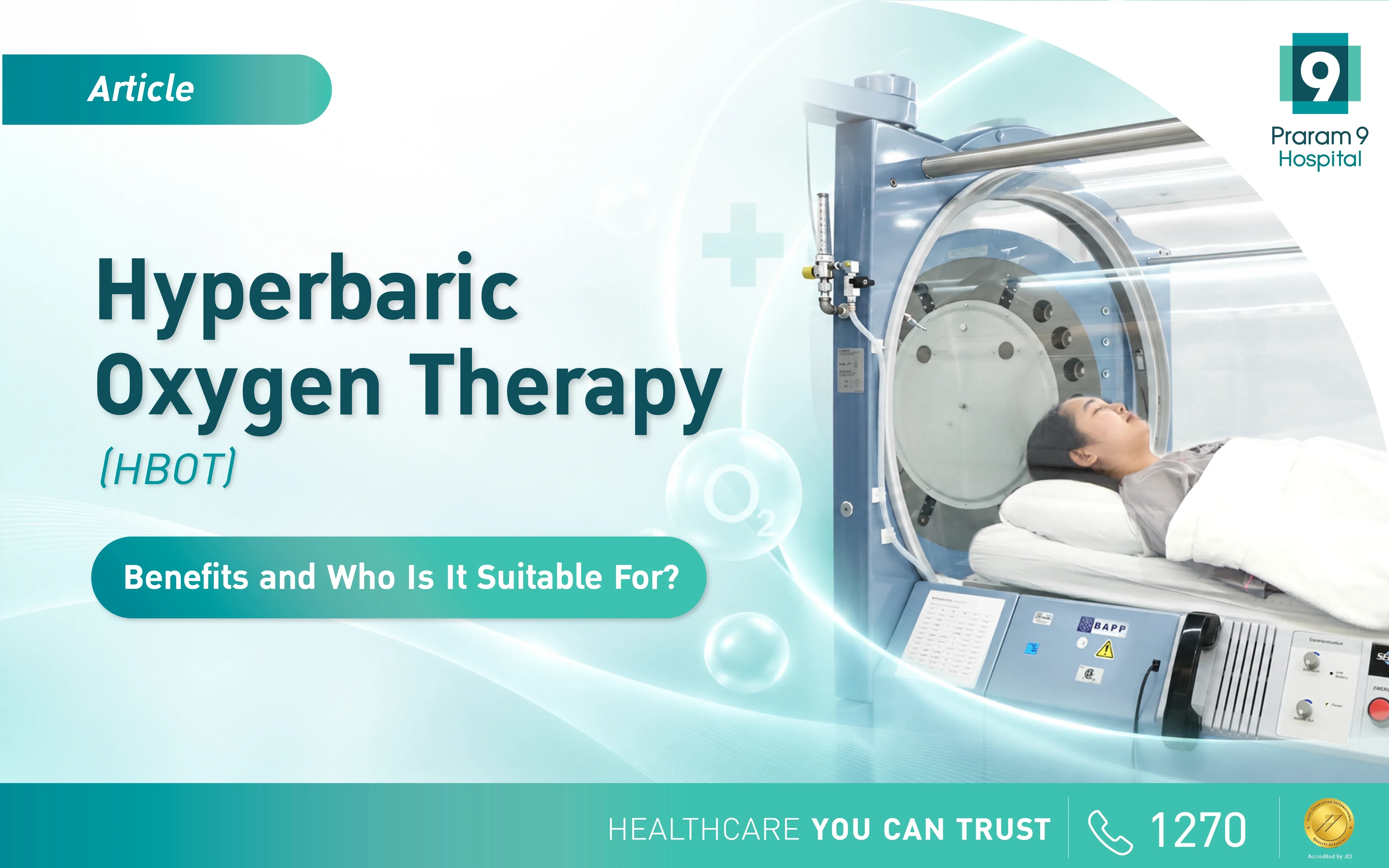
Many people may have heard of Hyperbaric Oxygen Therapy (HBOT) through various media and health-related sources. In modern medicine, HBOT is considered an adjunctive therapy supported by extensive scientific evidence. It may be used to support recovery and enhance the effectiveness of treatment in patients with appropriate medical indications.
This article provides an overview of how HBOT works, its potential benefits, who may be suitable for the treatment, and important considerations before undergoing therapy.
What Is Hyperbaric Oxygen Therapy (HBOT)?
Hyperbaric Oxygen Therapy (HBOT) is a treatment in which patients breathe 100% oxygen in a pressurized environment where the atmospheric pressure is higher than normal—typically around 2 to 3 times the atmospheric pressure at sea level. The treatment is performed inside a specialized chamber known as a Hyperbaric Chamber.
Under normal conditions, when we breathe regular air, oxygen is transported throughout the body primarily by red blood cells (hemoglobin). However, under increased atmospheric pressure, a significantly greater amount of oxygen can dissolve directly into the blood plasma. This allows more oxygen to reach the body's tissues and cells.
What Are the Benefits of Hyperbaric Oxygen Therapy (HBOT)?
By increasing the level of oxygen available to the body, HBOT may stimulate various cellular processes and support tissue recovery. Potential benefits include:
- Stimulating the formation of new blood vessels
- Supporting tissue recovery following injury
- Reducing inflammation
- Promoting wound healing and tissue repair
- Supporting the health and strength of cells and collagen
Who May Benefit from Hyperbaric Oxygen Therapy (HBOT)?
HBOT may be considered for patients with certain medical conditions or treatment-related complications, including:
- People with chronic or difficult-to-heal wounds, such as diabetic wounds, pressure ulcers, or ischemic wounds
- People with injuries resulting from accidents or sports, or wounds following surgery
- People with sudden sensorineural hearing loss
- People with diving-related injuries, such as decompression sickness
- People experiencing complications from radiation therapy, such as radiation-induced cystitis, chronic radiation-induced intestinal inflammation with bleeding, or radiation-induced bone necrosis
- People seeking health recovery and wellness support as part of anti-aging and preventive healthcare
Precautions for Hyperbaric Oxygen Therapy (HBOT)
HBOT may require special precautions in certain situations, including:
- Certain medical conditions, such as pneumothorax or epilepsy
- Use of certain medications that may affect the body’s response to treatment
- Air travel should generally be avoided for at least 24 hours after treatment
HBOT is generally considered safe when performed under the supervision of qualified physicians and experienced healthcare professionals. Patients should consult a physician before undergoing treatment to determine whether HBOT is appropriate for their individual condition.
What to Expect During Hyperbaric Oxygen Therapy (HBOT)
1. Preparation Before Treatment
Before undergoing HBOT:
- Medical assessment: The physician will review the patient's medical history and indications for treatment, perform a physical examination, and may recommend tests such as a chest X-ray, middle-ear examination, and electrocardiogram (ECG) to help plan the treatment.
- Staff will provide instructions on how to prepare for the treatment and teach techniques for equalizing pressure in the middle ear.
- Blood pressure will be checked. Patients with certain medical conditions, such as diabetes, may also have their blood glucose levels checked before treatment.
- Patients will change into appropriate clothing for HBOT.
- Electronic devices such as mobile phones and other battery-powered equipment, as well as materials containing metal, are not permitted inside the hyperbaric chamber.
2. During Treatment
- The patient will lie comfortably inside the hyperbaric chamber and breathe normally. There is no need to hold your breath. Patients may rest, listen to music, or watch television through the chamber window.
- During the pressurization phase, staff will guide patients on how to equalize pressure in the middle ear, for example, by moving the jaw or swallowing.
3. After Treatment
- Patients will be monitored for approximately 10–15 minutes after treatment. If any unusual symptoms occur, inform the attending nurse immediately.
- Patients can generally eat, drink, and resume their usual daily activities after treatment.
- Air travel should be avoided for at least 24 hours after treatment.
For more information
- Facebook : Praram 9 Hospital International & Expats
- Line : @Praram9Hospital
- Tel. 1270
Frequently Asked Questions About Hyperbaric Oxygen Therapy (HBOT)
1. How Is HBOT Different from Conventional Oxygen Therapy?
Oxygen delivered through a nasal cannula or conventional oxygen mask is administered at normal atmospheric pressure. This primarily increases the amount of oxygen carried by hemoglobin in the blood.
In contrast, HBOT combines increased atmospheric pressure with 100% oxygen, allowing a greater amount of oxygen to dissolve directly into the blood plasma and reach body tissues.
2. How Many HBOT Sessions Are Needed to See Results?
The number of treatment sessions depends on the patient's medical condition, treatment indication, and severity. The appropriate treatment plan will be determined by the physician and monitored throughout the course of therapy.
3. Are There Any Side Effects of HBOT?
HBOT is generally considered safe when performed under the supervision of qualified healthcare professionals. However, possible side effects may include middle-ear barotrauma caused by pressure changes and oxygen toxicity, particularly with prolonged or repeated exposure to high concentrations of oxygen.
Article by
Kritsada Luangrungruang, M.D.
Hyperbaric Medicine Physician