Health Articles
Knowledge
Sinusitis, a bothersome problem that can be treated—do not leave it until it becomes chronic
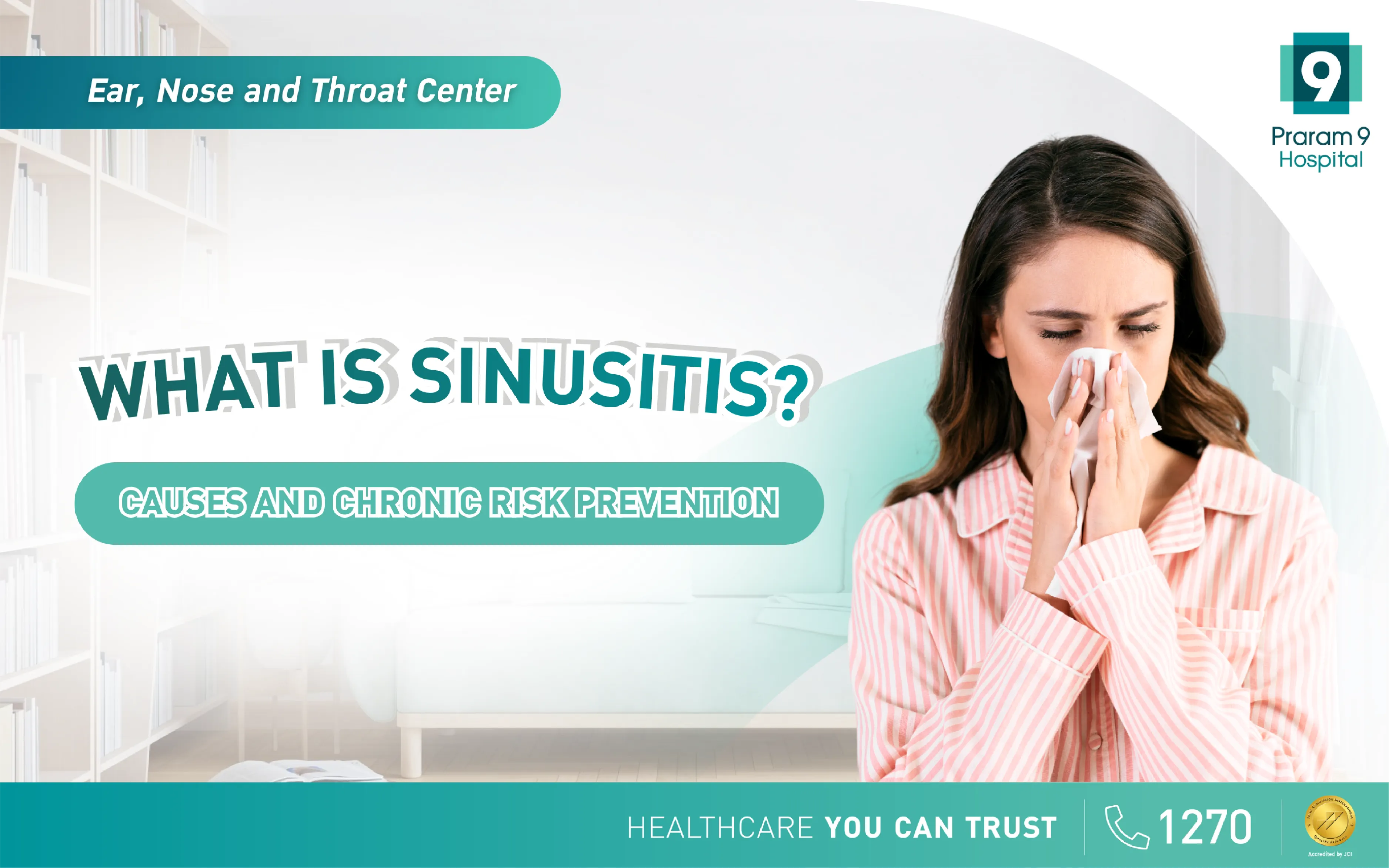
Normally, a common cold lasts only a few days and can resolve on its own. However, if cold symptoms last for weeks or persist for months, it may not be just a common cold, but could be ‘sinusitis,’ which is commonly found after a cold. Therefore, if prolonged cold symptoms are observed, one should not remain complacent and should promptly consult a physician for diagnosis, because sinusitis may progress, become more difficult to treat, and carry a risk of dangerous complications.
Key Takeaways
- Sinusitis is commonly caused by viral and bacterial infections, and fungal infections may also be found. Additionally, there are other factors that may make sinusitis occur more easily, such as allergic rhinitis, abnormal nasal structure, tooth root infection, smoking, and toxic pollution.
- Symptoms of sinusitis are similar to those of a common cold but are more severe and last longer, including nasal congestion, runny nose, sinus pain, reduced sense of smell; in some cases there may be cough, headache, and bad breath.
- Treatment of sinusitis can be done by nasal irrigation, medication use, and surgery in cases that do not respond to medication, have frequent recurrent infections, or have fungal infection.
What is sinus?
Before understanding sinusitis, we must first know what ‘sinus’ is.
Sinus (Sinus) is a small air-filled cavity located in the skull. There are 4 locations, arranged in pairs on the left and right sides of the skull as follows:
- Forehead near the eyebrows
- Between the inner corners of the eyes and the nasal bridge
- Cheeks
- Behind the nasal cavity
These sinuses have a lining that produces mucus and have openings connected to the nasal cavity, allowing mucus to drain from the sinus cavities. These spaces have airflow within them. Evolutionarily, sinuses have several benefits, including helping to reduce the weight of the skull, increasing the resonance of the voice, protecting against impact to deeper parts of the face, acting as insulation to protect the base of the brain from external temperature changes, and helping to increase the temperature and humidity of inhaled air. In addition, the mucus produced by the sinus lining also helps prevent infection.
What is sinusitis?
Sinusitis is inflammation of the lining within the sinus cavities, causing the lining to swell and leading to accumulation of mucus within the sinuses. The causes are usually infection and/or allergy.
Sinusitis can be divided into 3 types according to duration and cause of inflammation as follows:
- Acute sinusitis: symptoms for not more than 4 weeks
- Subacute sinusitis: symptoms lasting 1 to 3 months
- Chronic sinusitis: symptoms lasting more than 3 months; causes may include bacteria, superimposed fungal infection, or chronic inflammation from allergy
Symptoms of sinusitis
Sinusitis often occurs after a cold that does not improve or worsens after 7–10 days. Patients with sinusitis often have the following common symptoms:
- Pain in the sinus cavities, eye sockets, headache
- Tenderness over the sinus areas (cheeks, inner eye corners, or forehead)
- Nasal congestion, feeling of fullness in the nose
- Green or yellow nasal discharge
- Reduced sense of smell
- Fever
Some patients with sinusitis may also have the following symptoms:
- Toothache
- Bad breath or foul-smelling breath
- Cough, sensation of mucus dripping down the throat
- Ear fullness, decreased hearing
- Snoring during sleep
- Nasal speech
- In young children, there may be irritability, fussiness, decreased appetite, and mouth breathing
What causes sinusitis?
Sinusitis commonly occurs following a cold or influenza because the initial infection causes inflammation and swelling of the nasal mucosa and the openings of the sinus cavities. As the infection progresses, the sinus openings become narrowed, leading to accumulation of mucus within the sinus cavities, which is a condition suitable for the growth of pathogens, resulting in more severe symptoms and signs of sinusitis.
In addition to colds or influenza, there are factors that contribute to sinusitis as follows:
- Allergic disease, causing inflammation and swelling of the sinus openings more easily
- Diseases with abnormalities of the tiny hair-like structures (cilia) in the nasal and sinus mucosa, which cannot function to move mucus out for drainage from the sinuses
- Abnormalities in the nasal cavity that obstruct the sinus openings, such as deviated nasal septum, nasal bone spur, or nasal polyp; a notable point is that patients often have sinusitis on the side with the abnormality only
- Infection spreading from other organs, such as tooth root infection
- Presence of a foreign body in the nostril, found in young children
Complications of sinusitis
Sinusitis may lead to severe complications as follows:
- Upper and lower respiratory tract diseases such as otitis media, pharyngitis, laryngitis, bronchitis, asthma
- Orbital involvement causing inflammation of tissues around the eye, eye pain, eye swelling, or orbital abscess leading to loss of vision
- Spread of sinus infection to the bone and bone marrow in the sinus area
- Spread of sinusitis to the brain, which may cause meningitis or brain abscess
Diagnosis of sinusitis
Physicians can diagnose sinusitis from history taking and physical examination, and may use medical tools to confirm the diagnosis, such as:
- Endoscopic examination of the nasal cavity (Nasal Endoscope)
- CT scan of the sinuses (CT scan of Sinus)
- Magnetic resonance imaging (MRI)
These medical examinations help physicians clearly visualize pathology within the sinus cavities and more accurately determine the location and severity of inflammation.
How is sinusitis treated?
Nasal irrigation
Nasal irrigation with saline helps remove thick mucus accumulated in the nasal cavity and sinuses. Pathogens and/or allergens are also washed away, making it a direct and simple physical treatment. When the nasal cavity and sinuses become more open, inflammation decreases. However, precautions are as follows to avoid complications:
- Use proper nasal irrigation equipment and sterile saline
- Do not share nasal irrigation equipment with others
- Avoid forceful blowing of the nose during or after irrigation, as it may lead to otitis media
- If abnormal symptoms occur after irrigation, such as severe ear pain or persistent nosebleed, consult a physician promptly for advice
Medication treatment
Medication treatment is the basic treatment for sinusitis. The type of medication depends on symptoms and cause:
- Symptomatic relief medications such as antihistamines and decongestants to reduce nasal congestion
- Antibiotics, used in cases where sinusitis is caused by bacterial infection
- Anti-inflammatory medications; in patients with allergy and sinusitis, physicians may consider nasal steroid spray
- If there is fungal infection or structural abnormality in the nasal cavity, medication alone is often ineffective, and surgical treatment is required
Surgical treatment
Both acute and chronic sinusitis that do not respond to medication, recur frequently, involve fungal infection, or are caused by structural abnormalities in the nasal cavity require surgical treatment for correction. Currently, endoscopic sinus surgery is an effective, safe, and widely used surgical method worldwide.
Endoscopic surgical treatment
Functional Endoscopic Sinus Surgery (FESS) involves inserting an endoscope through the nostril to surgically widen the sinus openings, allowing better drainage of mucus and correction of abnormalities in the nasal cavity that cause the disease. It also allows removal of infected tissue or tumors without external surgical incisions. However, this surgery requires general anesthesia and intubation. The operation takes approximately 2–3 hours depending on disease severity. Advantages include relatively low blood loss, minimal wound pain, and a hospital stay of only 1–2 nights before returning home to rest.
Prevention of sinusitis that you can do yourself
The best prevention of sinusitis is to prevent getting a cold, or if ill, to rest and recover as quickly as possible, not forcing the body or overworking until a cold persists for a long time. The following guidelines are recommendations to prevent sinusitis:
- Receive influenza vaccination annually
- Wash hands with soap or use alcohol-based hand sanitizer frequently
- Avoid close contact with people with colds or influenza
- If having allergies, consult a physician to identify the cause
- and control symptoms as soon as possible
- Avoid cigarette smoke, pollution, and PM2.5 dust that may irritate the nasal lining
- Drink sufficient water to prevent dehydration for normal mucus clearance in the sinuses
- Get adequate sleep, exercise, and relieve stress
- If having a prolonged cold or suspected symptoms of sinusitis, consult a specialist promptly
Sinusitis: treat promptly, do not let it progress to chronic
Sinusitis is a common disease and resolves more slowly than a common cold. It can be simply divided into 2 phases: acute phase with symptoms less than 4 weeks, and chronic phase with symptoms more than 12 weeks. Some patients may have recurrent episodes many times in one year. Therefore, treatment of sinusitis is very important and requires diagnosis and treatment by a specialist physician to identify the cause and lead to appropriate treatment.
Praram 9 Hospital, with diagnostic services by specialist physicians and standardized medical equipment, enables patients to receive targeted treatment and recover from the disease with quality.
For more information
Facebook : Praram 9 Hospital International & Expats
Line : @Praram9Hospital
Tel. 1270
Frequently asked questions about sinusitis
1. How are sinusitis and a cold different?
A common cold (Cold) is usually caused by respiratory infection and typically lasts only 1–2 weeks and resolves on its own. Sinusitis (Sinusitis) is usually caused by inflammation and infection of the nasal and sinus mucosa following a cold that does not improve, or inflammation due to allergy.
2. Is it true that once having sinusitis, it often recurs frequently?
Not always. In cases of acute sinusitis that receive appropriate treatment, the chance of recurrence is low. However, if acute sinusitis is not completely treated, or in chronic sinusitis, or sinusitis from allergy, it often does not completely resolve and requires continuous treatment.
References
Mayo Clinic Staff. (2023, September 19). Chronic sinusitis. Mayo Clinic. https://www.mayoclinic.org/diseases-conditions/chronic-sinusitis/symptoms-causes/syc-20351661
Sinus Infection (Sinusitis). (2023, March 9). Cleveland Clinic. https://my.clevelandclinic.org/health/diseases/17701-sinusitis
Sinusitis. (2023, July). Healthdirect. https://www.healthdirect.gov.au/sinusitis