Health Articles
Knowledge
Child Health Check-up Program and Its Importance That Parents Must Pay Attention To
CHATTIMA SAOWAPARK, M.D.
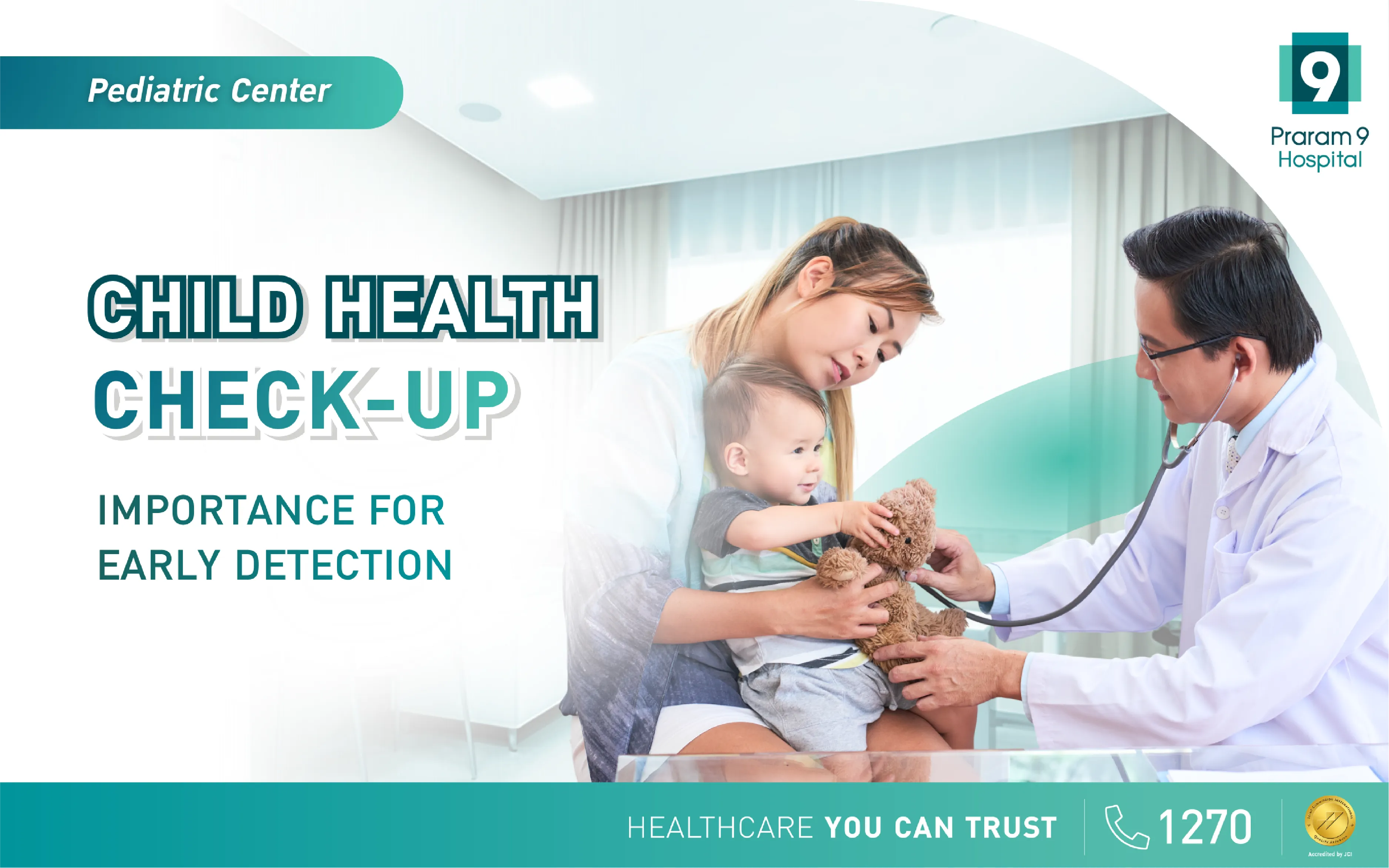
For strong health and age-appropriate growth, child health check-ups are an important step that parents should not overlook. In addition to helping screen for abnormalities that may occur without being noticed, they also allow comprehensive monitoring of the child’s development.
Caring for and raising a child to grow appropriately both physically and mentally can begin with regular child health check-ups. If abnormalities are detected early, effective treatment planning can be made and the severity of diseases that may occur in the future can be reduced.
Key Takeaways
- Child health check-ups help identify risks or warning signs of abnormalities, strengthen the immune system, and monitor whether the child’s development is appropriate for their age.
- Essential child health check-up items include growth assessment, vision, hearing, development, oral and dental health, as well as mental health issues.
- Parents who are concerned or want to understand their child’s overall health can have their child undergo health check-ups to detect serious diseases, chronic conditions that may occur in children, as well as genetic diseases that may be passed from parents to children.
How do child health check-ups differ at each age stage?
Because children are in a stage of continuous growth and physical changes, child health check-ups help determine the child’s growth at each age stage in order to plan for promoting complete development.
- Newborns aged 0–7 days: General physical examination, screening for hypothyroidism, and other genetic diseases.
- Infants up to 6 months: General physical examination to monitor growth according to age, including developmental assessment such as responsive smiling, tracking sounds, lifting the head, etc.
- Infants aged 6–12 months: This is a stage when children begin to eat a more varied diet, so oral and dental examinations begin. Additionally, screening for physical abnormalities such as anemia, and assessment of motor development and language development are conducted.
- Children aged 1–12 years: This is a stage of rapid physical and developmental changes, therefore emphasis is on growth assessment, brain development, behavioral evaluation, and social interaction.
- Children aged 13–15 years: The body grows to full strength, but hormonal changes may begin. Therefore, examinations focus on adolescent development and overall health assessment.
Why should children have regular health check-ups?
Reasons to take children for regular health check-ups are as follows:
- Early screening for diseases or abnormalities such as genetic diseases, chronic diseases, hearing, vision, delayed development, etc. Detecting these abnormalities early helps children receive prompt treatment and reduces potential future risks.
- To know the child’s growth, such as weight and height, whether they meet the criteria.
- To understand the child’s development in all aspects, both physical and mental.
- To plan healthcare and promote development for growth and development consistent with children of the same age.
- Doctors provide guidance on appropriate child-rearing according to age.
What are included in child health check-ups?
Child health check-ups include physical, developmental, and mental assessments at all ages. The check-up items in child health check-up programs typically include the following:
- Growth assessment: weight, height, head circumference, body mass index.
- General physical examination: eye examination, ear examination, function of the heart, lungs, nervous system, and various organs, blood tests, urine tests, stool tests, oral and dental health examination.
- Disease screening: genetic diseases, hypothyroidism, diabetes in children, anemia, heart disease, kidney disease, hepatitis virus infection.
- Age-appropriate developmental assessment: vision, hearing, movement, language and communication, social interaction, learning and intelligence.
- Mental assessment: mental condition, emotional control, risk behaviors.
- Immunization: age-appropriate vaccinations and additional vaccines such as influenza vaccine, hepatitis A and B, HPV, chickenpox, EV71, RSV, rabies, etc.
In addition to these child health check-up items, consultation with a doctor should be included to receive guidance on appropriate child-rearing according to age in terms of nutrition, sleep, excretion, and behavior monitoring so that children can progress appropriately through each stage.
Preparation before a child health check-up
Preparing the child before undergoing a health check-up helps ensure the process is smooth, quick, and yields quality results. Preparation guidelines are as follows:
- Prepare documents such as the child health record book, vaccination records, including information on congenital diseases and drug allergy history (if any).
- Ensure the child goes to bed early to get at least 6–8 hours of sleep.
- In cases where certain blood tests are required, fasting from food and drinks (except clean water) for at least 8–12 hours may be necessary.
- Parents should write down questions they want to ask the doctor in advance to avoid forgetting concerns or doubts.
- If the child is ill or has a high fever, vaccination should be postponed.
- If there is a history of severe vaccine allergy or severe food allergies (such as eggs, milk, nuts), this must be immediately informed to the doctor and nurse.
- After receiving vaccination, observation at the hospital for approximately 30–60 minutes is recommended. If there are no allergic reactions, the child can return home.
Regular child health check-ups for strong health and appropriate development
Child health check-ups are essential and should be prioritized by parents. It is not necessary to wait until the child shows symptoms or abnormalities before seeing a doctor. Regular healthcare helps monitor abnormalities and promotes appropriate development according to age. In addition, parents can directly consult doctors on child-rearing to better understand and meet the needs of each developmental stage.
A child’s good health begins with understanding their physical health. At Praram 9 Hospital, child health check-up services are provided by pediatric specialists in a child-friendly environment, ensuring that your child receives the most appropriate care.
For more information
- Facebook: Praram 9 Hospital International & Expats
- Line: @Praram9Hospital
- Tel. 1270
Frequently Asked Questions about Child Health Check-ups
How much does a child health check-up cost?
The KIDDIE Healthy child health check-up program at Praram 9 Hospital starts from 990–2,490 baht, with different check-up items as follows.
How often should children have health check-ups?
Health check-ups should be conducted at specified age intervals: age 0–1 year should be checked every 2–3 months, age 1–5 years every 6–12 months, and age 5 years and above annually. Doctors may schedule more frequent visits if problems or specific risks are found.
References
10 Powerful Reasons Every Child Needs Regular Pediatric Checkups. (n.d.) Prima CARE. https://www.prima-care.com/blog/10-powerful-reasons-every-child-needs-regular-pediatric-checkups
The Importance of Routine Check-Ups for Kids: A Comprehensive Guide. (2024, October 24). Mother's Care Hospital. https://motherscarehospital.com/the-importance-of-routine-check-ups-for-kids-a-comprehensive-guide/blog/
AAP Schedule of Well-Child Care Visits. (2025, May 29). Healthy Children. https://www.healthychildren.org/English/family-life/health-management/Pages/Well-Child-Care-A-Check-Up-for-Success.aspx