Health Articles
Knowledge
Skin Test Skin Allergy Test: Who is it suitable for and what does it help with
RAWEERAT SITCHARUNGSI,MD.
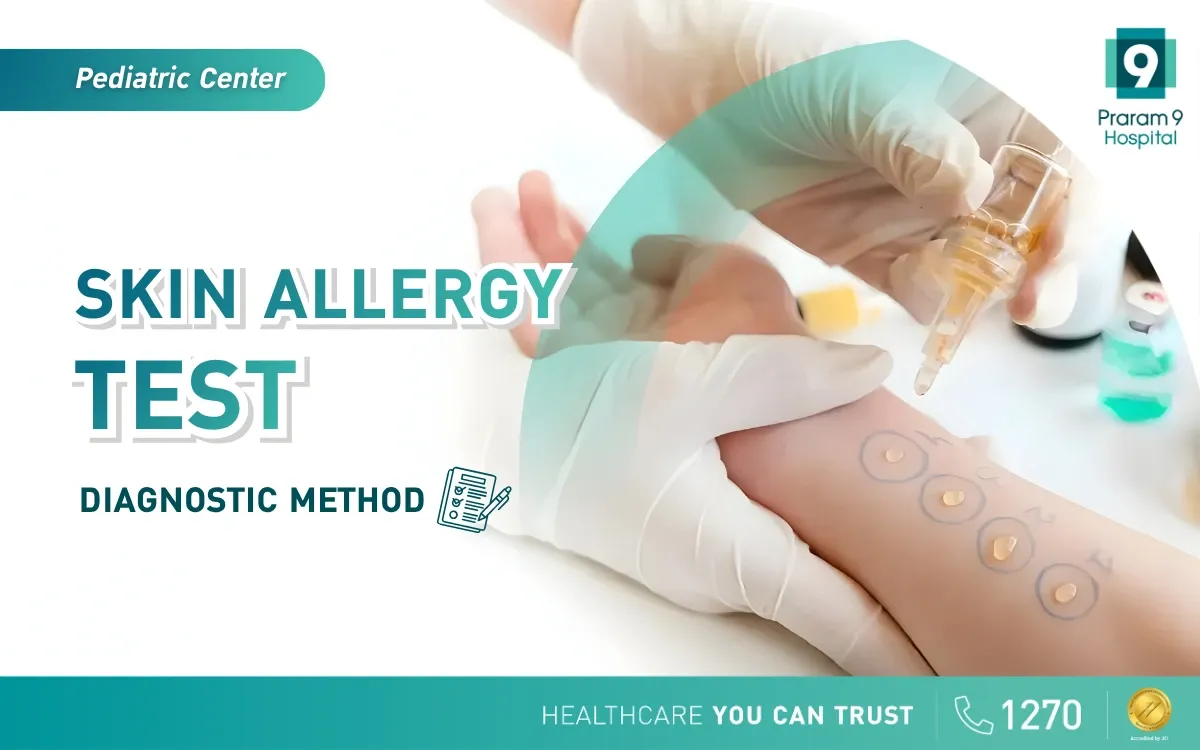
Skin Test or ‘skin allergy testing’ is one of the methods that physicians use to help assess which allergens the body reacts to, whether it is dust, pollen, animal dander, food, or even certain chemicals. Performing a Skin Test helps you determine what you are allergic to, so that you can avoid those triggering factors precisely and prevent dangerous allergic reactions.
This article will take you to get to know Skin Test in detail, from the steps of allergy testing to the benefits that will be received, for understanding and being able to take care of your health correctly.
Key Takeaways
- A Skin Test is an allergy test by using various allergens pricked onto the skin to check which substances the body reacts to.
- Skin Test examination is suitable for people who suspect that they have allergic symptoms such as rash, sneezing, nasal congestion, itchy eyes, chronic cough, or severe allergic reactions after eating certain foods or after insect bites.
- Skin Test examination has very few side effects; commonly found are itching, swelling, redness on the skin at the test area, but will resolve on their own within 1–2 hours.
What is Skin Test, skin allergy testing?
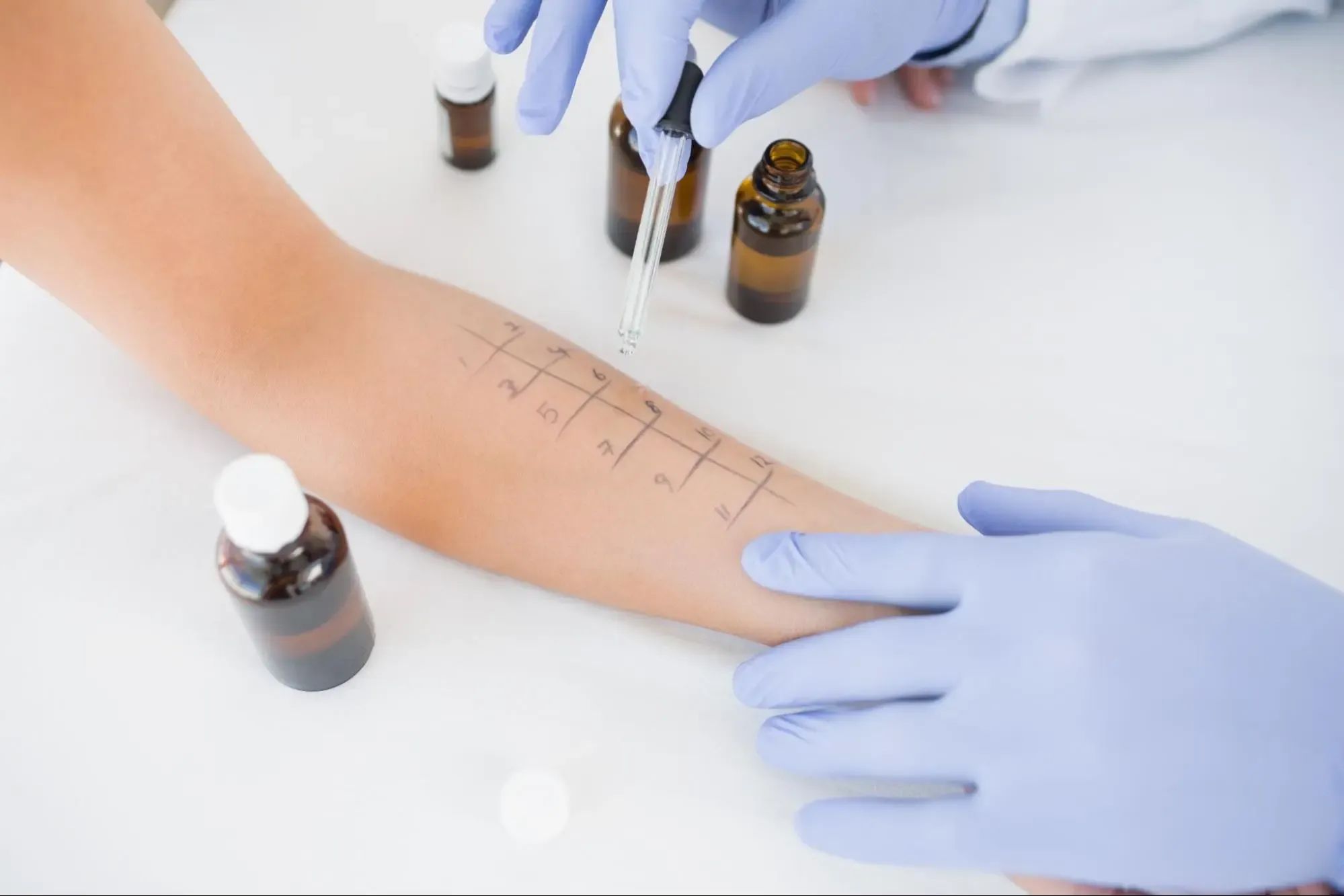
Skin allergy testing (Skin Prick Test) is a diagnostic examination to find allergens (Allergen) that each person’s body responds to. The physician will drop various types of allergens onto the skin, such as allergens from dust mites, grass pollen, mold, cats, dogs, seafood, cow’s milk, eggs, soybeans, peanuts, wheat flour, and then use a needle to lightly prick to observe how the skin in that area reacts. For those who are allergic to that substance, abnormal symptoms will occur such as swelling, redness, itching, or rash.
Who is suitable for Skin Test?
People who are suitable for allergy testing with the Skin Test method are those who have the following symptoms:
- Those who have respiratory allergies (Respiratory Allergies): such as nasal congestion, runny nose, sneezing, coughing, frequent cold-like symptoms, or people with a family history of allergies, including those diagnosed with childhood allergies, asthma, or allergic rhinitis.
- Those who have skin allergies (Skin Allergies): such as itchy rash, urticaria, skin allergy, or eczema (Eczema).
- Those who have eye allergies (Eye Allergies): such as itchy eyes, swollen eyes, watery eyes, or conjunctivitis.
- Those who have food allergies (Food Allergy): suspected allergy to certain foods such as itching in the mouth, swollen tongue, rash after eating food.
- Those who have drug or insect bite allergies: such as swelling, redness, or severe allergic reactions (Anaphylaxis) after insect bites.
- Those who want to know allergy-triggering factors: in order to plan avoidance and treatment precisely.
What are the benefits of Skin Test?
Skin allergy testing or Skin Test has many benefits for health care as follows:
- Helps identify the cause of allergic symptoms, which allergens they come from, and how severe they are, allowing physicians to diagnose your allergic disease accurately and precisely.
- When the cause of allergic symptoms is known, it helps each person know what they should avoid, such as pets like dogs or cats, avoiding eating seafood, certain nuts, eggs, milk, etc.
- Helps reduce the chance of severe allergic reactions, which sometimes may be life-threatening.
- Physicians will be able to plan appropriate treatment in cases where it is necessary to reduce allergic symptoms or when it is necessary to be near allergens, by treatment with allergen immunotherapy injections under the skin or using sublingual immunotherapy.
Preparation before Skin Test
To make the Skin Test results as accurate as possible, preparation should follow these recommendations:
- Stop using antihistamines (Antihistamines) used as runny nose medication, anti-itch medication, or urticaria treatment such as Cetirizine, Desloratadine for at least 7 days before performing the Skin Test because these medications may suppress the skin response, causing inaccurate results.
- Avoid using steroids, whether injection, topical, or oral, for at least 1–3 weeks. If it is necessary to use steroids, inform the physician in advance to assess appropriateness.
- Avoid using sedatives, sleeping pills, dizziness medication, or motion sickness medication for at least 1–3 weeks because they may affect the test.
- Inform the physician every time if there is a history of drug allergy or there are medications for underlying diseases that must be taken regularly for safety and accuracy of the test results.
- On the day of the test, wear a short-sleeved shirt, get enough rest, and do not need to abstain from water or food before the test.
What are the steps of Skin Test?
The Skin Test procedure generally does not take long and is not very painful, with the following steps:
- The staff cleans the skin, which may be the forearm or upper back.
- Mark the skin area to be tested with a pen.
- Drop allergen extracts onto the skin.
- The physician uses a small needle to lightly prick the skin at the points where the test solution is placed; the person being tested may feel similar to a small ant bite.
- Wait to read the Skin Test result for about 15–20 minutes to observe the skin reaction.
- The physician records whether there is swelling, redness, or itching at the test area.
- Then clean the skin again with antiseptic alcohol.
- Apply medication to reduce itching, swelling, redness, and the wheals will resolve on their own within 1–2 hours.
Possible side effects after Skin Test
In general, Skin Test is considered a safe examination and has very few side effects because it uses a small amount of allergen solution equivalent to a mung bean size, making the chance of severe allergic reactions low. However, after Skin Test, the following symptoms may occur:
- Itching and swelling: the test area may have itching, swelling, or redness, which will disappear within a few hours. Topical antihistamines or oral antihistamines can be used to relieve symptoms.
- Severe reaction: in cases of very severe allergy (Anaphylaxis), symptoms such as rash all over the body, chest tightness, or low blood pressure may occur. If Skin Test is performed in a hospital, physicians will closely observe the patient’s symptoms and provide timely treatment. However, the chance of severe allergic reactions is very low.
Whatever you are allergic to, you can avoid it with Skin Test
Performing a Skin Test is a method that helps accurately identify which allergens the body is allergic to. The procedure is quick, not complicated, and has very few side effects. When the results are known, patients can avoid the allergens that cause various allergic symptoms such as itchy eyes, nasal congestion, runny nose, etc., precisely, helping reduce repeated allergic episodes that interfere with daily life and prevent severe allergic conditions that may be life-threatening.
If you have symptoms suspected of being allergic diseases, whether itchy rash, urticaria, asthma, or food allergy, Praram 9 Hospital is ready to provide Skin Test services by specialist physicians, with standard equipment and close care at every step, to ensure that your health care is accurate and most appropriate.
Frequently Asked Questions about Skin Test
1. How are Skin Test results interpreted?
Results after Skin Test can be interpreted into 4 types:
- Positive Result: positive result means the skin has a swelling and redness reaction after the test, indicating an allergy to that substance.
- Negative Result: negative result means the skin shows no reaction or is very small, indicating no allergy to that substance.
- False Positive Result: false positive result may occur from other factors that cause the skin to respond to allergens during testing, but there is no reaction when encountering that substance in daily life.
- False Negative Result: false negative result causes no allergic reaction during the test, but symptoms occur when encountering that allergen in real life. It may be caused by not stopping antihistamines long enough or other factors.
2. Who is not suitable for Skin Test
Skin Test may not be suitable for some groups such as:
- People who have severe skin inflammation or have rash all over the body.
- People who are using certain medications and cannot stop them, such as antihistamines, steroids, or some antidepressants (Antidepressant).
- People who have a history of severe allergic reactions.
- Pregnant women.
- Infants under 6 months of age.
References
Mayo Clinic Staff. (2024, March 26). Allergy skin tests. Mayo Clinic. https://www.mayoclinic.org/tests-procedures/allergy-tests/about/pac-20392895
Morris, S.Y. (2018, June 6). What Is a Skin Prick Test?. Healthline. https://www.healthline.com/health/allergies/skin-prick-test-accuracy
Allergy Skin Test. (2023, April 4). Cleveland Clinic. https://my.clevelandclinic.org/health/diagnostics/24912-allergy-skin-test