Health Articles
Knowledge
What is Hepatitis B Virus? Causes, Symptoms, and Treatment Guidelines
RAPEEPUN KALAYAVINAI, M.D.
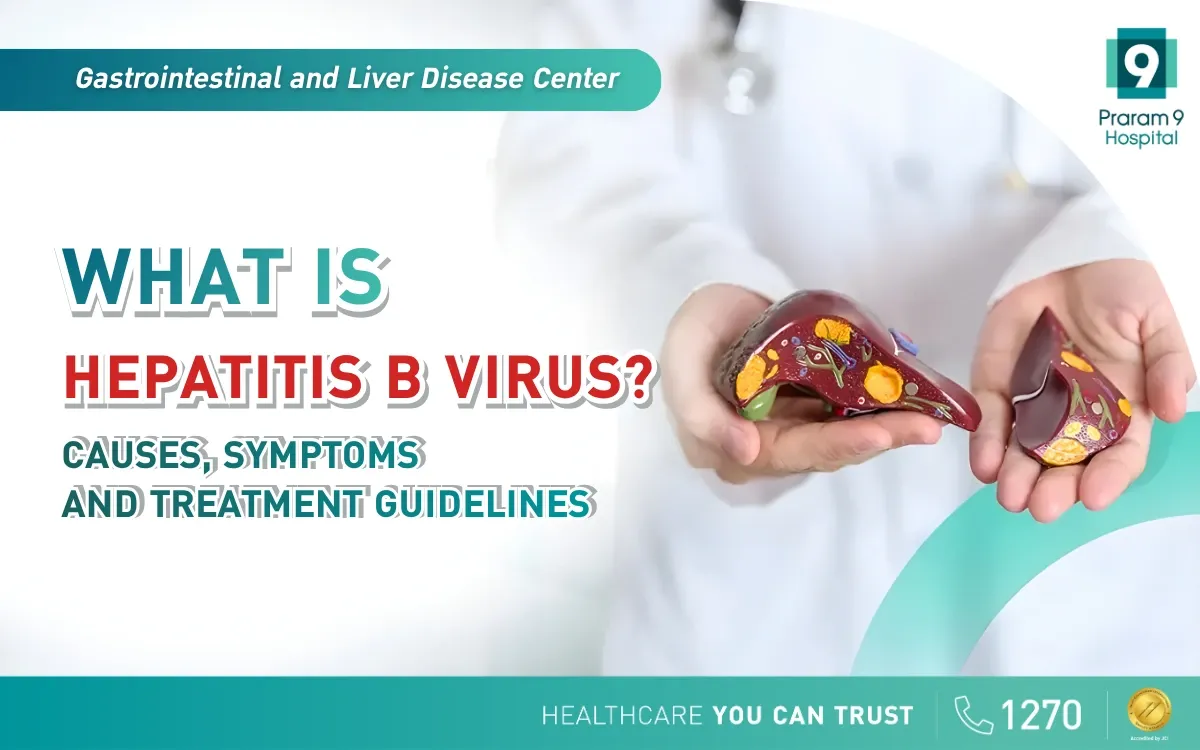
In the present world where diseases can occur easily and spread rapidly, “hepatitis B virus disease” is one of the important and concerning health problems. The cause of this disease comes from viral infection that damages liver health, which can lead to acute or chronic symptoms, and if not properly and timely treated, may lead to more severe conditions such as cirrhosis or liver cancer.
Let us understand hepatitis B virus—what this disease is, what causes it, as well as treatment approaches, and recommendations for hepatitis B vaccination to prevent the disease.
Key Takeaways
- Hepatitis B virus (HBV) is a pathogen that damages liver cells and is the starting point of serious dangerous diseases such as cirrhosis and liver cancer.
- Hepatitis B virus disease is transmitted through contact with blood or secretions from infected individuals, such as sharing needles, sexual intercourse, and mother-to-child transmission.
- Prevention of hepatitis B virus can be done by completing 3 doses of vaccination, which is the most effective prevention method and provides long-lasting immunity.
What is Hepatitis B Virus?
Hepatitis B (Hepatitis B) is a condition of liver infection caused by a type of virus called “Hepatitis B Virus” (HBV), which destroys liver cells. This infection is the starting point of serious dangerous liver diseases such as liver cancer, cirrhosis, and liver failure.
How is Hepatitis B Virus transmitted? HBV can spread in many ways through contact with blood or secretions of an infected person, such as sharing needles, sexual intercourse, or transmission from mother to child during childbirth, which in Thailand is often found that infection occurs from carrier mothers.
Hepatitis B virus can be both acute and chronic. Acute hepatitis B symptoms include nausea, vomiting, and jaundice. Chronic cases may show no symptoms, but the virus continuously damages the liver, leading to the risk of cirrhosis or liver cancer in the long term.
Finding the Causes of Hepatitis B Virus: What causes it
Hepatitis B virus occurs from main causes as follows:
- Contact with bodily fluids from infected persons, such as blood, semen, secretions, or lymph
- Unprotected sexual intercourse, especially if there is contact with blood or secretions
- Sharing items with others, such as syringes (often found among drug users), toothbrushes, or razors that may be contaminated with blood
- Transmission from an infected mother to the fetus or during childbirth
What are the symptoms of Hepatitis B Virus?
Symptoms of hepatitis B virus after receiving the virus can be divided into two forms as follows:
- Acute hepatitis B, which often occurs in older children and adults. Patients will begin to have the following symptoms:
- Flu-like symptoms such as fatigue, nausea, vomiting, and weight loss
- May feel fullness under the right rib cage from an enlarged liver
- Dark-colored urine and yellow eyes (jaundice)
These symptoms will gradually improve and disappear on their own within 2–3 weeks, with most bodies able to eliminate the virus successfully and create immunity to prevent reinfection later.
- Chronic infection, hepatitis B virus that occurs in a small number of older children and adults (approximately 1–5%) who cannot eliminate the virus from the body. At this stage, there are usually no symptoms, although the virus continues to damage the liver. If the liver is continuously inflamed, it will cause liver cells to die and increase fibrosis until it becomes cirrhosis, and there is also a high risk of developing liver cancer in the future.
Who should receive the Hepatitis B vaccine
Hepatitis B vaccine (Hepatitis B Vaccine: HBV) is the most effective prevention method. It helps stimulate the body to create immunity against hepatitis B virus. It can be started from birth. A total of 3 doses are given: dose 1, dose 2 (1 month after the first dose), and dose 3 (5 months after the second dose). Those who should receive the vaccine include:
- Those without immunity, such as newborns, children, and adults who have never been vaccinated at birth
- Those who have never been infected and do not yet have immunity to the virus
- Those who are in close contact with chronic hepatitis B patients, such as family members, medical personnel, and those working in healthcare facilities
- Those who need to travel to areas where the disease is endemic
- Those with risky sexual behaviors, such as having multiple partners or same-sex intercourse
- Those who use injectable drugs
- Patients with chronic liver disease
- Patients with chronic kidney failure receiving dialysis
- Those who must frequently be exposed to blood, such as medical personnel
Treatment of Hepatitis B Virus
Can hepatitis B virus be cured? Treatment of hepatitis B virus focuses on both managing the infection and preventing possible complications such as cirrhosis or liver cancer. Treatment methods can be divided into two main parts according to the stage of symptoms as follows:
Treatment in the acute stage
Most patients with acute hepatitis B do not need antiviral medication because the body’s immune system can eliminate the virus by itself, which may take several months. Treatment during this period therefore focuses on symptom relief and helping the body recover, such as providing fluid replacement and adequate rest.
However, if symptoms are very severe, the doctor may consider giving antiviral drugs or hospitalization may be necessary.
Treatment in the chronic stage
For those with chronic hepatitis B, treatment focuses on the use of antiviral drugs to reduce viral replication in the body, reduce inflammation and liver damage, and reduce the risk of dangerous complications such as cirrhosis or liver cancer. Drug treatment in the chronic stage usually takes several years or lifelong. The doctor will monitor regularly to evaluate results and adjust the treatment plan.
One of the important risks in treating chronic disease is viral mutation, which may lead to resistance to some antiviral drugs. This mutation makes previously effective drugs ineffective, therefore close monitoring is required and treatment plans must be changed when necessary.
Prevention of Hepatitis B Virus
Is hepatitis B virus dangerous? Can it be prevented? Prevention of hepatitis B virus focuses on building immunity and modifying risk behaviors. Hepatitis B virus disease can be prevented as follows:
Hepatitis B vaccination
Hepatitis B vaccination is considered the most effective method for creating immunity against the virus, preventing infection in the long term. It can be given from newborns to adults. Normally, it is given in 3 doses. The schedule differs according to age as follows:
- Newborns receive the vaccine on the first day or shortly after birth, followed by the second and third doses
- Adults start with the first dose at the scheduled time, then receive the second dose after 1 month, and the third dose after 6 months from the first dose
Control of risk behaviors
Modifying behaviors that risk infection is another important approach in preventing hepatitis B virus disease. Risk behaviors that involve contact with blood or secretions of infected persons should be avoided, such as:
- Avoid sharing needles or personal items with others
- Have safe sexual intercourse, use condoms every time
- Avoid drug use
- Abstain from alcoholic beverages for good liver health
Regular liver health check-ups
Regular liver health check-ups in those who are not infected with hepatitis B virus help reduce risk and help plan health to prevent infection, such as planning vaccination, and also help to know overall liver health.
For regular liver health check-ups in those infected with hepatitis virus, it helps to know the stage of the disease and severity of the disease, which is useful for planning treatment, evaluating treatment, and helping to plan self-care to control the disease from becoming more severe.
Doctors may recommend tests such as:
- ALT (Alanine Aminotransferase) test helps check liver integrity. If the level is too high, it may be a sign of abnormal liver function from hepatitis B virus
- HBsAg (Hepatitis B Surface Antigen) test is used to confirm whether there is hepatitis B virus infection in the body
- Hepatitis B viral load (HBV DNA) test helps assess the amount of hepatitis B virus in the body, which is used to monitor severity and changes in viral levels
Hepatitis B Virus: A dangerous disease that may lead to liver cancer
Hepatitis B virus is a dangerous pathogen that can lead to cirrhosis and liver cancer. The best prevention is complete vaccination with 3 doses from childhood and avoiding risk behaviors such as sharing needles and unprotected sexual intercourse. For those already infected, treatment with antiviral drugs and regular liver health check-ups are key to controlling the disease and reducing the risk of severe long-term complications.
At the Gastrointestinal and Liver Center, Praram 9 Hospital provides comprehensive services for hepatitis B virus and other liver diseases. A team of specialist doctors is ready to provide consultation and blood testing to assess infection (HBsAg) and enhance immunity through vaccination planning, including treatment of hepatitis B virus with antiviral drugs and monitoring disease severity with modern equipment to prevent cirrhosis and liver cancer that may occur.
For more information
Facebook : Praram 9 Hospital International & Expats
Line : @Praram9Hospital
Tel. 1270
Frequently Asked Questions about Hepatitis B Virus
1. How can doctors diagnose hepatitis B virus?
Doctors diagnose hepatitis B virus by blood tests for infection (HBsAg) and liver function tests (AST/ALT enzyme levels). If infection is found, further tests will be performed to assess disease severity, such as viral load (HBV DNA), and ultrasound of the liver may be used to assess damage.
2. Can hepatitis B virus mutate?
Hepatitis B virus can mutate. The structure of the virus may change from irregular intake of antiviral drugs or long-term drug use.
Hepatitis B virus mutation is an important problem that causes resistance to antiviral drugs, making treatment more difficult and complex. Therefore, doctors must closely monitor and adjust treatment plans when drug resistance or mutation is detected.
3. Is hepatitis B virus a serious disease?
Hepatitis B virus is a serious silent threat to the liver because it is a major cause leading to cirrhosis and liver cancer. Most infected individuals often do not show symptoms, making them unaware that they have the disease until it progresses, especially in infants infected from the mother, who have a very high risk of developing chronic infection.
References
Mayo Clinic Staff. (2024, October 4). Hepatitis B. Mayo Clinic. https://www.mayoclinic.org/diseases-conditions/hepatitis-b/symptoms-causes/syc-20366802
Hepatitis B. (2025, July 23). World Health Organization. https://www.who.int/news-room/fact-sheets/detail/hepatitis-b
Hepatitis B. (2025, February 8). Cleveland Clinic. https://my.clevelandclinic.org/health/diseases/4246-hepatitis-b