Health Articles
Knowledge
Intestinal obstruction, a life-threatening condition that many may not expect
PHATCHAYAMON SHINRATTANAROJ,M.D.
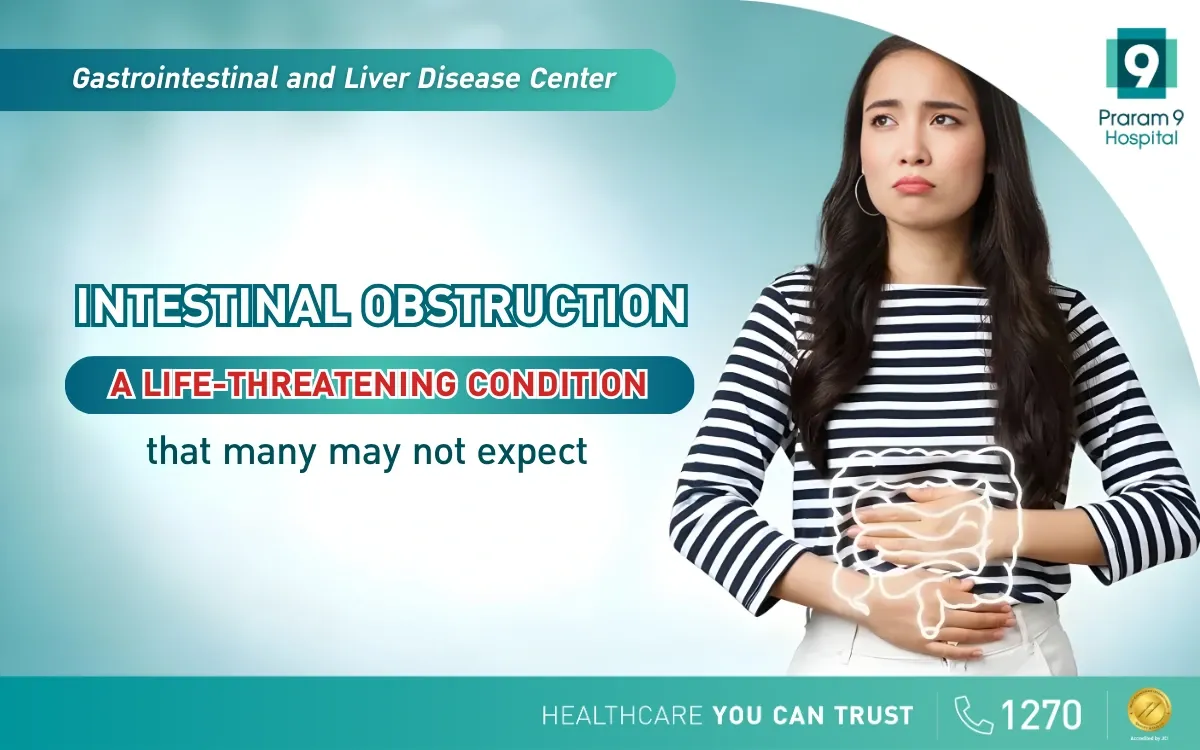
Many people may have experienced difficulty passing stool, inability to pass gas, and a feeling of abdominal discomfort, which normally we think of as general constipation and do not pay much attention to the symptoms that occur. However, another condition that has symptoms similar to constipation, “intestinal obstruction,” which seems not serious, but in fact may be life-threatening if not treated appropriately.
If there is constipation together with abdominal pain, tenderness when pressing the abdomen, including nausea and vomiting, it is recommended to see a doctor promptly for diagnosis and immediate treatment.
Key Takeaways
- Intestinal obstruction is a condition in which the intestine is blocked by an obstruction, or the intestine cannot contract normally, causing waste to accumulate inside the intestine and unable to be excreted.
- The accumulation of waste inside the intestine may cause the body to be unable to absorb nutrients and water, resulting in dehydration, or if it obstructs blood circulation, it may cause intestinal ischemia and intestinal necrosis.
- Treatment of intestinal obstruction depends on the cause of the obstruction and the severity of the symptoms, with treatment approaches ranging from tube feeding, administration of medications to stimulate bowel movement, and surgery.
- If symptoms of constipation, severe abdominal pain, nausea, and vomiting are found, seek medical attention promptly, as it may be a sign of intestinal obstruction that must be urgently corrected.
What is intestinal obstruction, and why can it be life-threatening?
Intestinal obstruction is a condition in which the intestine is blocked by an obstruction, or occurs from a condition in which the intestine cannot contract and function normally, causing waste including food, various fluids, and gas to be retained inside the intestine, which may result in severe life-threatening complications.
Intestinal obstruction results in severe abdominal pain, inability to expel waste or gas retained inside the intestine, leading to severe complications such as dehydration and severe electrolyte imbalance in the blood, intestinal perforation, intestinal ischemia, which may result in severe infection in the body leading to death.
What causes intestinal obstruction?
The causes and risk factors of intestinal obstruction can be divided into 2 types according to the mechanism of disease as follows:
Caused by obstruction or blockage within the intestine
- Cancer or tumors both inside and outside the intestine
- Foreign bodies retained inside the intestine
- Gallstones that have passed into the intestine
- Intestinal narrowing from scarring or chronic inflammation in the intestine
- Abdominal adhesions
- Intussusception
- Hernia
Caused by non-functioning intestine (Ileus and Pseudo-obstruction)
- Abnormal electrolyte levels in the blood
- Hypothyroidism
- Side effects from the use of certain medications or substances
- Congenital intestinal abnormalities
- Postoperative ileus
- Neurological conditions such as Parkinson’s disease
- Severe illness or infection in the body
Warning signs of intestinal obstruction that should not be ignored
Patients with intestinal obstruction may experience the following warning signs:
- Severe abdominal pain
- Small, very narrow stools
- Blood in the stool
- Inability to pass stool or gas at all
- Abdominal distension, fullness, tenderness on palpation
- Nausea, vomiting
If there is constipation for a prolonged period together with severe abdominal pain, nausea, and vomiting, these symptoms are all signs of intestinal obstruction. Seek medical attention promptly for treatment before the condition becomes more severe.
Diagnosis of intestinal obstruction
- History taking and symptom assessment of the patient together with physical examination by a physician.
- Blood tests to check indicators of infection, electrolyte levels, and abnormal fluid status.
- X-ray as an initial screening to assess the pattern of intestinal obstruction.
- Computed tomography (CT scan) to assess the characteristics of the intestine, location of obstruction, and severity of obstruction, including identifying the cause of intestinal obstruction.
- Endoscopy to determine the cause of obstruction within the intestine, including correcting the cause of obstruction in some cases.
Treatment of intestinal obstruction
Treatment of intestinal obstruction depends on the location of obstruction, the cause of obstruction, and the severity of obstruction.
- Monitoring and correcting dehydration, electrolyte imbalance in the blood, including monitoring for infection.
- Insertion of a tube to drain retained contents and gas inside the stomach or intestine.
- Administration of medications to stimulate intestinal function in some cases.
- Correction of obstruction by surgery or endoscopy to place a stent or use a balloon to dilate the narrowed segment.
Intestinal obstruction, a condition that should not be ignored; promptly find the cause and receive appropriate treatment
Intestinal obstruction may have symptoms similar to constipation, causing many people to not notice the abnormality. However, if abdominal pain is unusually severe, do not ignore it, as it may be a sign of intestinal obstruction that must be treated urgently before it becomes life-threatening.
Treat intestinal obstruction with small incisions and fast recovery at the Digestive and Liver Center, Praram 9 Hospital. We are ready to treat patients with specialist physicians experienced in endoscopic surgery and modern medical technology, helping increase surgical precision and allowing patients to return to daily life faster than before.
For more information
Facebook : Praram 9 Hospital International & Expats
Line : @Praram9Hospital
Tel. 1270
Frequently asked questions about intestinal obstruction
Can intestinal obstruction be prevented?
Intestinal obstruction can be prevented by reducing risk factors that cause masses or cancer in the intestine, such as eating a high-fiber diet, drinking sufficient water, avoiding smoking, exercising regularly, including undergoing cancer screening.
In cases of previous abdominal surgery, which is a risk factor for abdominal adhesions, monitoring is necessary. If abnormal symptoms are found, a doctor should be consulted promptly.
What complications may occur from intestinal obstruction?
Complications that may occur from intestinal obstruction include dehydration, electrolyte imbalance, intestinal perforation, intestinal ischemia, intestinal tissue necrosis, organ failure, bloodstream infection, kidney failure, and death.
References
Bowel Obstruction Causes And Symptoms. (n.d.). Bladder & Bowel Community. https://www.bladderandbowel.org/bowel/bowel-problems/bowel-obstruction-small-bowel-obstruction/
Crawford, J. (2024, January 26). What to know about bowel obstruction and blockage. MedicalNewsToday. https://www.medicalnewstoday.com/articles/324037
Moore, K. (2024, July 16). Bowel Obstruction and Blockage. Healthline. https://www.healthline.com/health/intestinal-obstruction