Health Articles
Knowledge
Irritable Bowel Syndrome: Causes of chronic abdominal pain, abdominal bloating, and abnormal bowel movements
RAPEEPUN KALAYAVINAI, M.D.
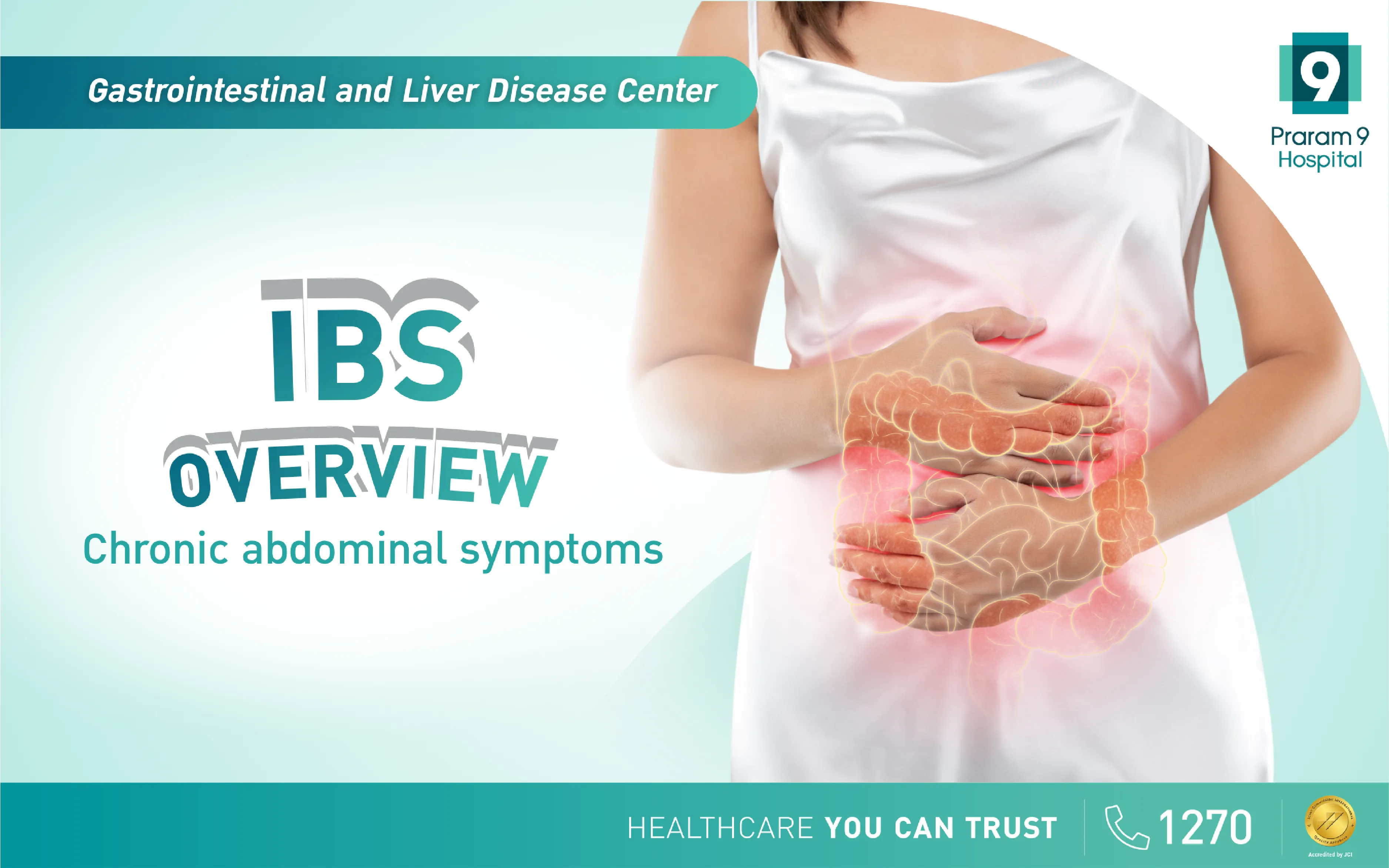
Irritable bowel syndrome (irritable bowel syndrome; IBS) is a disease of the gastrointestinal system that is found in as many as 10–20% of the global population. However, it is found that only 15% of those with symptoms of irritable bowel syndrome consult a doctor and undergo examination, resulting in not receiving appropriate treatment.
This disease is a chronic condition. Patients will have symptoms continuously, causing irritation and annoyance, affecting daily life and work. Importantly, irritable bowel syndrome may have symptoms similar to some serious diseases, such as colon cancer. Therefore, patients should consult a doctor for diagnosis and receive appropriate treatment.
What is irritable bowel syndrome or IBS?
Irritable bowel syndrome (irritable bowel syndrome; IBS) is a chronic abnormal function of the intestines, causing excessive intestinal contractions, resulting in symptoms and affecting the patient’s quality of daily life. It is often found from a young age to middle age and is found more in women than in men. The symptoms of irritable bowel syndrome consist of the main symptoms, which are chronic abdominal pain or abdominal discomfort, with characteristics related to changes in bowel movements, which cannot be explained by other causes.
What are the symptoms of irritable bowel syndrome?
Symptoms of irritable bowel syndrome are often found from a young age and are found more in women than in men. The symptoms found include:
- Abdominal pain: abdominal pain at least 1 time per week over a period of 3 months, often cramping in nature or may be other types such as dull, heavy, or uncomfortable. It is often felt in the lower left abdomen or may occur in other locations. The severity and location of pain vary in each person. In some people, it becomes more severe when stressed or after eating certain foods. Some people have more pain during menstruation. Some people improve after defecation.
- Abnormal bowel movement pattern: considered a characteristic that may help in diagnosing this disease, such as having diarrhea, constipation, or alternating diarrhea and constipation. This disease may have symptoms divided into diarrhea predominant IBS or constipation dominant IBS.
- Diarrhea: symptoms often occur during the daytime or working hours and often in the morning or after eating. Diarrhea in this condition is often accompanied by urgency to go to the bathroom to defecate, often feeling incomplete evacuation, and about half of patients have mucus during defecation.
- Constipation: may occur for days or months. Stool has a hard pellet-like appearance. Some people may feel incomplete evacuation, resulting in straining or sitting for a long time without passing stool, causing some people to need to use laxatives or enemas frequently.
- Other gastrointestinal symptoms: such as alternating diarrhea and constipation, bloating, excessive gas, belching, chest tightness or burning, difficulty swallowing, early satiety, or nausea.
- Other symptoms not in the gastrointestinal group: such as frequent urination, menstrual pain, or sexual problems.
Causes of irritable bowel syndrome
Irritable bowel syndrome is not a serious disease and is not caused by a serious disease. However, at present, the exact cause of this disease cannot be clearly identified, but there are assumptions that it is caused by the following:
- Abnormal contraction of the large intestine, or may be called spasm, causing abnormal intestinal contractions (spastic colon), resulting in severe contractions leading to intestinal cramping pain.
- Food sensitivity or inability to digest certain foods well is a common cause. It may be due to food allergy or food sensitivity. Recording food intake may help identify the food that causes allergy.
- Hypersensitivity of the intestines, which is an abnormality without any disease or abnormal contraction, but the intestines are overly sensitive.
- Stress or psychiatric conditions, because stress and anxiety make the intestines more sensitive, leading to pain.
- Caused by infections in the gastrointestinal tract and other infections, often found after infection such as typhoid or bacteria causing food poisoning, but the mechanism causing this condition is still unclear.
- Caused by the use of certain medications.
Can irritable bowel syndrome be cured?
Treatment of irritable bowel syndrome can be done in many ways, but most are symptomatic treatments, resulting in temporary relief. There is still no method for complete cure. Current treatment approaches include:
- Medication treatment: multiple groups of drugs may be required because there are many symptom groups and the response to medication differs in each person. Therefore, sometimes medication adjustment must be done many times. The doctor must monitor treatment and inquire about symptoms in detail in order to plan appropriate treatment.
- Follow-up of treatment: in the initial phase, the doctor may need to closely monitor treatment. Patients must describe symptoms, lifestyle habits, diet, including all history that may affect the intestines, which will make it easier for the doctor to plan treatment. For example, some people may be allergic to certain foods or have problems digesting dairy (lactose intolerance). There are reports that stress and depression are also causes of symptoms of irritable bowel syndrome. Therefore, patients should keep a detailed record of symptoms and these matters for treatment benefit.
- Dietary habit adjustment: it is assumed that symptoms in some patients are caused by digestive problems or food allergies. Therefore, there are recommendations to avoid foods that may be causes or foods that cause allergy. Doctors will recommend trying to avoid certain groups of foods including:
- Dairy products, because people with problems digesting dairy are commonly found (symptoms are diarrhea or bloating after consuming milk).
- Foods that cause gas in the abdomen such as dried beans, cauliflower, broccoli, cabbage, onions, carrots, raisins, bananas, apricots, prunes, bean sprouts, or wheat flour. These foods may cause cramping pain.
- Hard-to-digest foods such as some vegetables, some meats, fatty foods, fried foods.
Doctors often recommend choosing a low FODMAP diet (a group of foods that do not promote or minimally promote the growth of bacteria in the intestines), which can help reduce symptoms of irritable bowel syndrome. However, it depends on each person. Some people may not be related to any food at all. Therefore, detailed recording of each meal along with recording symptoms may help identify foods that cause symptoms more clearly.
Doctors may recommend increasing intake of fiber, which often gives good results in patients with constipation-type abdominal pain, including in some patients with diarrhea. Sometimes medical fiber may be considered. It is believed that fiber improves intestinal contraction.
Reducing stress or treating depression: stress, anxiety, and depression may worsen symptoms of irritable bowel syndrome. Consulting a psychiatrist to reduce such psychological problems can improve symptoms of this disease.
Exercise: regular exercise helps improve intestinal function.
Irritable bowel syndrome cannot be diagnosed by a single test. Therefore, multiple examinations are required for diagnosis and to differentiate from other gastrointestinal diseases such as colon cancer or inflammatory bowel disease.
Doctors will take history and perform physical examination, asking about symptom characteristics, duration, severity, symptoms related to food or medication, including stress problems and psychiatric conditions.
Other examinations include blood tests, stool examination, colonoscopy or sigmoidoscopy to differentiate irritable bowel syndrome from other diseases. Colonoscopy is often performed in people suspected of having colon cancer or in people over 40 years old who have increased risk of colon cancer.
Read more about “colorectal cancer screening”
Summary
Irritable bowel syndrome or IBS, although not a serious disease, is found in as many as 10–20% of the global population, and most do not consult a doctor, resulting in not receiving appropriate treatment. This disease often has recurrent symptoms, causing irritation and annoyance, affecting daily life and work.
In addition, symptoms of irritable bowel syndrome may be similar to symptoms of some serious diseases such as colon cancer. Therefore, if there are symptoms as mentioned above, a doctor should be consulted for diagnosis and appropriate treatment for quality of life and good health.
Consult a specialist doctor with Praram 9 V. Consult a doctor anywhere via video call (Telemedicine).