Health Articles
Knowledge
Liver Cancer: A Common Cause of Death in Thai People – Know Before the Danger
RAPEEPUN KALAYAVINAI, M.D.
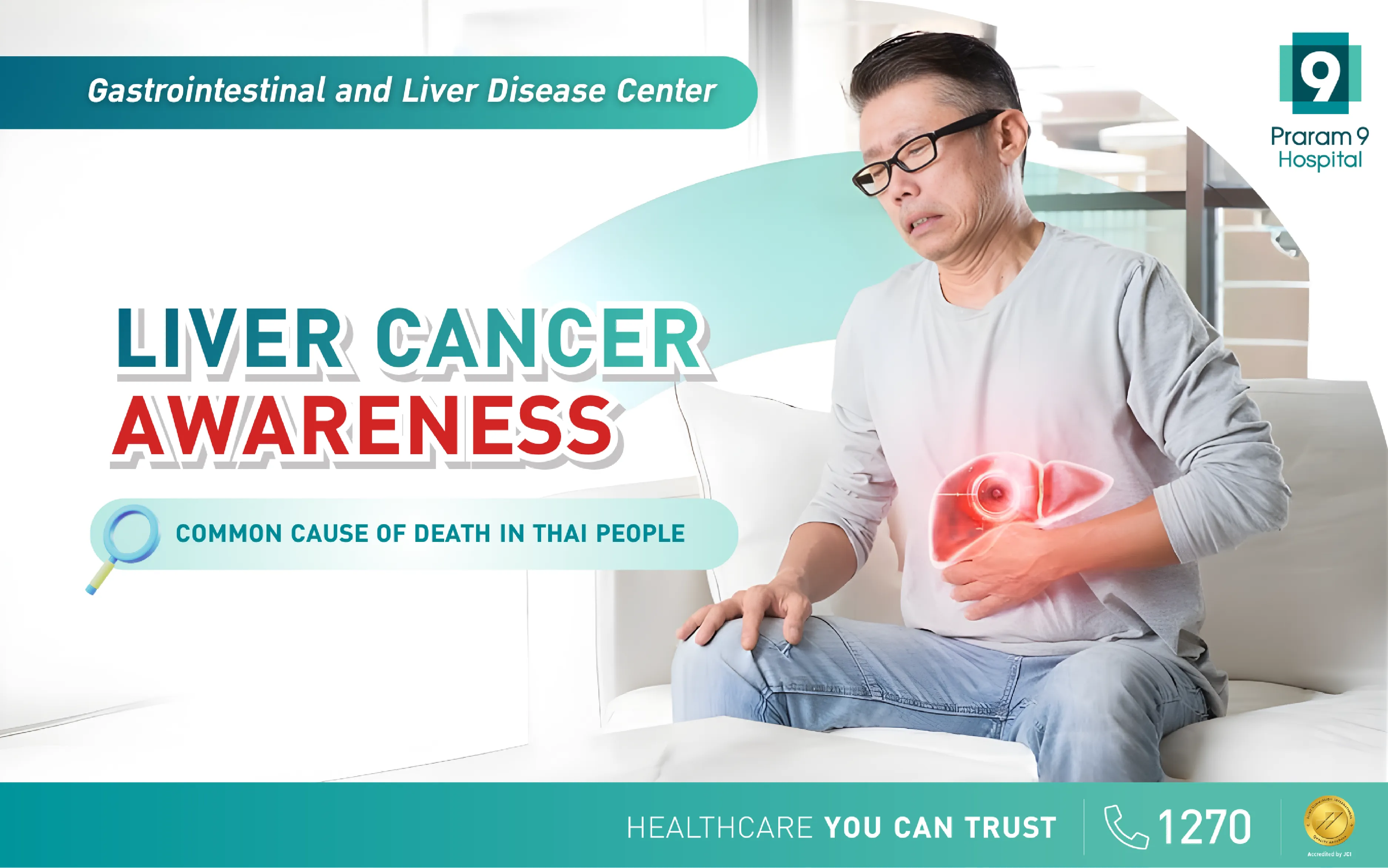
According to data from the Ministry of Public Health, “liver cancer” is the leading cause of death among Thai people. Meanwhile, information from the World Cancer Research Fund indicates that in 2022, Thailand had the fourth highest liver cancer mortality rate in the world. The major issue is that most patients are usually diagnosed at the late stage and cannot be completely cured. Therefore, liver cancer screening is extremely important, because if detected at an early stage, it can increase the chances of complete treatment or at least improve the patient’s quality of life and longevity.
Key Takeaways
- Liver cancer is a common type of cancer and is the leading cause of death among Thai people.
- Risk factors that may cause liver cancer include hepatitis B and C virus infection, cirrhosis, fatty liver disease, alcohol consumption, smoking, or exposure to Aflatoxin.
- Early-stage liver cancer usually does not show symptoms, causing many patients to be diagnosed at an advanced stage, which makes treatment more difficult.
- Annual health check-ups and hepatitis B vaccination help reduce the risk of liver cancer. Early detection increases the chances of complete treatment and maintaining quality of life.
Understanding ‘Liver Cancer’: The Silent Danger Number One That Thai People Should Be Careful Of
Liver cancer, or Hepatocellular Carcinoma, is cancer that occurs in the liver, caused by liver cells that undergo mutations and divide continuously without control. These cells multiply to form malignant tumors in the liver and can spread to other organs in the body.
In Thailand, liver cancer is one of the most common cancers and is a leading cause of death, particularly in men, who are much more likely to develop the disease than women. The danger of the disease usually lies in late detection, so when diagnosed, many patients are already in the advanced stage, which is difficult to cure.
What Causes Liver Cancer?
Normal cells in the body have a process to control cell growth. However, mutated cells lose this control and divide abnormally, forming malignant tumors that can invade or spread to other organs. Several factors can lead to liver cancer, as follows:
- Chronic hepatitis B and C virus infection, a major cause commonly found in Thailand.
- Cirrhosis from various causes, such as regular alcohol consumption or liver damage from autoimmune disorders.
- Fatty liver disease, especially in cases of obesity, diabetes, or high blood lipid levels.
- Smoking.
- Exposure to certain toxins, such as Aflatoxin in fungi.
- Genetics.
- Male sex.
Symptoms of Liver Cancer: Watch Early Before It’s Too Late
Liver cancer is dangerous because, in the early stage, patients often show no abnormal symptoms or do not notice them, especially those who already have liver disease. As the disease progresses, liver cancer patients may experience the following symptoms:
- Fluid in the abdomen or abdominal enlargement
- Fullness, abdominal pain, or bloating
- Palpable mass in the abdomen
- Dark urine
- Weight loss, loss of appetite, fatigue, weakness
- Diarrhea or black stools
- Numbness or cramps in hands and feet
- Low blood sugar, sweating, fainting
- Skin or muscle inflammation
- Jaundice, itching
- Bone pain
- Internal bleeding, anemia
Who is at Risk for Liver Cancer?
Those at risk for liver cancer include:
- Individuals with relatives who have liver disease or family history of liver cancer
- Individuals with chronic hepatitis B or C
- Individuals with iron overload in the liver (Hemochromatosis)
- Individuals with genetic disorders such as Tyrosinemia
- Individuals with cirrhosis
- Individuals exposed to Aflatoxin from fungi, commonly found in stored crushed peanuts or old chili powder
- Individuals with liver inflammation due to fatty liver disease
Diagnosis of Liver Cancer
Whether showing abnormal symptoms or at risk for liver cancer, screening and diagnosis should be performed using the following methods:
- Medical history and physical examination by a physician
- Blood tests to assess liver function, measure liver cancer marker Alpha-Fetoprotein (AFP), and detect hepatitis viruses
- Radiological examinations such as ultrasound, CT scan, or MRI
- Biopsy for cancer examination
Treatment Options for Liver Cancer
Treatment depends on the severity or stage of the disease and the patient’s overall condition. Doctors often use multiple methods together to control the spread of cancer cells, as follows:
Hepatic Resection
Partial liver resection is the most effective liver cancer treatment, offering higher chances of complete cure compared to other methods. It is suitable for early-stage patients with small tumors that have not spread, normal liver function, and overall good health.
Thermal Ablation
Thermal ablation destroys liver cancer cells using heat. It is suitable for early-stage patients with small tumors. The treatment results are nearly comparable to liver surgery, but recurrence risk is slightly higher. It is an option for patients with impaired liver function or poor overall health unsuitable for surgery.
Liver Transplantation
Liver transplantation involves removing the diseased liver and replacing it with a new one. Limitations include finding a matching donor liver, risk of organ rejection, and lifelong immunosuppressive drugs affecting long-term immunity. It is used for patients with non-metastatic liver cancer and concurrent cirrhosis.
Transarterial Chemoembolization (TACE)
TACE delivers chemotherapy directly to the tumor or its supplying blood vessel while blocking blood flow, causing the tumor to die. It is chosen when liver cancer has begun to spread or surgery is not feasible due to tumor location near large vessels, cirrhosis, or high surgical risk.
Systemic Chemotherapy
Systemic chemotherapy, including targeted therapy or immunotherapy, specifically attacks cancer cells to destroy or inhibit their division. It is available in injectable and oral forms.
Radiotherapy
Radiotherapy destroys liver cancer cells using focused radiation, without affecting surrounding organs or causing side effects.
Palliative Care
Palliative care does not aim to cure the disease but alleviates pain from liver cancer, improving the patient’s quality of life.
Can Liver Cancer Be Prevented?
Liver cancer arises from multiple factors but can be prevented by maintaining health and avoiding risk behaviors:
- Avoid alcohol and smoking
- Be cautious with foods potentially contaminated with Aflatoxin, such as peanuts, dried chili, or moldy onions
- Control diet, reduce high-fat and high-starch foods
- Exercise regularly
- Avoid hepatitis virus infection, do not share personal items, and receive hepatitis vaccination
- Undergo liver cancer screening, especially for high-risk groups such as those with cirrhosis, hepatitis virus infection, or family history of liver cancer
Liver Cancer: Early Awareness Increases Chances of Cure
Liver cancer is common and has a high mortality rate because most cases are detected at an advanced stage. However, good hygiene, regular annual health check-ups, and hepatitis B vaccination can reduce risk. Early detection and timely treatment provide a chance for complete cure and the restoration of a good quality of life.
At Praram 9 Hospital, we care for the health of Thai people, providing services with attention to detail, offering standard care at every step, from diagnosis to personalized treatment, ensuring comprehensive care for every patient.
For more information
Facebook : Praram 9 Hospital International & Expats
Line : @Praram9Hospital
Tel. 1270
References
Asafo-Agyei KO, Samant H. Hepatocellular Carcinoma. [Updated 2023 Jun 12]. In: StatPearls [Internet]. Treasure Island (FL): StatPearls Publishing; 2025 Jan-. Available from: https://www.ncbi.nlm.nih.gov/books/NBK559177/
Hepatocellular Carcinoma (HCC). (2024, February 13). Cleveland Clinic. https://my.clevelandclinic.org/health/diseases/21709-hepatocellular-carcinoma-hcc
Llovet, J.M., Kelley, R.K., Villanueva, A. et al. (2021). Hepatocellular carcinoma. Nature Reviews Disease Primers. https://doi.org/10.1038/s41572-020-00240-3