Health Articles
Knowledge
Is red eye dangerous? Which types of red eye symptoms require urgent medical attention
CHAKRAPAN SUTATVORAVUT,M.D.
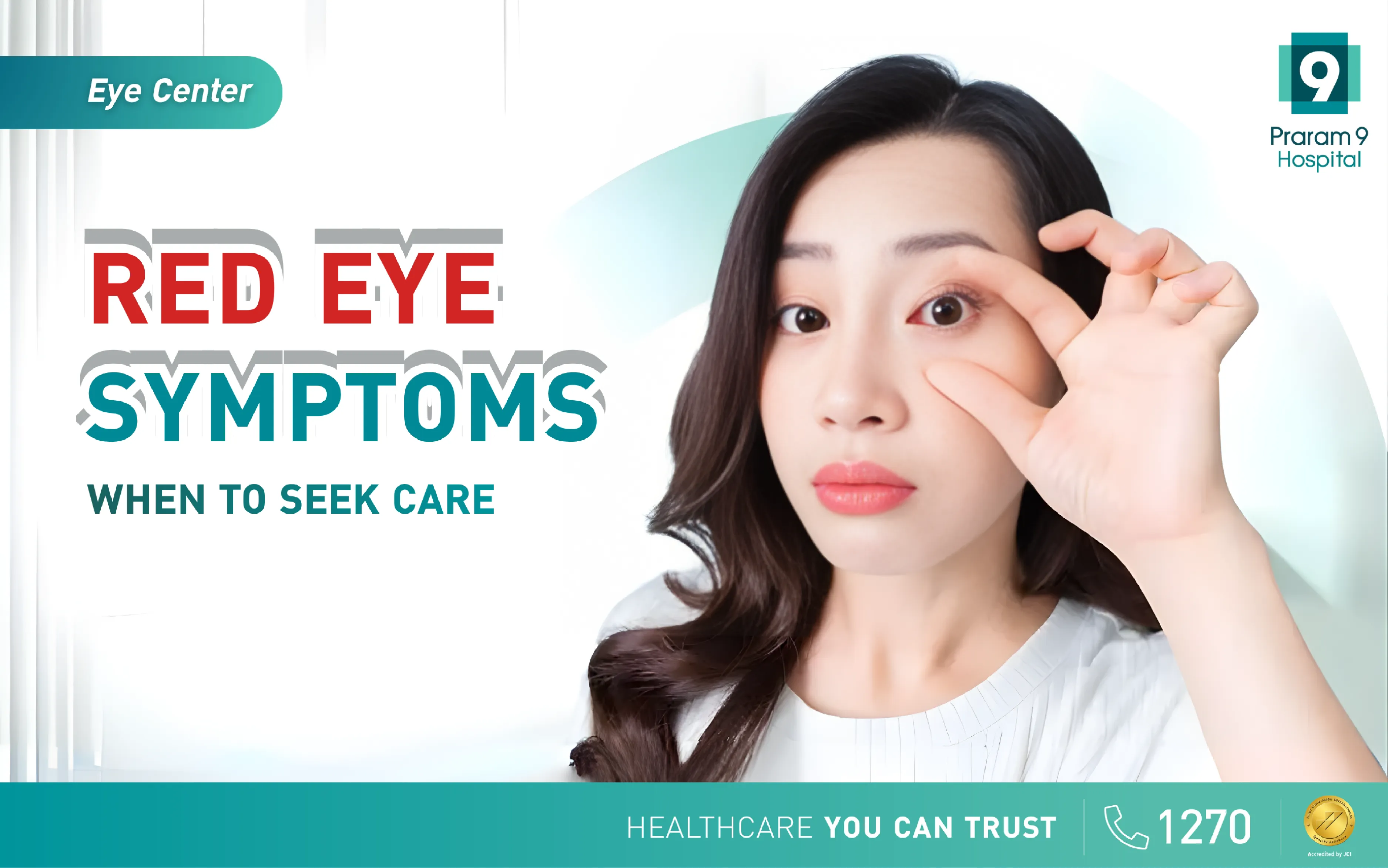
Red eye is one of the common eye diseases found in both children and adults. It often occurs acutely and causes discomfort to patients due to symptoms such as red eye, eye irritation, tearing, or burning sensation, affecting daily life.
Many people may wonder what causes red eye. The main causes are usually viral infection (Adenovirus) or bacterial infection (Bacterial Conjunctivitis), which can spread easily through contact. Some cases may have symptoms of red eye along with itchy eyes or excessive eye discharge. If not properly cared for, it may worsen and risk deeper eye infection.
Key Takeaways
- Red eye can be caused by many factors such as viral infection, bacterial infection, allergies, or irritation. Each type has different characteristics and treatment approaches.
- Red eye can be contagious, especially from viruses and bacteria, through contact with tears, eye discharge, or shared items. Therefore, hands should be washed frequently and eye rubbing should be avoided.
- Treatment of red eye depends on the cause. If caused by a virus, it can resolve on its own within 7–10 days. However, if symptoms do not improve, there is eye pain, or blurred vision, an ophthalmologist should be consulted promptly for appropriate treatment.
Red eye is a sign of abnormality of the eye
Red eye, medically known as ‘Conjunctivitis’, is a condition caused by inflammation of the conjunctiva, which is a thin transparent tissue covering the white part of the eye and the inner eyelids. This results in clearly visible redness, as the small blood vessels in the conjunctiva dilate and appear distinctly red. Red eye can be caused by viral or bacterial infections, or allergic reactions to certain irritants such as dust or smoke.
In some cases, patients with red eye may also have blurred vision, especially if the inflammation spreads to the cornea (Cornea). Therefore, a doctor should diagnose to determine the true cause of red eye and provide appropriate treatment.
What causes red eye? Understand the causes clearly
Red eye can result from many causes, ranging from mild irritation to infection or serious eye disease. Generally, causes of red eye can be divided into 3 main groups: irritation, infection, and eye diseases or complications from other conditions.
Red eye from irritation
One of the common causes of red eye is exposure to stimuli or irritants in daily life, which may cause inflammation of the conjunctiva (Conjunctiva) and result in red eye. The main causes can be summarized as follows:
- Dust, smoke, and air pollution: These irritants can cause inflammation of the conjunctiva, leading to red eye, irritation, tearing, or burning sensation. Symptoms can improve by avoiding triggers and using artificial tears (Artificial Tears) to wash away debris.
- Exposure to chemicals such as cleaning agents or certain sprays: When entering the eye, they may cause severe redness along with burning sensation or blurred vision. The eyes should be rinsed immediately with clean water, and a doctor should be consulted if symptoms do not improve.
- Allergy to cosmetics or products around the eyes: Cosmetics, mascara, or eye creams may cause allergic reactions, resulting in red, itchy, and swollen eyes. Suspected products should be stopped immediately and the eyes cleaned thoroughly.
- Improper use of contact lenses, such as wearing them for too long or improper cleaning, may easily cause irritation and red eye. If symptoms do not improve, use should be stopped and a doctor consulted to determine the cause.
Red eye from infection
Red eye from infection is a common cause and can be divided into 2 main types:
- Viral conjunctivitis (Viral Conjunctivitis): Mostly caused by Adenovirus. Patients will have redness in both eyes, irritation, tearing, and slight clear discharge. This condition spreads easily through contact with contaminated objects or hands. Treatment focuses on supportive care until recovery within a few days.
- Bacterial conjunctivitis (Bacterial Conjunctivitis): There is thick yellow or green discharge, swollen red eyelids, and in some cases eye pain. This type of infection requires treatment by a doctor with antibiotics to control infection and reduce inflammation.
Red eye from eye diseases or complications from other conditions
In addition to irritation and infection, red eye may also be a sign of more complex eye diseases or conditions, such as:
- Chronic dry eye (Dry Eye Syndrome): Causes inflammation of the eye surface, leading to red eye, burning sensation, or a feeling of a foreign body in the eye. Regular use of artificial tears can help relieve symptoms.
- Allergic conjunctivitis (Allergic Conjunctivitis): Caused by allergies to pollen or animal hair, resulting in red, itchy eyes and excessive tearing. Some cases also have sneezing or nasal congestion. Antihistamines (Antihistamine) can help reduce symptoms.
- Keratitis (Keratitis): A dangerous condition involving inflammation of the cornea, causing red eye, severe eye pain, light sensitivity, and blurred vision. If left untreated, it may cause corneal ulcers or reduced vision leading to blurred vision. Immediate medical treatment is necessary to prevent eye damage.
Observing characteristics of red eye along with other symptoms such as change in discharge color, severe eye pain, or blurred vision should not be overlooked, as it may indicate underlying eye problems. Medical evaluation helps ensure accurate and safe treatment.
Red eye symptoms indicating risk of severe inflammation
When red eye occurs, there are often several abnormal signs that can be observed. Symptoms may vary depending on the cause, such as infection, allergy, or irritation from foreign bodies. Common symptoms in red eye patients include:
- Itchy and irritated eyes: A common symptom where patients feel like there is dust or a foreign body in the eye, leading to frequent rubbing, which may worsen the redness.
- Change in scleral color: A key sign of red eye is that the white part of the eye turns pink or red due to dilation of blood vessels. Some cases may have subconjunctival hemorrhage, appearing as a clearly visible red patch.
- Abnormal tears and discharge: The eyes produce excessive tears or continuous tearing, along with yellow or white sticky discharge, especially after waking up, indicating infection or inflammation.
- Swollen red eyelids: Inflammation may spread to the eyelids, causing swelling, redness, or heaviness, sometimes making it difficult to open the eyes.
- Severe complications: If there is blurred vision, severe eye pain, white opacity on the cornea, or enlarged and tender preauricular lymph nodes, these are symptoms requiring immediate consultation with an ophthalmologist for proper diagnosis and treatment.
How is red eye treated?
When experiencing red eye, proper care is important to prevent worsening or reinfection. Treatment depends on the cause and severity of symptoms. Treatment methods include:
- Symptomatic treatment
If caused by a virus, there is usually no direct antiviral treatment. Doctors may prescribe antibiotic eye drops to prevent secondary bacterial infection and recommend using them only in the affected eye.
- Anti-inflammatory or pain-relieving medication
In some cases of inflamed red eye, doctors may prescribe anti-inflammatory eye drops to reduce swelling and irritation of the conjunctiva and help dilated blood vessels return to normal. If there is pain or burning sensation, paracetamol may be recommended to relieve pain.
- Hygiene during treatment
Use clean cotton soaked in water to wipe discharge, avoid rubbing the eyes, and stop wearing contact lenses until recovery. Adequate rest and avoiding prolonged eye use are recommended.
- Daily remedies for red eye
A clean cloth soaked in cold water can be applied gently to reduce swelling and irritation, or sunglasses can be worn outdoors to protect against dust and sunlight that may worsen symptoms.
Self-care and prevention of red eye
Maintaining eye cleanliness is important to reduce the risk of red eye and help symptoms improve faster. Consistent practice of the following can help relieve and prevent red eye:
- Avoid rubbing or directly touching the eyes, as it may spread infection or increase inflammation in the unaffected eye.
- Wash hands frequently with soap and clean water, especially after touching the face, eyes, or shared objects.
- Use clean cotton or a soft cloth to gently wipe discharge and tears, using a new piece each time to prevent reinfection.
- Apply eye drops only to the affected eye and do not use the same bottle for the other eye.
- Avoid sharing personal items such as towels, pillows, or eye cosmetics.
- Temporarily stop wearing contact lenses and switch to glasses until full recovery.
- Avoid swimming pools or environments with dust, smoke, or chemicals, as they may worsen inflammation.
- Get sufficient rest and reduce prolonged eye use to help faster recovery.
If swelling, redness, or eye pain persists, consult an ophthalmologist for further examination. You can also read other eye-related articles from Praram 9 Hospital, such as stye, to learn how to care for eyes safely from infection or inflammation.
Is red eye dangerous? Can it resolve on its own?
Although most cases of red eye are not severe and can resolve on their own within a few days, some cases may indicate dangerous eye diseases requiring prompt medical attention. If left untreated for too long, it may lead to corneal damage or vision loss.
- Non-dangerous red eye
This type is caused by viral infection or environmental irritation such as dust, smoke, or sunlight. Most symptoms improve within 1–2 weeks with adequate rest, avoiding eye rubbing, and maintaining proper hygiene. In some cases, doctors may prescribe eye drops to reduce inflammation.
- Dangerous red eye
If severe redness is accompanied by eye pain, light sensitivity, blurred vision, or white opacity on the cornea, immediate medical consultation is required, as it may be caused by serious eye conditions such as:
- Keratitis (Keratitis) from bacterial or viral infection, which may cause corneal opacity or perforation.
- Acute angle-closure glaucoma (Acute Angle-closure Glaucoma), causing rapid increase in intraocular pressure, leading to eye pain, blurred vision, and possible permanent vision loss.
- Uveitis (Uveitis), presenting with eye pain, redness, and severe light sensitivity, requiring steroid or immunosuppressive treatment under medical supervision only.
Red eye, a warning sign of conjunctivitis—seek medical care before it worsens
Red eye is a common conjunctival inflammation causing redness, itching, tearing, or sticky discharge. It may be caused by viral infection, which can resolve within 7–10 days, or bacterial infection requiring antibiotic treatment. If symptoms do not improve within 2–3 days, with severe eye pain or blurred vision, consult an ophthalmologist promptly and avoid rubbing the eyes or sharing items to reduce transmission.
The Eye Center at Praram 9 Hospital understands the concern when you experience red eye and other eye problems. We are ready to provide diagnostic and treatment services for red eye with specialized ophthalmologists and modern technology. Regardless of the cause, we offer various treatment approaches to restore your eye health.
For more information
- Facebook: Praram 9 Hospital International & Expats
- Line: @Praram9Hospital
- Tel. 1270
Frequently asked questions about red eye
1. Can red eye resolve on its own? How should it be managed?
Some types of red eye, such as viral conjunctivitis, can resolve on their own within 7–10 days without medication, with adequate rest and proper eye hygiene. However, if caused by bacterial infection and symptoms do not improve within 2–3 days, with severe pain or blurred vision, consult a doctor promptly for diagnosis and appropriate treatment.
2. Is red eye contagious? How is it transmitted?
Red eye can spread easily through contact with tears, discharge, or shared items with infected individuals, such as handkerchiefs and pillows. Therefore, avoid touching the eyes, wash hands frequently, and separate personal items to prevent infection and reduce the spread of red eye.
References
Muhammad F. Hashmi, Bharat Gurnani, Scarlet Benson. (2024, January 26). Conjunctivitis. National Institutes of Health. https://www.ncbi.nlm.nih.gov/books/NBK541034/
(n.d.). Pink eye (conjunctivitis) symptoms & treatment. | Aurora Health Care. Aurora Health Care. https://www.aurorahealthcare.org/services/eye-care/pink-eye-conjunctivitis
Frances Gatta, Amy Gopal. (2024, April 09). Pink Eye: What You Should Know. Web MD. https://www.webmd.com/eye-health/eye-health-conjunctivitis