Health Articles
Knowledge
What is pterygium? What causes it and how can it be treated?
DISAKORN KOCHAKRAI,M.D.
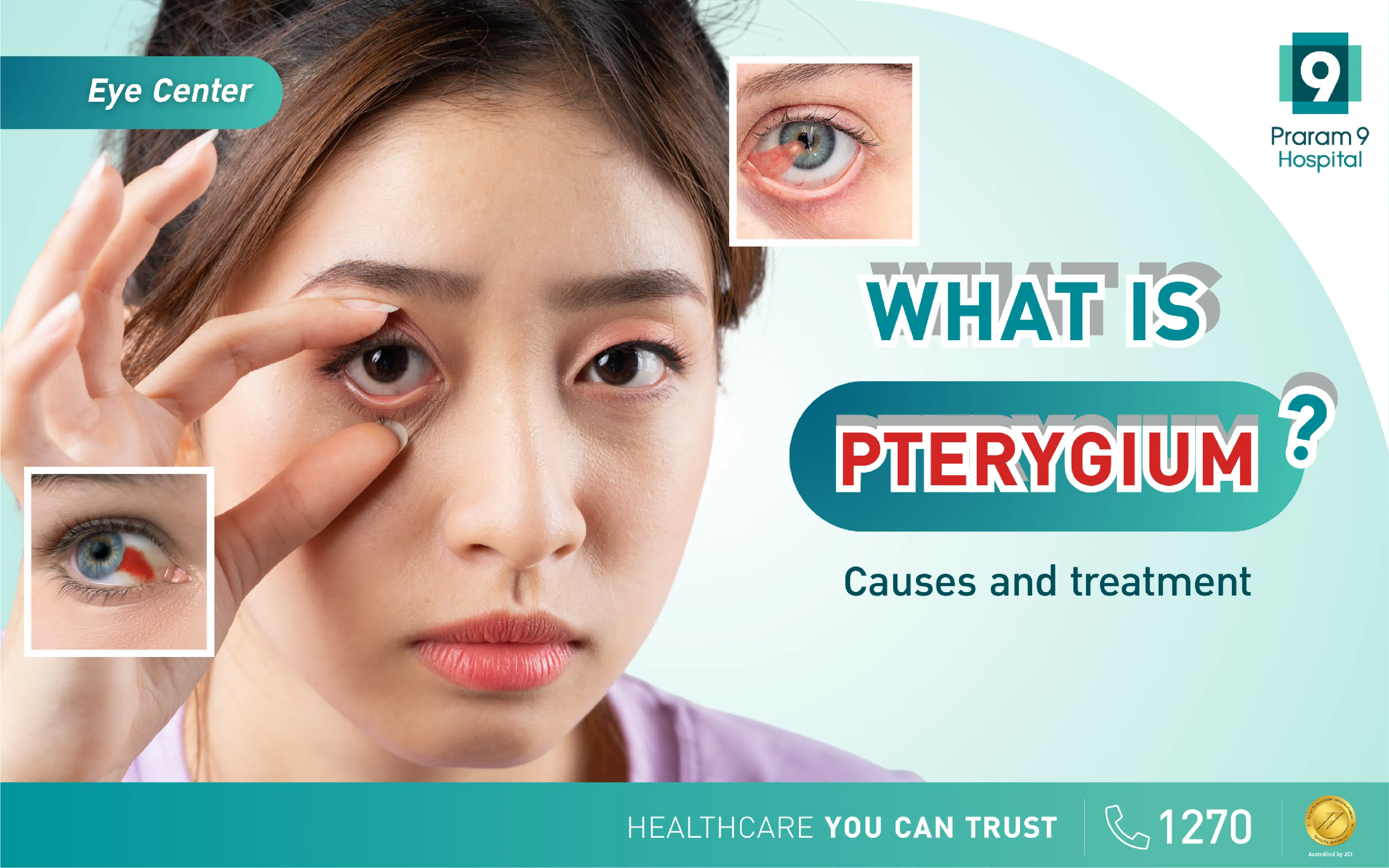
Pterygium is a condition in which the conjunctiva has abnormal growth, forming a triangular tissue that often extends onto the cornea. If neglected and not properly treated, it may affect vision.
This article will take you to explore everything about pterygium, from what causes it, what symptoms it has, whether it is dangerous, to how it is treated, along with prevention methods to reduce the risk of developing pterygium.
Key Takeaways
- Pterygium is a condition involving thickening and expansion of the conjunctiva, usually shaped like a triangle.
- The main factor that stimulates pterygium is prolonged and continuous exposure of the eyes to ultraviolet (UV) radiation.
- Early symptoms of pterygium include eye irritation, red eyes, and a feeling of a foreign body in the eye. In early stages, it may not affect vision, but if it extends into the central cornea, it may cause astigmatism and reduce visual quality.
- Treatment includes the use of eye drops to relieve symptoms and surgical removal in cases where the condition progresses and affects vision.
What is pterygium?
Pterygium is characterized by abnormal growth of the conjunctiva. It appears as a light pink or yellowish-white triangular tissue, most commonly found on the nasal side of the eye rather than the temporal side, and it may occur in one or both eyes.
In the early stage, the tissue begins growing on the conjunctiva and may gradually extend onto the cornea. If the tissue grows large enough to cover the central cornea or causes astigmatism, it may affect vision and quality of life. This condition is classified among common eye diseases such as pinguecula, glaucoma, and cataract, and should be evaluated and managed directly by an ophthalmologist.
What causes pterygium?
The main cause and most important contributing factor of pterygium is prolonged exposure of the eyes to ultraviolet (UV) radiation more than normal, leading to degeneration and stimulation of abnormal conjunctival growth. In addition, there are other environmental factors that increase the risk, as follows:
- Exposure to strong sunlight or UV radiation without protection is a major factor causing pterygium.
- Prolonged exposure to smoke, dust, chemicals, or dry air.
- People who work outdoors, such as farmers, fishermen, construction workers, or frequent motorcycle riders, have a higher risk of developing pterygium.
Recognizing pterygium: what are the symptoms?
The symptoms of pterygium vary depending on the stage and severity of growth. If the pterygium is small and not inflamed, it often has no symptoms. However, if it is large and inflamed, patients may experience the following:
- Red eyes, burning sensation, irritation, or feeling like a foreign body in the eye.
- Dry eyes, burning, itching, excessive tearing.
- A white or pink mass resembling a thin membrane at the nasal side of the eye, triangular in shape extending toward the cornea.
- Eye pain, photophobia, glare.
- Double vision when looking toward the nasal or temporal side.
- When the pterygium begins to extend onto the cornea, it pulls and alters the curvature of the cornea, resulting in astigmatism.
- If it progresses to a very large size, it may obstruct vision or cause temporary vision loss.
How is pterygium diagnosed?
Diagnosis of pterygium by an ophthalmologist is very important to confirm the condition and differentiate it from other eye disorders. Diagnosis usually includes the following steps:
- Medical history taking, such as history of outdoor work, sunlight exposure, or eye irritation.
- Slit-lamp examination, which is the main diagnostic method. The ophthalmologist uses a microscope to magnify and assess the size, shape, and extent of the pterygium on the conjunctiva and cornea.
- Additional specialized eye examination equipment to monitor tissue growth.
Can pterygium be treated? How many methods are there?
Can pterygium be cured? The answer is yes, but the choice of treatment depends on the severity and the extent of invasion into the pupil. There are several approaches, ranging from basic self-care to surgical treatment.
Medical treatment
For patients in early stages or with small pterygium that does not affect vision, doctors may consider medication to relieve irritation and inflammation. Medications include:
- Artificial tears to increase moisture, reduce dryness, and relieve irritation.
- Steroid eye drops to reduce inflammation and redness during flare-ups, but they must be used strictly under medical supervision due to side effects such as glaucoma.
- Antihistamines to reduce itching, irritation, and redness.
However, no eye drops can eliminate the pterygium tissue. Medications only relieve irritation and inflammation and cannot completely cure the condition.
Surgical treatment
When pterygium becomes large and extends onto the cornea affecting vision, such as causing astigmatism or directly obstructing vision, or in cases of chronic irritation not relieved by medication, surgery can be performed in two methods:
- Bare sclera technique: the pterygium is removed from the cornea and conjunctiva, and the area is left to heal on its own. The advantage is less pain and irritation, but the recurrence rate is relatively high, about 40–50%.
- Pterygium excision with autologous conjunctival autograft or amniotic membrane graft: the pterygium is removed, and healthy conjunctival tissue from the patient or amniotic membrane is grafted to cover the area. This method reduces recurrence to about 5–10%, but patients may feel more irritation after surgery.
Postoperative self-care to promote recovery and reduce recurrence
After surgery, strict self-care is important to help the eyes recover quickly, reduce complications, and lower recurrence risk. Recommendations include:
- Protect the eyes from sunlight and wind: avoid dusty, smoky, windy, or bright sunlight areas. If outdoors, wear high-quality sunglasses that block UV radiation and provide side protection.
- Use protective equipment during work: wear safety glasses or eye protection when exposed to UV or dust.
- Use prescribed eye drops strictly as directed: do not overuse steroid eye drops or use them without prescription, as it may lead to serious complications or permanent vision loss.
- Do not rub the eyes: this may injure the surgical area and increase the risk of inflammation or complications.
- Attend all follow-up appointments.
Prevention of pterygium
Prevention can be done easily by avoiding risk factors, including:
- Choose sunglasses that filter UVA and UVB and are large enough to cover the sides of the eyes to protect from wind and pollution.
- Wear a wide-brimmed hat when outdoors.
- Avoid outdoor activities during peak UV hours, between 10:00 AM and 2:00 PM.
- Use artificial tears to maintain eye moisture and reduce chronic irritation.
- Rest the eyes when using a computer for long periods.
- Avoid touching the eyes with bare hands.
- If there are abnormalities in the eyes or vision, consult an ophthalmologist promptly for early detection and treatment.
Manage pterygium before progression to reduce impact on vision
Pterygium is a thickening of the conjunctiva that extends onto the cornea, mainly caused by continuous exposure to sunlight and UV radiation. If symptoms such as red eyes, irritation, or tissue growth at the nasal side are observed, consult a doctor early for treatment with medication or surgery to prevent future vision loss.
If you wish to receive examination and treatment, you can contact the Eye Center, Praram 9 Hospital, which has a team of specialized ophthalmologists and modern equipment for accurate diagnosis. Surgical removal of pterygium or intraocular lens replacement for cataract patients can be performed effectively to restore clear vision.
For more information
- Facebook: Praram 9 Hospital International & Expats
- Line: @Praram9Hospital
- Tel. 1270
Frequently Asked Questions about pterygium
1. Can pterygium heal on its own?
Pterygium cannot resolve on its own because it is an abnormal growth of the conjunctiva. If left untreated, it will gradually extend onto the cornea. A doctor should be consulted for evaluation and appropriate treatment.
2. Is surgery required in every case?
Pterygium is not a severe disease and does not require surgery in all cases. If it is small and does not significantly extend onto the cornea, treatment focuses on medication and behavioral adjustments. However, if it extensively invades the cornea, obstructs vision, causes astigmatism, or results in chronic inflammation affecting daily life, surgical removal is recommended to restore visual quality.
References
Pterygium (Surfer's Eye). (2024, May 28). Cleveland Clinic. https://my.clevelandclinic.org/health/diseases/22497-pterygium-surfers-eye
Delgado, A. (2018, September 17). Pterygium. Healthline. https://www.healthline.com/health/pterygium
King, L.M. (2024, February 13). What Is Pterygium (Surfer's Eye)?. WebMD. https://www.webmd.com/eye-health/pterygium-surfers-eye