Health Articles
Knowledge
Keratoconus or corneal ectasia (Keratoconus): understanding the causes, symptoms, and treatment approaches
ORATHAI SUWAJANAKORN,M.D.
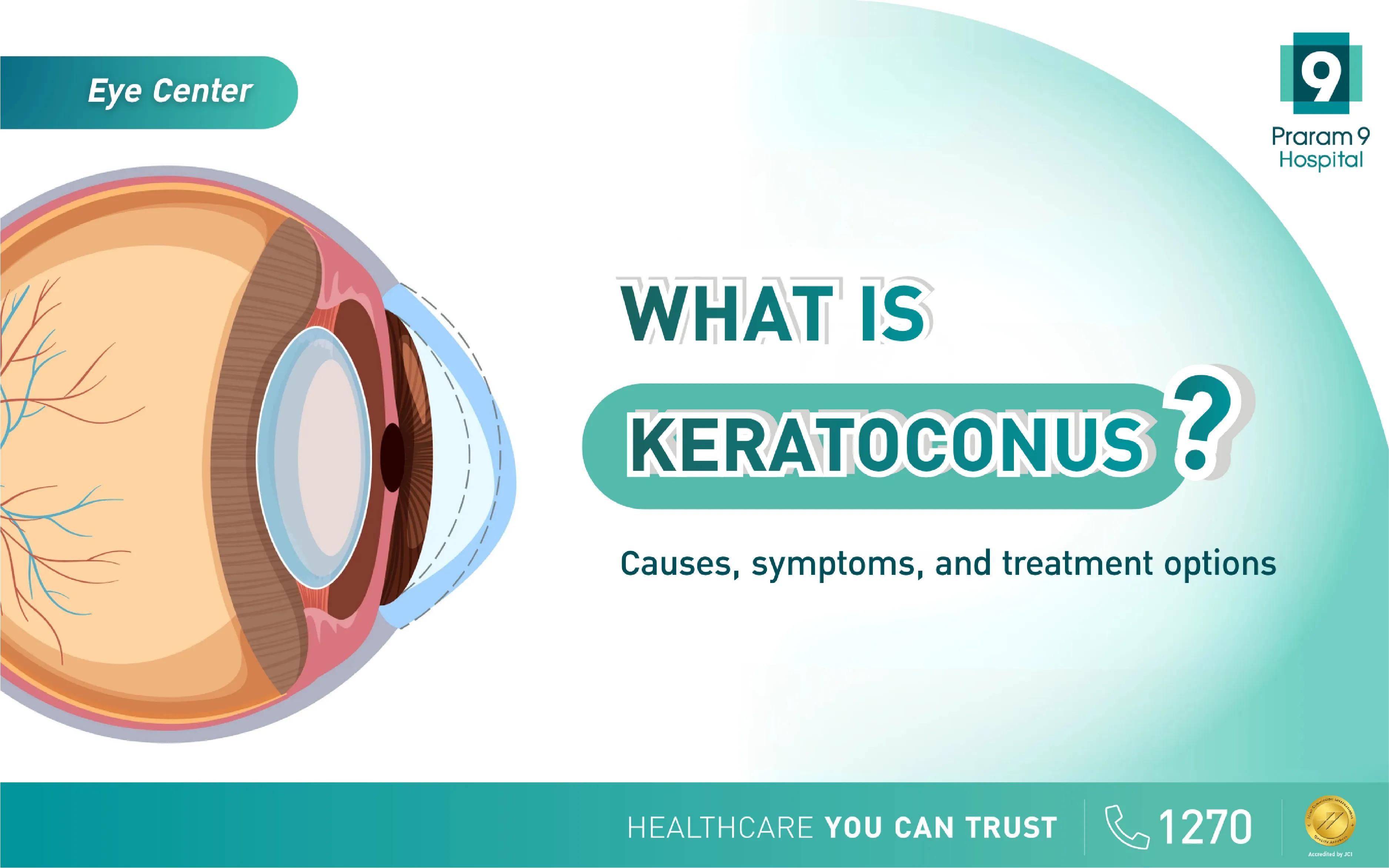
The cornea is a thin, transparent structure located at the frontmost part of the eye, functioning to refract light into the eye and assist in focusing images. If the cornea becomes abnormal, it will affect vision.
Keratoconus or corneal ectasia (Keratoconus) is a condition in which there is an abnormality of the corneal structure, causing the cornea to become weak, thinner, and bulge outward in a cone-like shape. This results in abnormal refraction of light entering the eye, leading to decreased vision. This condition often begins to show symptoms during adolescence and can progress until approximately 30–40 years of age.
Causes
At present, the exact cause is unknown, but there are several risk factors that may be related, including:
- Genetics: individuals with a family history of keratoconus have a higher risk of developing this condition than the general population
- Habit of rubbing the eyes forcefully or frequently: an important triggering factor that can weaken the cornea and cause it to bulge
- Certain diseases: such as allergic conjunctivitis, Down syndrome, connective tissue disorders (Marfan syndrome or Ehlers-Danlos syndrome), etc.
Symptoms
Keratoconus often begins to show symptoms during adolescence, or in some cases may occur since childhood and gradually worsen over many years. It usually affects both eyes, but the severity may not be equal.
Common symptoms include:
- Blurred vision due to increasing myopia and astigmatism
- Rapid changes in vision, requiring frequent changes of eyeglasses, or vision remains unclear even after changing glasses
- May have photophobia
- If more severe, the cornea may become thinner until there is a rupture of the corneal layer (Corneal hydrops), causing corneal edema and a sudden decrease in vision. When the corneal swelling subsides, scarring of the cornea will occur.
Diagnosis
Requires specialized instruments for diagnosis by an ophthalmologist, including:
- Refraction test
- Slit lamp examination
- Corneal curvature examination using Corneal Topography or Pentacam
- Measurement of corneal thickness (Pachymetry)
Treatment approaches
Treatment depends on the severity of the condition, with the following approaches:
1. Eyeglasses or contact lenses
- In the early stage, when symptoms are not severe, vision may be improved with eyeglasses
- If the condition becomes more abnormal, rigid gas permeable (RGP) contact lenses or large-diameter rigid contact lenses covering the cornea (Scleral lens) may be required to improve vision clarity
2. Intracorneal Ring Segment (ICRS) implantation
- Helps improve the shape of the bulging cornea, allowing eyeglasses or contact lenses to be used more effectively
3. Corneal Collagen Cross-Linking (CXL)
- A method that strengthens the cornea by using vitamin B2 (Riboflavin) together with UVA light to slow or stop the progression of corneal bulging
4. Corneal transplantation
- Used in patients with severe corneal deformation, scarring, or excessively thin cornea
- May involve partial or full corneal transplantation depending on the severity of the condition
Recommendations for practice
- Avoid rubbing the eyes to reduce the risk of disease progression
- Treat allergic conjunctivitis to reduce irritation and itching
- LASIK cannot be performed because it may further weaken the cornea
- Regular follow-up of refractive values and corneal shape should be performed according to the ophthalmologist’s recommendations
Summary
Keratoconus or corneal ectasia (Keratoconus), if not properly diagnosed and treated, may affect long-term vision. Recognizing warning signs and undergoing early diagnosis by a specialist ophthalmologist will help prevent complications and preserve visual quality for as long as possible.
If you or someone close has increasing myopia, increasing astigmatism, unclear vision, or requires frequent changes of eyeglasses, you should promptly consult an ophthalmologist for appropriate diagnosis and management.