Health Articles
Knowledge
Food after kidney transplantation: how to choose to eat appropriately?
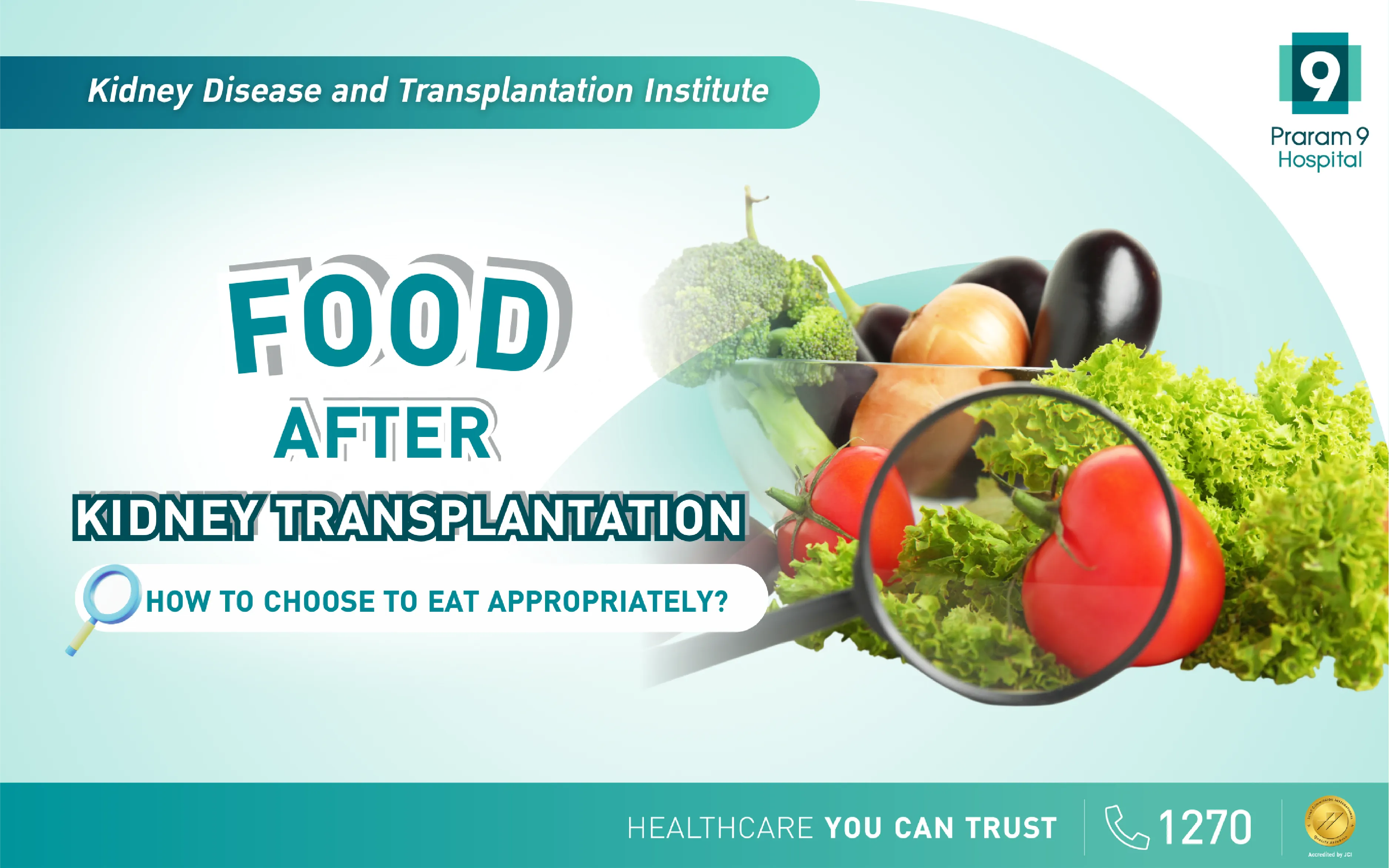
Kidney transplantation is a surgery to bring a new kidney from a donor, who may be a relative or a brain-dead patient, to transplant to a patient with chronic kidney failure in order to replace impaired kidney function. Currently, the success rate of kidney transplantation is relatively high. Patients who receive a kidney transplant will have a better quality of life and can return to normal living. Therefore, it is considered the best treatment option for patients with chronic kidney failure, and the transplanted kidney can function for more than 10 years. However, after kidney transplant surgery, patients need to adjust their lifestyle behaviors because they must take immunosuppressive drugs for life to prevent graft rejection, which increases the risk of infection. Therefore, health care after kidney transplantation is very important.
Eating after kidney transplantation is also something that patients should consider, because they need to increase attention to food hygiene to prevent infection, and some foods may affect immunosuppressive drugs. Therefore, after kidney transplantation, patients should eat appropriately and may need to avoid certain foods that may affect the action of immunosuppressive drugs or affect drug levels in the body, which may cause toxicity in the body. In addition, patients should prepare and consume food according to food sanitation principles to reduce the risk of infection. Therefore, patients should have basic knowledge about eating after kidney transplantation in order to properly and appropriately take care of their health, so that the new kidney can function efficiently and the transplant recipient has a good quality of life.
Why is food after kidney transplantation important?
As mentioned above, patients who have received a kidney transplant need to pay attention and be careful about food consumption, including food hygiene. Because appropriate eating after kidney transplantation will result in faster recovery after surgery and a quicker return to good health. It also helps the new kidney function efficiently and prolongs its function. Kidney transplant patients may need to consider these factors in choosing food.
- The food consumed should be freshly cooked, clean, nutritionally complete in all 5 food groups, and food preparation should follow food sanitation principles.
- Patients without any complications after surgery can eat normally.
- Patients with post-operative complications such as fever, infection, increased muscle breakdown need to consume adequate and appropriate food according to their physical condition under the supervision of a physician and a nutritionist.
- Patients who need to be cautious and control certain nutrients due to medications or conditions such as high blood sugar, high blood lipids, high blood pressure, increased protein requirements, or imbalance of minerals in the body need to receive food appropriate to their current health condition under the supervision of a physician and a nutritionist.
Choosing to eat different food groups for kidney transplant patients
Kidney transplant patients must adapt their eating, which will have more details in food selection than normal people. However, this is for the efficiency of the new kidney and better quality of life of the patient. The principles of choosing different food groups are as follows.
Carbohydrate group
Patients with diabetes or those with high blood sugar levels due to the effects of steroid drugs (steroid) are the group that must control carbohydrate intake. They should consume rice, flour, and sugar in appropriate amounts. They should choose as follows.
Carbohydrate foods that should be consumed include:
- Complex carbohydrates such as brown rice, partially milled rice, oats, pasta, unsweetened cereals, grains, etc.
- Foods with low glycemic index (glycemic index < 55) such as oats, partially milled rice, barley, pasta, lettuce, sweet potato, corn, red beans, carrot, cucumber, tomato, apple, dragon fruit, guava, etc.
Carbohydrate foods that should be avoided include:
- High-sugar foods such as sweet drinks, fruit juice, desserts, etc.
- Seasoning with granulated sugar, honey, and various sweet syrups, if necessary, should not exceed 3–6 teaspoons/day (excluding sugar contained in fruits and vegetables).
Fat group
Patients with high blood lipids need to limit fat intake. The principles are:
- Consume fat not more than 30–35 percent of total daily energy.
- Limit saturated fat not more than 7 percent of total daily energy.
- Limit unsaturated fat not more than 10 percent of total daily energy.
- Limit dietary cholesterol to less than 300 milligrams per day.
And consider choosing fat foods as follows.
Appropriate fat foods include:
- Consume lean or low-fat meat such as fish, chicken breast, egg white, etc.
- Eat in appropriate amounts and not excessively full.
- Eat meals on time so that the metabolism works efficiently.
Fat foods that should be avoided include:
- Stir-fried and fried foods that use oil such as stir-fried vegetables, omelet, fried meatballs, fried chicken, etc.
- Bakery foods that use fat, butter, and milk such as cake, cookies, brownies, bread, etc.
- Foods high in cholesterol such as egg yolk, fish eggs, squid, shrimp, organ meats, milk, mayonnaise, etc.
And should avoid alcoholic beverages such as liquor, wine, whisky, beer, etc., and avoid late-night eating because eating within 3 hours before bedtime can easily increase triglyceride levels in the blood.
Sodium-containing foods
Sodium plays an important role in controlling the function of the nervous system and muscles. For general people, it is recommended to consume sodium not more than 2,000 milligrams/day (based on dietary reference index; DRI).
For those who need to limit sodium intake such as patients with kidney disease, hypertension, pulmonary edema, or those with fluid retention in the body, etc., the guidelines for limiting sodium intake are as follows.
- Consume freshly cooked food, taste before seasoning every time.
- Use sour, spicy tastes and herbs such as shallot, garlic, kaffir lime leaves, etc. to enhance taste, aroma, and color instead of salty taste.
- Foods that should be avoided include:
- Processed foods, pickled foods, canned foods, frozen foods, dried foods, preserved foods, and semi-prepared foods.
- Seasonings, monosodium glutamate, seasoning powder, and soup cubes.
- Dipping sauces or various sauces such as chicken dipping sauce, meatball dipping sauce, etc.
Protein group
Protein plays an important role in repairing worn-out parts of the body, is a component of muscles, and helps synthesize important substances that help the body function normally such as hormones, enzymes, immunity, blood cells, etc. Therefore, protein is an essential nutrient for the body.
Post-operative patients with increased muscle breakdown or pre-existing malnutrition should have protein intake determined to be sufficient to compensate for the deficiency. They should choose high biological value protein such as milk, lean meat, fish, egg white, etc.
Potassium-containing foods
Potassium helps the nervous system and muscles function normally. For patients with high blood potassium levels, physicians will prescribe limiting potassium intake. Therefore, patients must choose low-potassium foods. Sources of high potassium include vegetables, fruits, milk, grains, and some potassium-fortified seasonings. Potassium in vegetables can be reduced by washing thoroughly, peeling, cutting into small pieces, or boiling or blanching before cooking, which can reduce potassium content in vegetables.
Phosphorus-containing foods
Phosphorus is a mineral found mainly in bones and is a component of blood. If there is too much phosphorus, it affects the body such as brittle bones, itching skin, calcification, and can cause heart disease.
For kidney disease patients with high phosphorus, phosphorus levels can be controlled by several methods including dialysis, taking phosphate binders, and controlling high-phosphorus foods. The absorption rate of phosphorus depends on the food source, such as phosphorus from chemical additives used in food preservation and flavoring is absorbed more than 90%, phosphorus from meat, milk, eggs is absorbed about 60%, and phosphorus from plants is absorbed less than 50%. The high-phosphorus food groups are as follows.
- Egg yolks of all kinds and egg yolk products such as thong yip, thong yod, bakery.
- Fish eaten with bones such as crispy fish, small whole fish, dried fish, sardines.
- Animal organs, frogs, field frogs, bullfrogs, lizards, all kinds of insects, sea crab, dried shrimp.
- Processed foods and canned foods.
- Frozen foods, dried fruits.
- Fast foods such as burgers, nuggets, french fries.
- Milk and milk-containing foods such as iced milk, milk tea, instant 3-in-1 drinks, yogurt, cheese.
- Dark-colored soft drinks, beer, mineral water, energy drinks.
- Coffee, chocolate, cocoa.
- Yeast, baking powder, and products such as bakery, steamed buns, donuts, fried dough sticks.
- Job’s tears, black sesame, tofu, beans, and grains.
Alcoholic beverages
- Kidney transplant patients should abstain from alcoholic beverages.
- Should not drink alcohol close to the time of taking medication because it affects drug levels and drug elimination by the kidneys.
Food and immunosuppressive drugs
All patients after kidney transplant surgery will receive immunosuppressive drugs to prevent graft rejection. Immunosuppressive drugs should be taken continuously and on time every day. Some drugs should be taken with food or immediately after meals, some should not be taken with food or should be taken on an empty stomach, and some drugs may interact with certain foods. Therefore, those foods should be avoided because they affect drug levels and the immune system, causing toxicity in the body.
Patients should understand the basic relationship between food and immunosuppressive drugs in order to maximize the effectiveness and safety of medication. The relationship between drugs and food can be summarized as follows.
- Immunosuppressive drugs that should be taken with food or immediately after meals include:
- Prednisolone
- Azathioprine (Imuran®)
- Nystatin (Nyst Oral®)
- Co-trimoxazole (Bactrim®)
- Valganciclovir (Valcyte®)
- Lamivudine (Lamivir®)
- Immunosuppressive drugs that should not be taken with food or should be taken on an empty stomach include:
- Tacrolimus (Advagraf®)
- Mycophenolate mofetil (Cellcept®)
- Mycophenolate sodium (Myfortic®)
- Immunosuppressive drugs that interact with grapefruit, pomegranate, ginger, pomelo, turmeric, and ginseng include:
- Cyclosporin (Sandimmume Neoral®)
- Tacrolimus (Advagraf®, Prograf®)
- Sirolimus (Rapamune®)
- Everolimus (Certican®)
- Immunosuppressive drugs that should not be taken with milk, or if milk is consumed it should be separated by 2 hours from medication time include:
- Cyclosporin (Sandimmume Neoral®)
- Tacrolimus (Advagraf®), Prograf®)
- Sirolimus (Rapamune®)
- Mycophenolate mofetil (Cellcept®)
- Mycophenolate sodium (Myfortic®)
- Immunosuppressive drugs that interact with caffeine (tea, coffee); if tea or coffee is consumed, it should be separated by 2 hours from medication time is prednisolone
What foods should kidney transplant patients avoid?
Foods and dietary supplements that kidney transplant patients “should avoid” are as follows.
Food hygiene for kidney transplant recipients
Receiving immunosuppressive drugs in kidney transplant patients will reduce the immune system function, making them more susceptible to infection. Therefore, food hygiene for kidney transplant recipients must be considered to reduce the risk of infection. The food sanitation guidelines are as follows.
Wash hands regularly.
- Before touching or handling food.
- After touching various environments such as touching raw meat of all kinds, using the toilet, touching pets, blowing nose, touching face or body parts, touching dirt, etc.
- Hands should be washed with hand soap, rub both hands thoroughly, and dry hands with paper towels or clean cloth.
- Food handlers must have good hygiene such as not being ill and not coughing or sneezing on food.
Reducing contamination
- Separate storage of raw foods by type such as beef, pork, poultry, seafood, vegetables, fruits, and eggs in the refrigerator.
- Separate areas for cooked food preparation, raw food preparation, and raw meat.
- Wash eggs before cooking with clean water and scrub the eggshell with a sponge.
- Use separate cutting boards for different types of food such as cooked food board, seafood board, etc.
- Do not reuse marinade from raw meat; if reused, it must be boiled again before use.
- Wash vegetables and fruits thoroughly before consumption. For leafy vegetables, separate leaves before washing. Methods of washing vegetables and fruits include:
- Rub by hand under running water for about 2 minutes.
- Soak in salt water for 10 minutes (using 1 tablespoon of salt mixed with 4 liters of water) and rinse with clean water.
- Soak in sodium bicarbonate solution (using 1/2 tablespoon sodium bicarbonate mixed with 10 liters of water) and rinse with clean water.
- Separate cloths used for cleaning tables and utensils.
- Prepare a clean eating area.
Safe food preparation and consumption
- Avoid undercooked foods and unpasteurized foods and products.
- Peel fruits before eating.
- Avoid cooked food kept overnight; if stored, keep in refrigerator and reheat before consumption every time.
- Eat thoroughly cooked food to prevent pathogens and contaminants.
- Thawing frozen food before use should not be done at room temperature. It should be thawed in the refrigerator compartment before use, or in cold water with food sealed in a bag or container, or using a microwave. After thawing, it must be used immediately.
- Microwave cooking is not recommended because it cannot eliminate some pathogens.
Food storage
- Store food and ingredients at appropriate temperatures according to food type as shown in the figure.
- Store all food not yet consumed and leftovers in the refrigerator within 2 hours after cooking.
- Store food in tightly closed containers, separate by type, and do not store in large quantities at one time to allow even cooling.
- Principles of storing food in the refrigerator are shown in the table.
- Appropriate temperatures and storage duration are shown in the table.
(Source: Academic manual on food sanitation for officers, 2023)
Summary
Kidney transplantation is considered a treatment method for chronic kidney failure that provides better results than other treatments. Kidney transplant surgery is a major surgery that requires preparation of both the donor and recipient before, during, and after surgery for the best efficiency of the new kidney and safety of both donor and recipient. After kidney transplantation, patients must be careful and choose appropriate food to prevent graft rejection, reduce infection risk, and prolong kidney function.
Patients after kidney transplantation should consume appropriate energy from complex carbohydrates, high-quality protein, and good fats to maintain normal blood sugar and lipid levels. They should also limit minerals from food such as sodium, potassium, and phosphorus to maintain fluid and electrolyte balance, which directly affects kidney function.
Kidney transplant patients should carefully choose food and avoid certain foods such as ginger, galangal, ginseng, pomelo, and pomegranate because they affect immunosuppressive drug levels and may cause toxicity. Some foods should not be consumed with certain immunosuppressive drugs such as alcohol, milk, and coffee. In addition, patients after kidney transplantation are more susceptible to infection, so proper food sanitation should be emphasized to reduce infection risk.
Appropriate eating after kidney transplantation helps the new kidney function efficiently and results in a good quality of life for patients.
Consult a specialist doctor at Praram 9 V Consult a doctor anywhere via video call (Telemedicine)