Health Articles
Knowledge
Be aware of the symptom of ‘swollen feet’: what health problems can it indicate?
CHALOTHORN TAESILAPASATHIT,M.D.
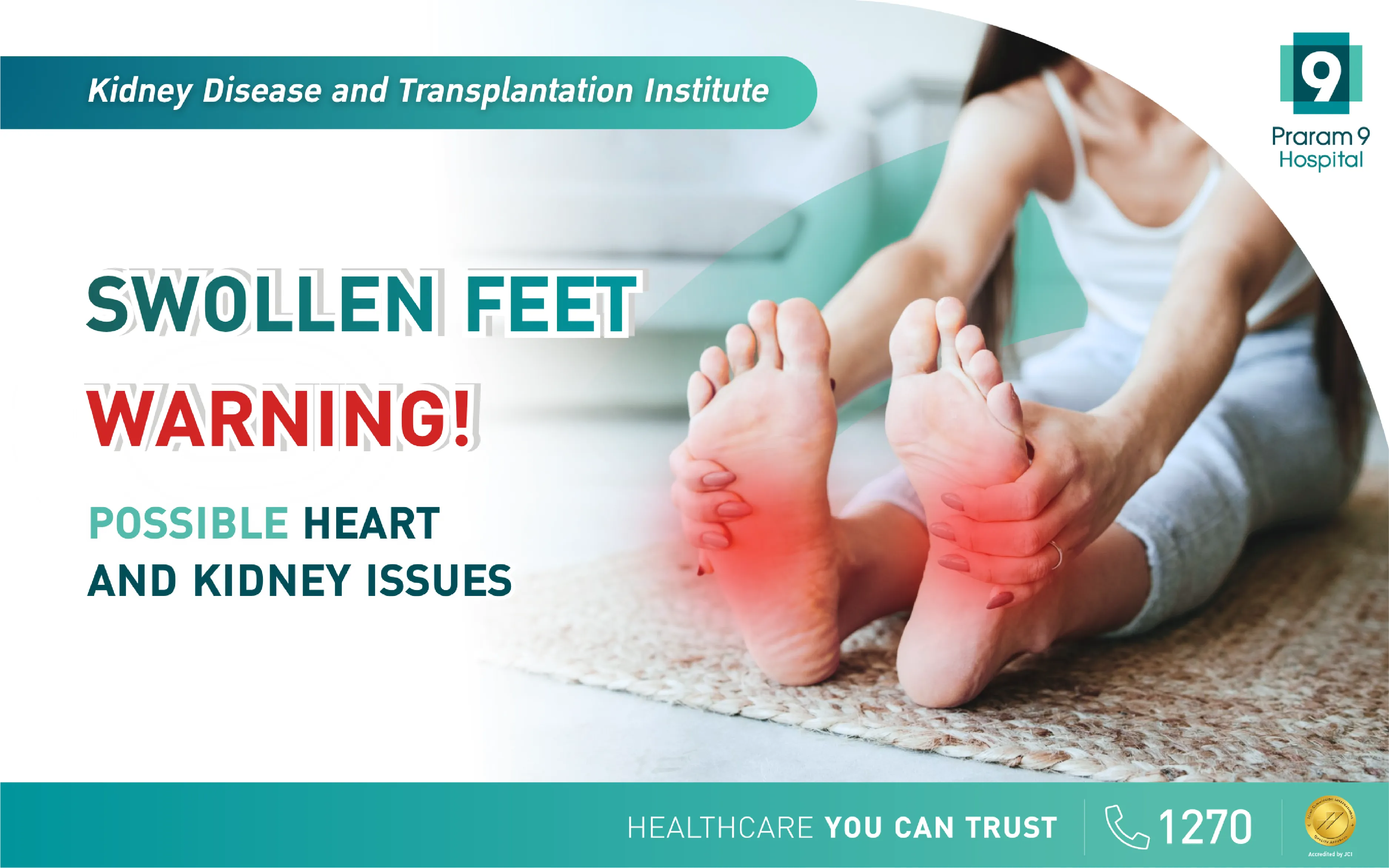
‘Swollen feet’ may be only a temporary symptom that does not require treatment and can resolve on its own. However, in many cases, swollen feet may be a warning sign of health problems that need to be diagnosed and treated promptly in order to reduce danger from severe complications. For this reason, if swollen feet are found and do not resolve, especially in the elderly, one should promptly see a doctor to find the true cause and receive appropriate care.
Key Takeaways
- Swollen feet can be caused by many factors, from temporary conditions such as injury, prolonged sitting or standing, medication use, to symptoms from serious diseases and chronic diseases.
- Swollen feet can occur in all genders and ages, but are commonly found in the elderly due to daily routine characteristics and health problems.
- Treatment of swollen feet depends on the cause of the swelling, such as behavior modification, medication adjustment, and control of any diseases that cause the swelling.
What causes swollen feet?
Swollen feet are swelling that occurs in the foot area. The swelling may extend to the ankle and the lower leg. It can occur on one side only or on both sides. It may arise from many causes, ranging from non-severe conditions to abnormalities that the body signals as danger, as follows:
- Prolonged standing or sitting in the same position: causes slow blood circulation, increasing the chance of fluid accumulation in the foot area leading to swelling.
- Use of certain medications: some medications have side effects causing swelling, such as antihypertensive drugs, steroid drugs, hormone drugs, etc.
- Excessive intake of sodium or water: causes the body to have excess fluid, leading to swollen feet.
- Pregnancy: causes changes in the body such as hormonal changes, uterine enlargement and compression of veins, increasing the chance of fluid accumulation in the body.
- Accidents: such as ankle twisting, ankle sprain, fractures, torn ligaments, all can cause inflammation in the foot area leading to swelling, usually only on the side that had the accident.
- Infection: feet with infection will have swelling, warmth, redness due to inflammation of tissues.
- Kidney disease: causes the body to be unable to effectively excrete excess fluid, leading to edema.
- Nephrotic Syndrome: a group of kidney disorders causing significant protein leakage in urine, often accompanied by leg swelling and foot swelling.
- Heart disease: may occur when the heart cannot pump blood effectively, causing blood to accumulate more in the legs and feet.
- Venous thrombosis in the leg: causes blood to be unable to flow back, usually on one side, and may be life-threatening if the clot blocks veins in the lungs.
- Diabetes: often has poor blood circulation, increasing the chance of fluid accumulation leading to swollen feet.
- Lymphedema: caused by blockage of lymph nodes, leading to swelling in the arms, legs, feet, often on one side.
How to observe symptoms of swollen feet
What kind of symptoms are considered swollen feet? They can be observed from these symptoms:
- The feet are larger and more swollen than normal, the skin on the feet is tight, skin folds and wrinkles disappear. If swelling occurs only on one side, the difference can be observed more clearly.
- Movement of the foot is more difficult than normal, may or may not be accompanied by pain.
- When pressing on the foot, an indentation may remain longer than normal.
- The skin color in the foot area may change to red-purple or pale white in some causes.
Why do elderly people often have swollen feet?
Swollen feet can occur in all genders and ages, but are commonly found in the elderly due to daily routine characteristics with less movement, or being bedridden patients, leading to a higher chance of fluid accumulation in the feet compared to other age groups that move the body frequently.
Additionally, swollen feet in the elderly often occur due to degeneration of various body systems, leading to health problems such as kidney disease, heart disease, taking medications that may have side effects, even excess body weight is also another issue of swollen feet in the elderly.
How are swollen feet treated?
Treatment of swollen feet depends on the cause of the swelling, for example:
- Prolonged sitting or standing: behavior should be adjusted to increase movement.
- Injury: reduce use of the foot and wear supportive devices.
- Overweight, high sodium intake: adjust behavior by controlling diet, reducing sodium, exercising adequately.
- Medication use: it is recommended to consult a doctor to adjust to new medications without side effects.
- Complications such as heart disease, diabetes, kidney disease: treated by controlling the disease symptoms.
Warning: ‘swollen feet’ as a sign of serious disease that requires urgent treatment
Swollen feet may be one symptom of chronic diseases such as kidney disease, heart disease, liver disease, or dangerous conditions that require urgent treatment such as infection, thrombosis, preeclampsia. For this reason, if a patient has abnormal swollen feet, especially in the elderly, pregnant individuals, or those with foot wounds, they should promptly undergo diagnosis and receive treatment to prevent severe complications and maintain long-term health safety.
‘Swollen feet’ may not be just a minor issue; promptly diagnose to reduce the risk of dangerous complications
Swollen feet can occur from temporary conditions to being a sign of serious conditions or diseases. For this reason, attention should be paid to swollen feet, especially in the elderly, pregnant individuals, or those with foot wounds at risk of infection. If the swelling does not resolve even after resting the foot, or there are other abnormal symptoms, promptly go to see a doctor for diagnosis and appropriate treatment as soon as possible.
Kidney Institute, Praram 9 Hospital focuses on accurate and precise diagnosis of disease causes by nephrology specialist physicians together with physicians from other fields as a multidisciplinary team, along with a support staff team, to provide effective and safe treatment so that patients can return to living with quality of life.
For more information
Facebook : Praram 9 Hospital International & Expats
Line : @Praram9Hospital
Tel. 1270
Frequently asked questions about swollen feet
1. What kind of swollen feet are dangerous?
Swollen feet with abnormal symptoms such as sudden severe foot pain, shortness of breath, fever, history of chronic disease, or history of thrombosis.
2. How can swollen feet be initially relieved?
Initially, swollen feet can be reduced by elevating the legs above heart level, reducing intake of high-sodium foods, and trying to change sitting and standing positions frequently.
References
Cadman, B. (2025, April 15). What can cause swollen feet? MedicalNewsToday. https://www.medicalnewstoday.com/articles/323265
Dunkin, MA. (2023, March 5). Swollen Ankles and Feet. WebMD. https://www.webmd.com/a-to-z-guides/swollen-ankles-and-feet
Edema. (2022, May 17). Cleveland Clinic. https://my.clevelandclinic.org/health/diseases/12564-edema
About the Author