Health Articles
Knowledge
How much sodium intake is too much, posing a risk to kidney health?
WISIT LIWLOMPAISAN,M.D.
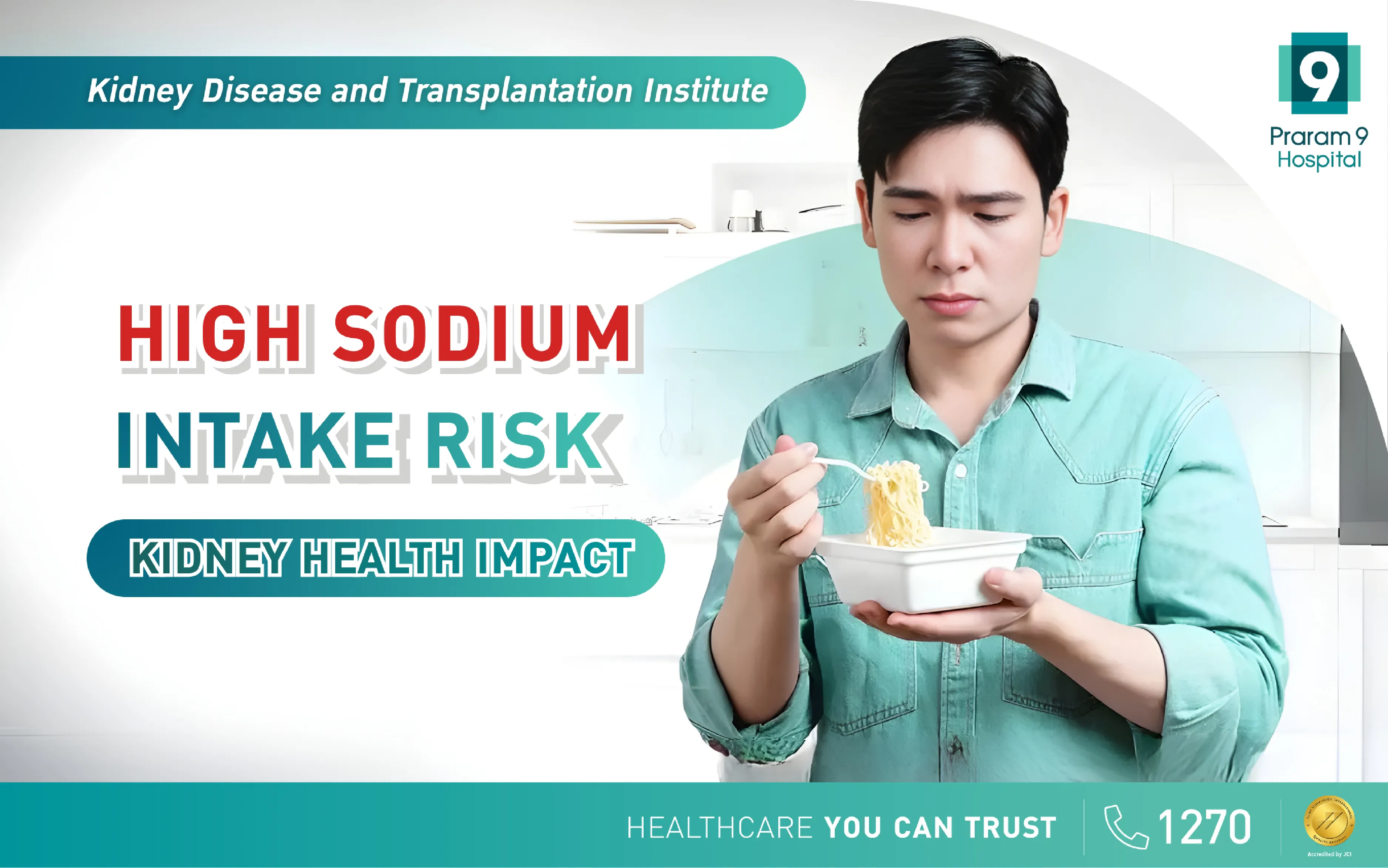
Thai food is cuisine with a variety of flavors, including sour, sweet, salty, and spicy. The intensity of Thai flavors appeals to both Thai people and foreigners. However, beneath the delicious taste lies considerable danger, because if we consume excessive sodium, there is a risk of developing NCDs (non-communicable diseases), which arise from daily lifestyle behaviors, especially consumption of sweet, fatty, and salty foods, and lack of exercise. These are important causes that increase the statistics of patients with NCDs and lead to premature death.
Key Takeaways
- Consuming sodium in excess of the body’s needs increases the risk of non-communicable diseases (NCDs) such as heart disease, hypertension, and kidney disease. Additionally, there is also a possibility of other conditions such as stroke or osteoporosis.
- The amount of sodium that should be received per day depends on age and current physical condition, but the maximum sodium intake per day that is not harmful to the body is 2,000 milligrams per day, equivalent to approximately 1 teaspoon of salt.
- Highly flavored foods, processed foods, semi-prepared foods, pickled foods, including various seasonings should be avoided to prevent sodium levels in the body from exceeding.
Why is sodium important to the body?
Sodium is a mineral that the body requires in small amounts but cannot be lacking, because sodium plays roles in many systems of the body, including:
- Controlling water and fluid balance in the body
- Maintaining acid-base balance in the blood
- Maintaining balance of other minerals between inside and outside the cells
- Controlling blood pressure to remain at a normal level
- Affecting the function of nerve cells and muscles
- Affecting absorption of certain nutrients in the small intestine and kidneys
- Being an important component of bones and teeth
- Being a component of digestive fluids in the gastrointestinal system
In cases where the body lacks sodium, it may cause various systems to lose function and result in abnormalities such as dehydration and abnormal acid-base balance, which may lead to seizures and unconsciousness.
How much sodium does the body need? How to consume sodium appropriately
In general, the maximum sodium level that is not harmful to the body is 2,000 milligrams per day, or approximately equivalent to 1 teaspoon of table salt. However, in reality, how much sodium a person needs depends on age and current physical condition.
- Young children (1–8 years) require 225–950 milligrams of sodium per day
- Older children (9–12 years) require 350–1175 milligrams of sodium per day
- Adolescents (13–18 years) require 400–1600 milligrams of sodium per day
- Adults require 400–1475 milligrams of sodium per day
- Elderly require 350–1200 milligrams of sodium per day
- Pregnant women require 450–1600 milligrams of sodium per day
- Breastfeeding women require 520–1700 milligrams of sodium per day
Natural foods generally contain sufficient sodium for the body’s needs, but often we season foods strongly to enhance flavor, resulting in excessive daily sodium intake. This is especially common in the elderly who consume high sodium and very salty foods due to decreased taste perception, as well as those who regularly consume ready-made or fast food, who are more likely to receive higher sodium than those who eat freshly prepared meals.
Consuming excessive sodium, what diseases are at risk?
Consuming sodium in amounts higher than the recommended daily intake can increase the risk of diseases across multiple systems, including:
- Kidney disease: Consuming excessive sodium causes the kidneys to work harder to excrete excess sodium from the body. If the kidneys work continuously under strain, it may accelerate kidney deterioration and lead to chronic kidney failure in the future.
- Hypertension: High sodium levels in the blood cause dehydration, so the system must draw more water into the blood vessels to maintain fluid levels, which results in increased vascular pressure.
- Heart disease: Consuming excessive sodium causes the heart to work harder by pumping a larger volume of blood due to increased fluid in the body under high pressure, increasing the risk of arrhythmia, myocardial ischemia, or future heart failure.
- Stroke: Excessive sodium intake may lead to increased blood pressure, which is a significant risk factor for stroke, particularly hemorrhagic or ischemic stroke.
- Osteoporosis: High sodium levels can cause the body to excrete more calcium from bones, resulting in thinner bones and increased risk of osteoporosis.
These diseases are classified as non-communicable diseases (NCDs) caused by improper dietary behavior. Additionally, it is found that three out of four deaths among Thai people are caused by NCDs.
List of high-sodium foods to avoid
Foods with strong flavors are often rich in sodium. Regular consumption may increase the risk of NCDs. To reduce risk, the following foods should be avoided:
- Highly flavored foods such as papaya salad, hot pot, mala, noodles
- Processed foods such as frozen foods, canned foods, sausages
- Semi-prepared foods and snacks such as instant noodles, potato chips
- Fast food such as burgers, pizza, French fries
- Pickled foods, salted foods such as pickled vegetables, pickled fruits, salted meat
- Seasonings such as salt, soy sauce, various sauces
- Bakery products such as bread, cakes, cookies
Recommended low-sodium foods beneficial to health
Controlling appropriate daily sodium intake helps reduce the risk of diseases caused by excessive sodium consumption. Low-sodium foods include:
- Fish such as tuna and salmon that are not seasoned
- Vegetables such as leafy greens, carrots, tomatoes
- Fruits such as bananas, avocados, oranges, apples
- Grains such as brown rice, oats, quinoa
Consuming excessive sodium increases NCD risk, how to avoid it?
Excessive salt consumption each day may cause many diseases. Therefore, reducing sodium consumption is encouraged, from 4–5 grams per day to 2 grams per day, to prevent NCDs that may occur.
Sodium intake can be reduced by adjusting cooking methods and observing sodium content in foods as follows:
- Avoid using salt, fish sauce, seasoning sauces, and monosodium glutamate in cooking
- Avoid adding extra seasonings, such as seasoning noodles or adding chili fish sauce to rice dishes
- Avoid pickled-salty and processed foods such as salted eggs, salted fish, sun-dried fish, fermented fish sausage (naem), sausages, Chinese sausage, shredded pork
- Choose foods with a variety of flavors such as sour curry or tom yum to replace salty taste
- Check sodium content per serving on labels of sauces, ready-made foods, and packaged snacks to avoid foods with excessively high sodium
The above approaches are considered one way to help control the increasing salt consumption behavior among Thai people. If followed, they can help Thai people stay away from NCDs.
Warning! Consuming excessive sodium and developing a salty preference increases NCD risk
Consuming sodium in excess of the body’s needs can negatively affect health in many aspects, especially increasing the risk of non-communicable diseases (NCDs) such as heart disease, hypertension, and kidney disease, which are groups of diseases that impact quality of life in the long term. Reducing sodium is therefore a good option to reduce the risk of these diseases and helps you live a longer life with good health.
Kidney Disease Institute, Praram 9 Hospital recognizes the dietary behavior of Thai people who often consume high-sodium foods without considering health impacts, which is one of the main causes of chronic diseases. Therefore, importance is placed on promoting appropriate dietary behavior changes, along with providing advice to patients, to take care of the health of all Thai people and keep them away from NCDs with quality.
For more information
- Facebook: Praram 9 Hospital International & Expats
- Line: @Praram9Hospital
- Tel. 1270
Frequently asked questions about consuming excessive sodium
1. How can we know if we have sodium-related swelling?
People with sodium-related swelling will have characteristics such as body swelling, facial swelling, swelling of hands and feet, and thirst. When pressing the skin with a finger, the skin often retains an indentation longer than normal.
References
Khan, F. A., Khalequzzaman, M., Hasan, M., Choudhury, S. R., Chiang, C., Aoyama, A., & Islam, S. S. (2021). Dietary salt intake and its correlates among adults in a slum area in Dhaka, Bangladesh: a cross-sectional study. Nagoya journal of medical science, 83(3), 589–599. https://doi.org/10.18999/nagjms.83.3.589
Reduce salt to save lives, says new WHO report. (2023, March 14). NCDAlliance. https://ncdalliance.org/stories/news-blogs/2023/reduce-salt-save-lives-says-new-who
Sodium reduction. (2025, February 7). WHO. https://www.who.int/news-room/fact-sheets/detail/sodium-reduction