Health Articles
Knowledge
What is brain cancer? What causes it, what are the symptoms like, and can it be treated?
NICHANAN EKPITAKDAMRONG,M.D.
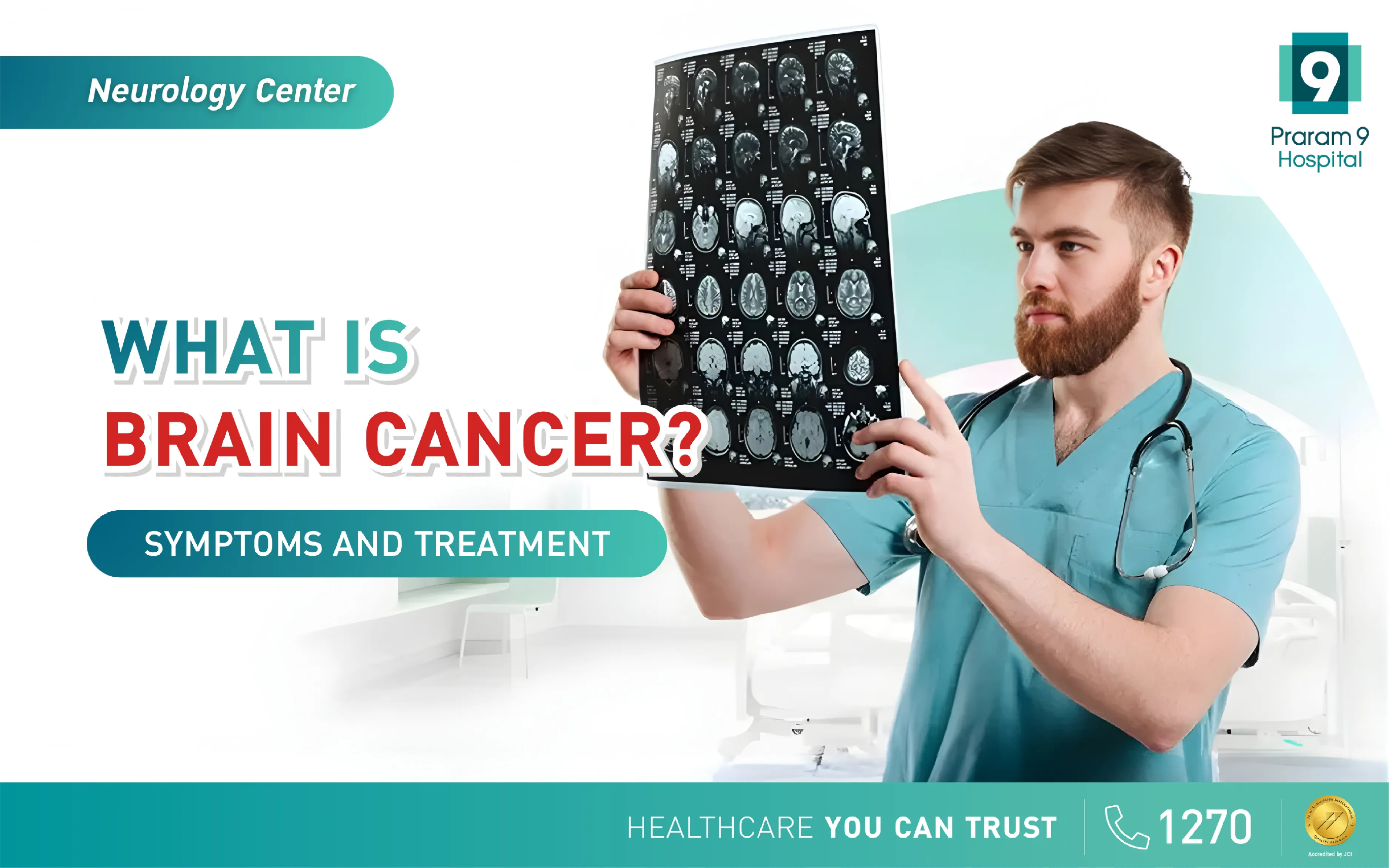
The brain is one of the most important organs of the body. It functions to control all processes of movement, perception, and emotions. If the brain has abnormalities at any time, it may affect the functioning of the body. Especially abnormalities caused by brain cancer, a serious disease that occurs from the abnormal growth of cells, which requires prompt diagnosis and treatment of brain cancer to prevent danger to life.
Key Takeaways
- Brain cancer is a disease caused by abnormal growth of cells within the brain, or it may occur from the spread of cancer cells from other organs in the body.
- The cause of brain cancer is not clearly known, but it may be caused by certain risk factors such as genetics, age, exposure to radiation or chemicals, including smoking behavior.
- Common symptoms in brain cancer patients include chronic headache, seizures, cognitive decline, problems with vision and communication, and changes in mood and personality.
- Brain cancer can be treated in many ways such as surgery, radiation therapy, and chemotherapy, depending on the size, type, location of the cancer, and the patient’s physical condition.
- Brain cancer has no medical prevention method, but the risk can be reduced by quitting smoking and avoiding unnecessary exposure to chemicals or radiation.
What is brain cancer and what types should be known?
Brain cancer (Brain tumor) or a tumor diagnosed as malignant, due to abnormal growth of cells. At the same time, brain cancer can also occur from the spread of cancer from other organs in the body, which affects surrounding brain tissue and various functions. Brain cancer can be divided into 2 types as follows:
- Primary brain cancer occurs from abnormal cell growth causing a brain tumor. It is a type of tumor that does not spread to other areas of the body. There are many types such as tumors at the base of the skull (Chordomas), tumors in the pituitary gland (Craniopharyngiomas), and tumors in the meninges (Meningioma).
- Secondary brain cancer or metastatic brain cancer occurs from cancer cells that arise in other parts of the body such as lung cancer, breast cancer, or skin cancer cells that spread to the brain area. This causes more severe symptoms and is found more frequently than primary type. It is necessary to receive appropriate treatment to prevent danger to life.
What causes brain cancer?
Brain cancer is caused by abnormal growth of cells in the brain and the spread of cancer cells from other organs. However, the exact cause of brain cancer is not clearly known. There are certain risk factors that may cause such abnormalities as follows:
- Genetic characteristics or heredity
- Increasing age
- Long-term exposure to radiation, such as radiation from cancer treatment
- Long-term exposure to fertilizers, pesticides, herbicides
- Smoking behavior
What are the symptoms of brain cancer like?
The characteristics of brain cancer symptoms vary in severity depending on the size and location of the cancer in the brain. These symptoms may occur gradually or rapidly. Common symptoms of brain cancer include:
- Headache, especially after waking up with severe pain, or in some cases chronic headache that interferes with daily life
- Signs of seizures such as convulsions or jerking
- Numbness in the body or muscle weakness
- Dizziness, loss of balance
- Nausea, vomiting
- Dementia, decreased intellectual ability
- Vision problems such as blurred vision or double vision
- Communication problems, difficulty speaking
- Abnormal changes in personality and mood
It can be seen that the above symptoms of brain cancer are quite general and similar to other symptoms or physical abnormalities that may not be brain cancer. Therefore, it is recommended to always observe your own symptoms, whether chronic headache, seizures, or numbness in the body are signs of brain cancer or not. If unsure or if there are severe abnormal symptoms, you should see a doctor for proper diagnosis of symptoms.
How can brain cancer be diagnosed?
Diagnosis of brain cancer is an important step to find the true cause of the symptoms the patient is experiencing and to determine the appropriate treatment approach next. The diagnostic procedures for brain cancer are as follows:
- Neurological examination to check how much the tumor affects brain function
- Computed tomography (CT Scan) is one of the diagnostic procedures to scan for abnormalities in the brain
- Magnetic resonance imaging (MRI) is a diagnostic procedure with high detail to determine the characteristics and location of the tumor
- PET Scan to assess abnormalities of brain tissue or to observe the spread of cancer in the brain
- In cases where a brain tumor is detected and the doctor suspects whether it is malignant, a biopsy may be required for cancer examination.
Diagnosis of brain cancer requires multiple methods together to obtain accurate results and to be able to plan the most appropriate treatment. This depends on the type, size, location of the cancer, as well as the physical condition and overall health of each individual.
How can brain cancer be treated?
Treatment of brain cancer depends on many factors including age, overall health of the patient, size, type, and location of the tumor. At the same time, due to the complexity of brain cancer, patients may receive a variety of treatments to best meet the treatment needs. The methods of treating brain cancer are as follows:
Brain surgery
Surgery is the most commonly used method for treating brain cancer, especially in patients with early-stage brain cancer or when the cancer has not spread. The doctor will perform surgery to remove part or all of the brain tumor for treatment.
There are 2 methods of surgery to remove a brain tumor or brain cancer: open skull surgery to remove all or part of the tumor, and endoscopic surgery using small instruments to remove the tumor.
Radiation therapy
The use of high-energy radiation to destroy cancer cells or inhibit tumor growth. It is often used in cases where surgery cannot be performed or as treatment after surgery to prevent cancer cells from spreading to other organs in the body.
Radiation can be delivered in several ways such as external radiation (External Radiation), or radiation delivered through the skin, skull, and outer brain tissue to the tumor, which requires continuous treatment for several weeks.
In addition, there is stereotactic radiosurgery, which is the delivery of high-energy radiation from multiple directions in a single session. It is a method with low complications and requires a short recovery time.
Chemotherapy
Chemotherapy is a commonly used method for treating brain cancer and is highly effective in destroying cancer cells. It involves the use of a single drug or a combination of drugs, administered orally or intravenously. Chemotherapy is given in cycles depending on the response of each individual.
Chemotherapy may cause certain side effects such as nausea, vomiting, loss of appetite, hair loss, diarrhea, weight loss, and increased risk of infection due to a weakened immune system.
Biologic therapy
Biologic therapy (Biologic Therapy / Immunotherapy) is the treatment of brain cancer by stimulating, controlling, or restoring the body’s natural immune system to fight cancer cells.
Physical therapy
In cases where patients are affected by brain cancer symptoms, such as inability to move the body normally, rehabilitation or physical therapy is required to return to normal life.
How can brain cancer be prevented?
Although medically brain cancer cannot be prevented, there are avoidance approaches that can help reduce the risk of this disease, including:
- Reduce, stop, or quit smoking, or avoid areas with cigarette smoke
- Avoid exposure to chemicals such as pesticides and herbicides
- Avoid unnecessary exposure to various types of radiation
- Maintain good health by eating beneficial foods and exercising regularly
- Have annual health check-ups to detect health problems at an early stage and find appropriate prevention approaches
Brain cancer recognizing symptoms early enables faster treatment
Brain cancer is a disease caused by mutation of brain tumors or from the spread of cancer cells from other organs. Brain cancer symptoms are similar to other diseases such as headache, muscle weakness, communication or vision problems. If symptoms are observed and a doctor is consulted in time, it can help reduce the severity of the disease or complications in the future.
Neurology Center, Praram 9 Hospital has a team of specialized doctors with experience and expertise in diagnosing and treating brain cancer, along with modern standard equipment, so that patients can be confident in effective and safe treatment.
For more information
- Facebook: Praram 9 Hospital International & Expats
- Line: @Praram9Hospital
- Tel. 1270
Frequently asked questions about brain cancer
1. What complications can occur in brain cancer patients?
Brain cancer patients may develop life-threatening complications such as acute bleeding in the tumor, increased intracranial pressure, and hydrocephalus.
2. How long can a brain cancer patient live?
How long a brain cancer patient can live depends on the type of cancer, the stage of the disease, as well as the patient’s physical condition and how well they respond to treatment.
References
Cancer Council Australia. (n.d.). Brain cancer: Causes, symptoms & treatments. https://www.cancer.org.au/cancer-information/types-of-cancer/brain-cancer
Srakocic, S. (2022, March 6). Brain cancer: Causes, types & symptoms. Healthline. https://www.healthline.com/health/brain-cancer
Cleveland Clinic. (n.d.). Brain cancer (brain tumor). https://my.clevelandclinic.org/health/diseases/6149-brain-cancer-brain-tumor
Ratini, M. (2024, June 28). Brain cancer. WebMD. https://www.webmd.com/cancer/brain-cancer/brain-cancer