Health Articles
Knowledge
What is Paralysis? What are the symptoms like? Summary of information you should know
SITTHI PETCHRUTCHATACHART,M.D.
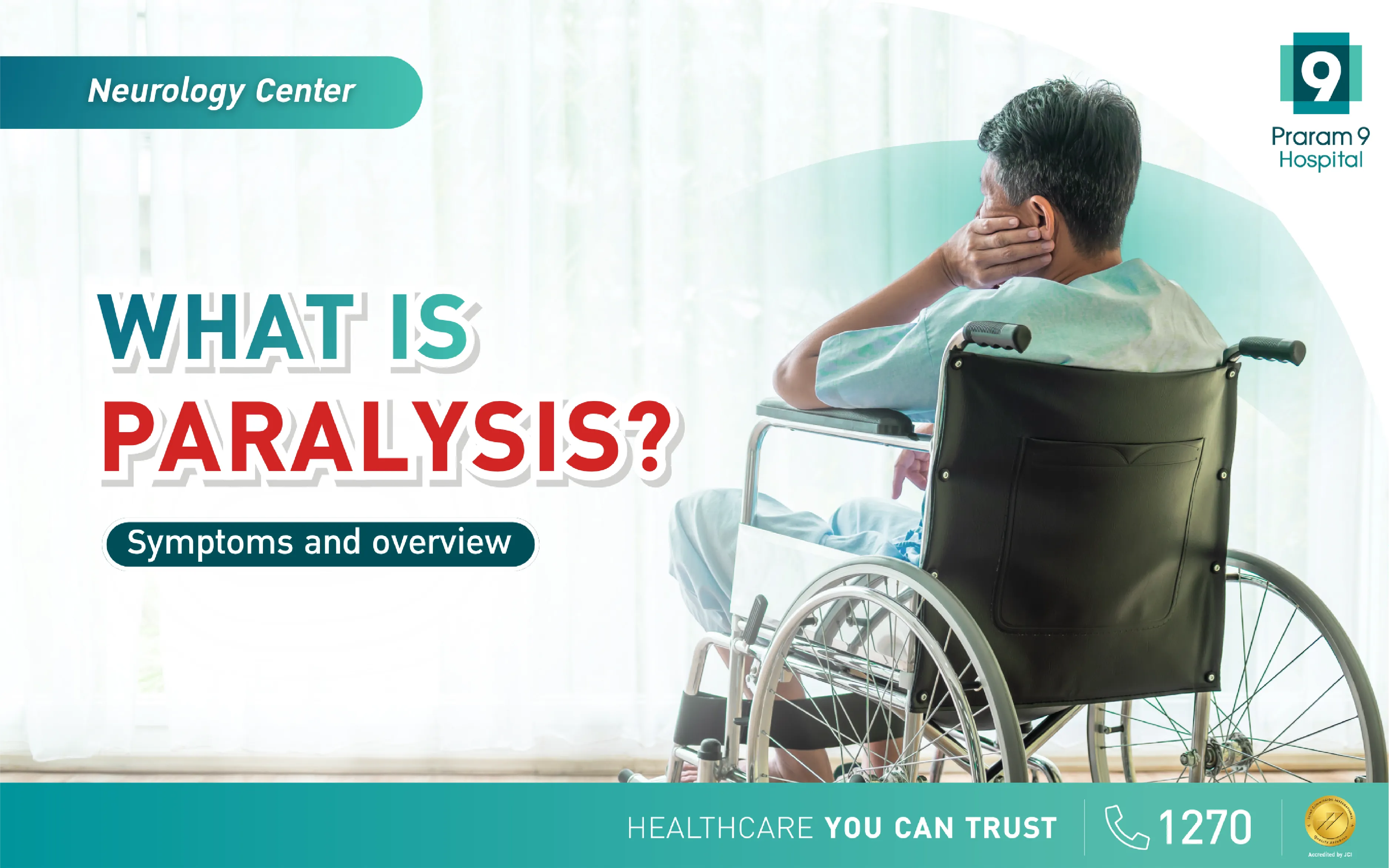
Paralysis (Paralysis) is a disease that affects the movement of muscles in the body, making it unable to move the body normally. It is commonly found in the elderly and is also one of the leading causes of death. However, it is possible to understand the causes of paralysis and what treatment approaches are available to reduce the risk of developing this disease in the future.
Key Takeaways
- Paralysis (Paralysis) is a disease caused by narrowed blood vessels or damage to the spinal cord, resulting in abnormal functioning of the nervous system and brain, unable to command various organs to move normally.
- Paralysis and paresis are different in that paralysis cannot move the body partially or entirely, while paresis can still move the body but more slowly and with numbness.
- Currently, there is no direct cure for paralysis, only treatment according to the cause of paralysis to prevent symptoms from becoming more severe or to rehabilitate the body to regain more normal movement.
- It is recommended to observe paralysis symptoms from the BEFAST warning signs: loss of balance (Balance), vision problems (Eye), facial drooping or crooked mouth (Face), inability to move arm or leg (Arm), inability to communicate (Speech), and the need to take the patient to the hospital as quickly as possible (Time).
What is Paralysis?
Paralysis, or Paralysis, is a disease that causes weakness in the arms and legs, making it impossible to move the body normally, resulting in an inability to help oneself much, which affects daily life. It is caused by abnormalities of the nervous system and the brain in the part that controls movement, making it unable to send signals from the brain to muscles in various parts of the body, eventually causing paralysis in certain areas.
What causes paralysis?
If asked what causes paralysis, most cases are mainly caused by abnormal functioning of the nervous system and brain, resulting in the brain being unable to command organs such as arms or legs to move normally. Common causes of paralysis are as follows:
- Stroke, in which brain blood vessels are blocked by clots or become narrowed due to fat accumulation on vessel walls, including rupture or tearing of brain blood vessels, resulting in lack of blood supply to the brain, inability to function normally, and eventually causing paralysis. Head injury, whether from accidents or severe impact, causing damage to brain tissue, blood vessels, and nerves in the brain. Spinal cord injury or cervical spine injury, which controls the central nervous system; if injured or damaged from accidents such as car accidents or falls from height, it may cause paralysis.
- Congenital paralysis due to spina bifida (Spina Bifida) or cerebral palsy (Cerebral Palsy).
- Diseases related to the nervous system and brain, such as amyotrophic lateral sclerosis (Amyotrophic Lateral Sclerosis), motor neuron disease (Motor Neuron Disease), brain cancer, spinal cord cancer, brain tumors, spinal cord tumors.
- Diseases related to the immune system, such as multiple sclerosis (Multiple Sclerosis), Guillain-Barré syndrome (Guillan Barre Syndrome).
- Infectious diseases such as Lyme disease (Lyme Disease), caused by bacterial infection leading to nerve damage and paralysis, meningitis (Meningitis), encephalitis (Encephalitis), poliomyelitis or polio (Polio).
What are the symptoms of paralysis?
Since paralysis is a disease caused by abnormal functioning of the brain system related to movement, most patients with paralysis have symptoms directly related to body movement, whether in the arms, legs, or parts of the body that can move. The symptoms of paralysis can be divided into 2 main types as follows:
- Localized paralysis (Localized Paralysis), where movement or sensation is lost only in a specific part of the body, such as the face, fingers, hands, feet, or vocal cords.
- Generalized paralysis (Generalized Paralysis) has symptoms affecting more areas than localized paralysis, depending on the severity in each individual. It can be divided into several types as follows:
Paralysis affecting only one arm or one leg (Monoplegia).
Hemiplegia (Hemiplegia), or paralysis affecting both the arm and leg on the same side of the body.
Paraplegia (Paraplegia), or paralysis affecting the lower part of the body from the middle of the torso downward and both legs.
Tetraplegia or quadriplegia (Tetraplegia or Quadriplegia).
Locked-in syndrome (Locked-in syndrome), or paralysis of all parts of the body except eye movement, considered the most severe form of paralysis.
Additionally, paralysis can also be classified based on muscle characteristics: flaccid paralysis (Flaccid Paralysis), caused by injury to the peripheral nervous system, and spastic paralysis (Spastic Paralysis), characterized by muscle stiffness and tightness, frequent cramps or spasms, usually caused by injury to the spinal cord or brain.
Paralysis is considered a silent danger that requires regular observation of abnormalities in oneself or close persons. Initial signs of paralysis include severe headache without known cause, loss of balance and vision, difficulty communicating, numbness in arms or legs, weakness in limbs, slower movement, and in some cases facial distortion, drooping mouth corners, muscle stiffness, or cramps.
What is the difference between paresis and paralysis?
Paralysis and paresis are names that many people often use together because they may think they are the same disease. In fact, both are symptoms of cerebrovascular accident (Cerebrovascular Accident), but they have different characteristics. Paralysis refers to complete loss of body movement, whether partial or entire body, while paresis involves only weakness, numbness, or limited movement in certain parts of the body.
What are the risk factors for paralysis?
Paralysis is mainly caused by abnormalities of the nervous system and brain. It is commonly found in the elderly, but there are also certain risk factors that can lead to paralysis at other ages, including:
- Genetic traits passed from generation to generation; having a family history of stroke or neurological diseases increases risk.
- People with underlying diseases, such as diabetes, hypertension, high blood lipids, or arrhythmia, which increase the risk of stroke and paralysis.
- People who are overweight or obese, due to excessive fat accumulation and increased risk of blood clots or narrowed/blocked vessels, also affecting overall health.
- People who smoke or regularly drink alcohol, which not only affects overall health but also reduces oxygen in blood vessels, preventing proper supply and leading to cerebrovascular problems.
It can be seen that risk factors for paralysis include both controllable and uncontrollable factors. Controllable factors should be understood and managed to reduce the risk of paralysis in the future.
How is paralysis treated?
Currently, there is no direct cure for paralysis, but there are methods that can help improve symptoms or allow patients to recover more quickly. Treatment approaches depend on the cause and severity of paralysis as follows:
- Medication to control and prevent paralysis, such as thrombolytic drugs to prevent blood clots in brain vessels, and muscle relaxants in patients with muscle spasticity.
- Use of catheter-based thrombectomy to remove clots in cases of large vessel occlusion in the brain or when thrombolytic drugs are ineffective.
- Surgery, such as in cases of hemorrhagic stroke, requiring urgent operation to prevent paralysis or life-threatening conditions.
- Acupuncture to stimulate nervous system and muscle function to return to normal.
- Use of medical devices or technologies such as transcranial magnetic stimulation (Transcranial Magnetic Stimulation) to stimulate new nerve cell formation, improving muscle movement or reducing spasticity.
- Physical therapy to rehabilitate muscles, such as arms and legs, including speech training for patients with vocal cord paralysis.
- Rehabilitation of muscles and affected organs through exercise and stretching to reduce stiffness or tightness.
- Control of diseases that cause paralysis, such as maintaining normal blood pressure, blood lipid levels, or managing diabetes to prevent exacerbation.
Therefore, treatment of paralysis requires planning together with a specialist physician to diagnose the true cause and determine the most appropriate treatment approach, helping patients recover as quickly as possible.
Paralysis: If you do not want it in old age, you must take care of yourself early
Paralysis is a silent danger mainly caused by stroke and can result from many risk factors such as hypertension, diabetes, smoking, and alcohol consumption. To prevent paralysis in the future, one should take care of health from a young age, including maintaining normal blood sugar, lipid levels, and body weight, which can help prevent paralysis.
Additionally, regular health check-ups should not be neglected. For those who observe abnormal symptoms that may indicate paralysis, they should seek medical attention as soon as possible or undergo diagnosis and appropriate treatment at a Neurology Center with specialist doctors and standardized modern medical technology.
For more information
- Facebook: Praram 9 Hospital International & Expats
- Line: @Praram9Hospital
- Tel. 1270
Frequently asked questions about paralysis
How can paralysis be prevented?
For those at risk due to controllable factors, prevention includes maintaining normal blood pressure and blood sugar levels, exercising regularly, maintaining normal body weight, avoiding smoking, and reducing alcohol consumption to promote overall health.
What are the BEFAST warning signs of paralysis?
BEFAST stands for Balance (loss of balance), Eye (blurred vision), Face (crooked mouth or facial drooping), Arm (weakness in arm or leg), Speech (inability to communicate), and Time (the need to take the patient to the hospital as quickly as possible). These signs are warning signs of stroke; recognizing and observing them can help provide timely assistance and reduce the risk of paralysis.