Health Articles
Knowledge
EEG Examination for Tumor Diagnosis: A Silent Threat That Must Be Treated Before It Is Too Late
SALISA PRADITHBATUGA, MD.
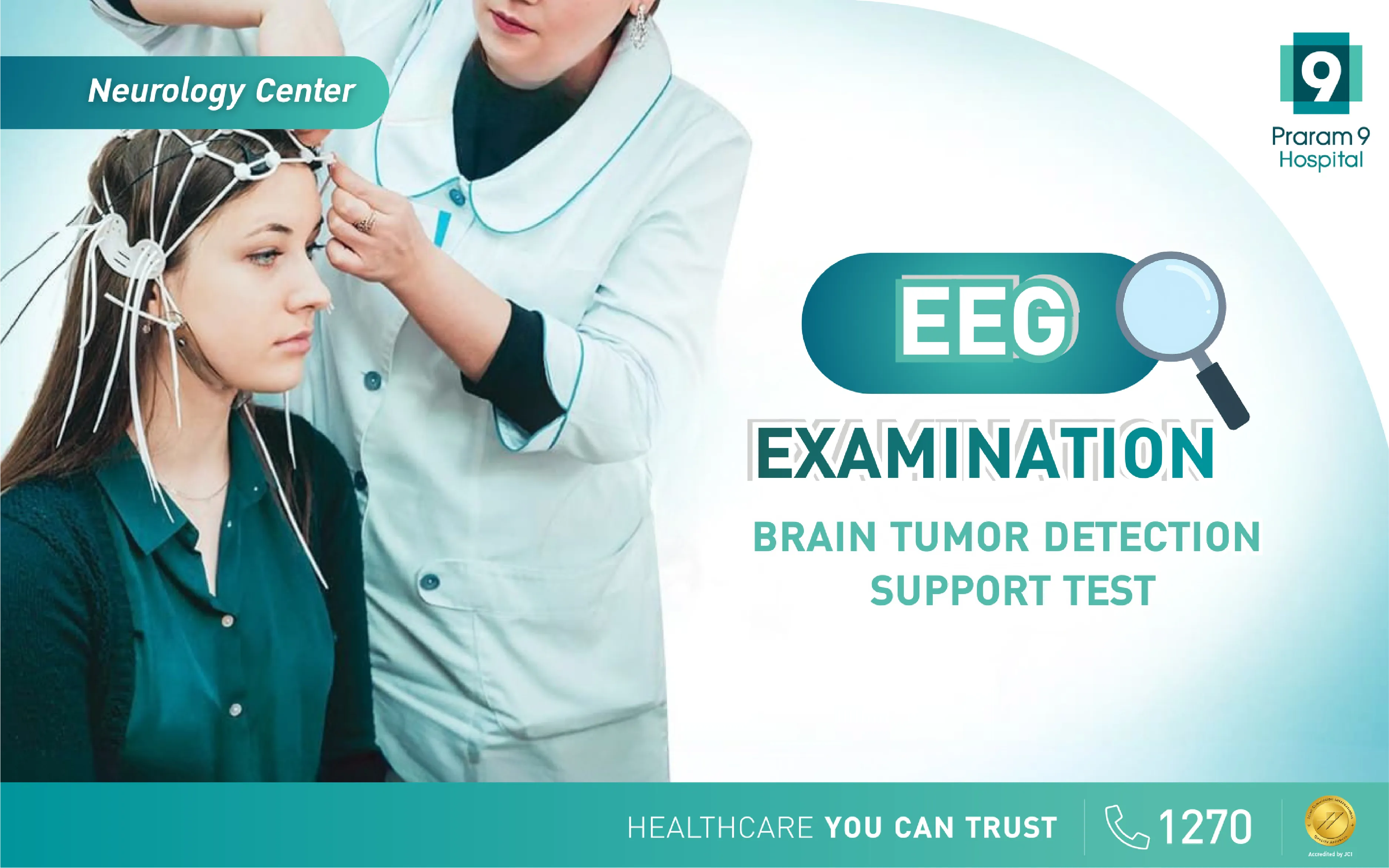
Epilepsy, seizures, or sudden loss of consciousness may be warning signs of hidden abnormalities in the brain. Electroencephalography (EEG) is therefore an important tool that helps doctors detect brain abnormalities at an early stage, improving the effectiveness of treatment and reducing the risk of dangerous progression affecting health, especially in cases of brain tumors that may affect brain function and lead to the aforementioned symptoms.
Key Takeaways
- Electroencephalography (EEG Test) is an important tool for diagnosing brain abnormalities, including brain tumors and other conditions that affect brain wave function.
- EEG is a non-invasive, non-surgical test and is highly useful in identifying seizure types as well as the location of abnormalities in the brain.
What is EEG?
EEG, or electroencephalography, is a neurological diagnostic method used to record brain wave signals by using small electrodes attached to the patient’s scalp. These electrodes detect electrical signals generated by the activity of neurons in the brain and transmit the signals to a recording device, displaying the results as wave graphs that move up and down like general waves, measured in cycles per minute.
Changes in wave patterns can indicate abnormalities in brain function, which may be caused by conditions such as epilepsy, brain tumors, head injury, meningitis, or other neurological diseases.
Benefits of EEG
Electroencephalography is very important in helping diagnose and monitor diseases related to the brain. The main benefits of EEG are as follows:
- Diagnosis of epilepsy: EEG is an important tool used to diagnose epilepsy. It can indicate the location of abnormal electrical activity in the brain and identify seizure types, helping doctors choose appropriate anti-seizure medications for each patient and also used in planning the discontinuation of anti-seizure drugs.
- Monitoring treatment outcomes: EEG in patients with epilepsy can be used to monitor the results of treatment with medication or other therapies in order to adjust the treatment approach to be more appropriate for the patient.
- Detection of brain abnormalities: EEG can help detect other abnormalities in the brain such as brain tumors, brain abscess, brain inflammation, or abnormalities of brain blood vessels, which may affect brain wave patterns.
- Assessment of brain function: EEG can be used to assess brain function in patients with loss of consciousness or other brain conditions such as brain death, for diagnosis and treatment planning.
- Preoperative evaluation for brain surgery: In some cases, such as medical refractory epilepsy or brain tumors located near important brain areas (eloquent cortex), patients may need EEG together with other tests before brain surgery to assess symptoms and identify the area of abnormality, helping doctors plan surgery more accurately.
- Diagnosis of sleep disorders: EEG is part of sleep study (polysomnography), which is used to diagnose certain sleep disorders.
- Differentiation of psychiatric causes: For patients with psychiatric symptoms caused by brain pathology or epilepsy, abnormal brain waves are often found, whereas patients with psychiatric disorders caused by psychological factors usually do not show abnormal brain waves.
Preparation before EEG
Before undergoing an EEG, patients should prepare as follows:
- The night before the test, sleep for about 4–6 hours and do not take naps during the day, because the doctor may need to record brain waves during sleep to help more clearly diagnose abnormalities in brain waves.
- Wash hair thoroughly on the day of the test. Avoid using conditioner, gel, or hair styling products, as they may interfere with electrode attachment on the scalp.
- Patients can take anti-seizure medication as usual unless the attending physician instructs to stop before the test.
- EEG does not require fasting. Food and water can be consumed as usual.
What are the steps of EEG?
The EEG procedure generally takes about 30–60 minutes, with the main steps as follows:
- The patient will be positioned lying flat on a bed in a comfortable position in preparation for the test.
- The staff will clean the scalp and attach electrodes at various positions using conductive gel, then connect wires to the EEG recording machine.
- Once the electrodes are securely attached, the machine will begin recording brain waves, displaying results as graphs on paper or a monitor.
- The results obtained will be read and interpreted by a specialist physician.
- After the test is completed, the staff will remove the electrodes from the patient’s head.
During the test, the doctor may stimulate the brain to observe changes in brain waves using the following methods:
Brain wave recording
In this step, the patient must lie still without movement or talking so that the machine can accurately record brain waves. During this time, staff will instruct the patient to alternately open and close their eyes periodically to stimulate changes in brain waves. The electrodes attached to the scalp will record these signals throughout the specified period.
Hyperventilation
Hyperventilation helps stimulate brain wave activity. The patient must breathe deeply and rapidly continuously for about 3 minutes. This process increases the chance of detecting abnormalities in brain waves but may cause seizures or symptoms such as dizziness and numbness in the hands and feet. However, hyperventilation is not required for all patients, depending on the doctor’s assessment.
Photic stimulation
Photic stimulation is another method used to stimulate the brain. The patient will look at a flashing light that turns on and off at different frequencies to observe whether there is an abnormal response in brain waves. This test is important in diagnosing certain types of epilepsy.
EEG for detecting risk of brain disease: early detection, early treatment, helps prevent disease progression
Electroencephalography (EEG) is a safe, non-painful test suitable for diagnosing brain diseases such as brain tumors, epilepsy, and meningitis, as well as for monitoring neurological patients. It helps doctors make accurate and timely treatment decisions.
If you have abnormal symptoms such as frequent seizures, chronic headache, or frequent loss of consciousness, you should consult a doctor to consider undergoing an EEG at a nearby hospital or at the Neurology Center, Praram 9 Hospital. There is a team of specialist doctors and personnel with expertise in specific diseases providing close care from diagnosis, treatment, to rehabilitation, along with modern medical technology that helps detect abnormalities early, increasing treatment opportunities and preventing complications in the future.
For more information
Facebook : Praram 9 Hospital International & Expats
Line : @Praram9Hospital
Tel. 1270
Frequently Asked Questions about EEG
1. Is EEG risky?
EEG is a safe test with no risk because there is no puncture or use of radiation and it does not cause pain. However, patients may experience slight dizziness after hyperventilation or photic stimulation, but symptoms will resolve on their own within a few minutes.
2. Is recovery needed after EEG?
In general, patients do not need recovery after EEG. They can return home and resume normal activities immediately. There may be some conductive gel remaining on the scalp, but it can be easily washed off with water and shampoo.
3. What can EEG results indicate?
EEG results are displayed as wave graphs, which are read and interpreted by a neurologist. Abnormal wave patterns can indicate the type and severity of brain abnormalities. For example, sharp waves may indicate epilepsy, while slow waves in certain areas may indicate brain tissue damage or compression by a tumor.
However, EEG results alone may not be sufficient for a final diagnosis. Doctors may consider symptoms, medical history, and results of other examinations together.
References
Mayo Clinic. (2024, May 29). EEG (electroencephalogram). https://www.mayoclinic.org/tests-procedures/eeg/about/pac-20393875
Meara Withe. (2023, June 19). 10 conditions doctors assess with an EEG. MedicalNewsToday. https://www.medicalnewstoday.com/articles/10-conditions-diagnosed-with-an-eeg
Omar A. Danoun. (2023, 1 September). Brain Tumors. Epilepsy Foundation. https://www.epilepsy.com/causes/structural/brain-tumors#What-Are-the-Symptoms-of-DNETs,-Gangliogliomas,-and-Low-grade-Tumors?