Health Articles
Knowledge
What causes dizziness? How should it be managed when symptoms occur
SITTHI PETCHRUTCHATACHART,M.D.
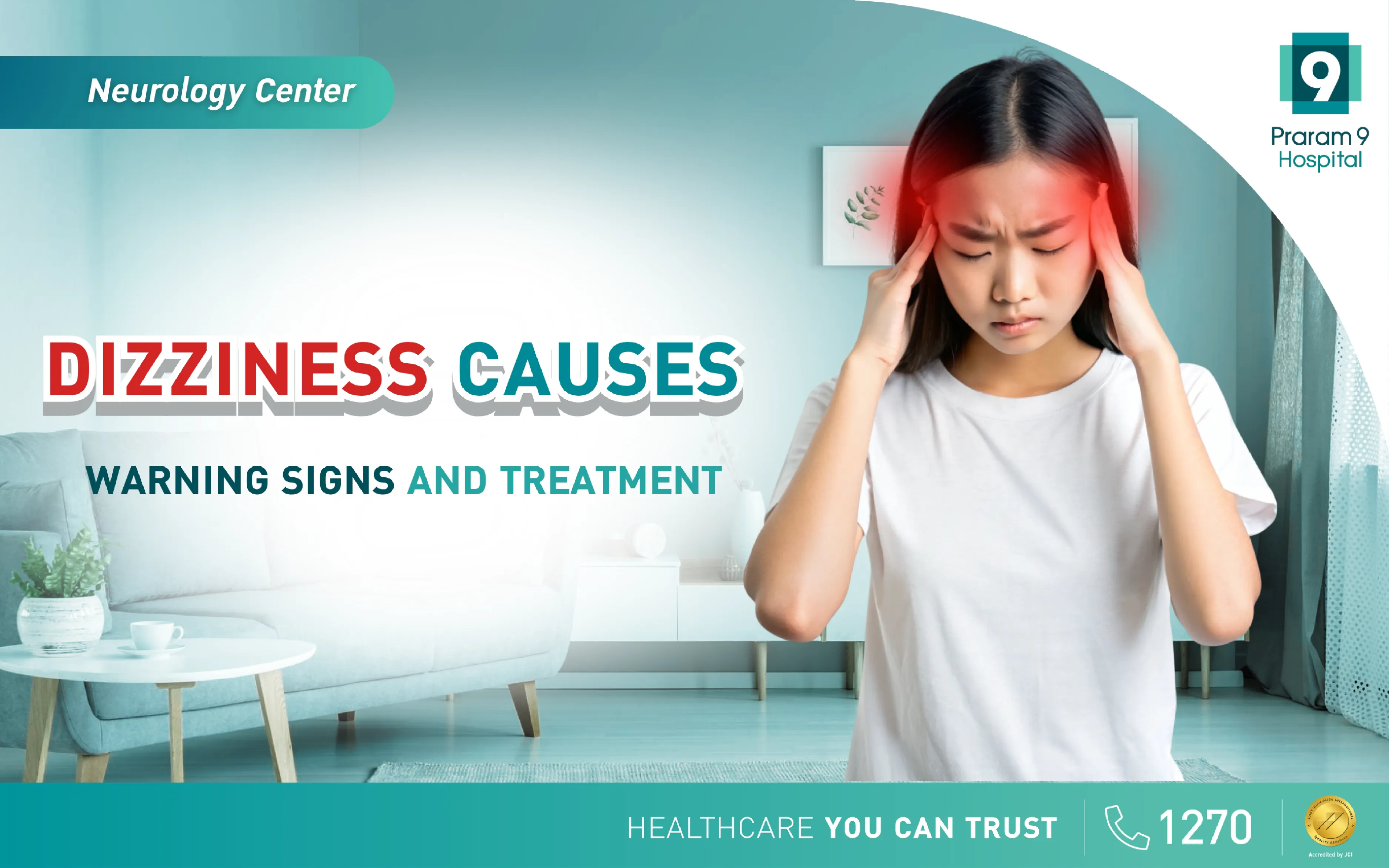
Dizziness is one of the signs indicating abnormalities occurring in the body. It may range from minor problems such as sudden changes in posture to severe neurological problems. If neglected, it may lead to unexpected complications. This article will take you to understand what dizziness is, what causes it, and basic self-care guidelines so that you can appropriately handle this condition
Key Takeaways
- Dizziness can occur from many factors, ranging from non-severe conditions such as rapid posture changes or motion sickness to complex health problems such as Ménière's disease, anemia, and stroke
- If dizziness occurs together with other abnormal symptoms such as chronic headache, confusion, slurred speech, tinnitus, chest tightness, loss of balance, or fainting, you should seek medical attention immediately
What is dizziness?
Dizziness is a condition in which the patient feels spinning or movement even though they are not moving. In general, it can be divided into several forms. Some people may feel unsteady, loss of balance (Disequilibrium), near fainting (Presyncope), or feel dazed, lightheaded, faint, as if unable to stand (Lightheadedness)
The most common dizziness symptom is a sensation as if the world is spinning, called vertigo, which is caused by abnormalities of the balance system in the inner ear or brain
What are the causes of dizziness?
What causes lightheadedness and blurred vision? In general, dizziness is a condition that can occur from many causes, both from internal factors related to body systems and external factors from daily life or environment, which can be divided as follows
Internal factors
- Inner ear system problems: This is the most common cause of dizziness and vertigo, especially Ménière's disease and benign paroxysmal positional vertigo (BPPV)
- Circulatory system problems: May be a cause of persistent lightheadedness, such as hypotension or cerebral vascular stenosis, resulting in insufficient blood supply to the brain, causing dizziness
- Neurological diseases: Such as migraine, which may cause dizziness together with headache, or in some cases may be a sign of stroke or brain tumor, which are severe causes and require urgent diagnosis
- Endocrine abnormalities: Hyperthyroidism may cause palpitations, sweating, and dizziness
- Anemia: Having too few red blood cells causes the body to receive insufficient oxygen, resulting in dizziness and fatigue
External factors
- Dehydration: Causes blood pressure to decrease and can result in dizziness
- Certain medications: Such as antihypertensive drugs, antihistamines, or anxiolytics may have side effects causing dizziness
- Stress and anxiety: Psychological conditions affect the autonomic nervous system, causing dizziness
- Rapid posture changes: May cause a sudden drop in blood pressure, resulting in lightheadedness and unsteady walking
- Motion sickness: Caused by mismatch between body motion perception and visual input, stimulating the central nervous system to cause dizziness and nausea
Observe symptoms: what type of dizziness should see a doctor
Although dizziness is a common symptom, if it occurs frequently or has severe abnormalities, you should see a doctor for thorough diagnosis immediately, especially when having these symptoms
- Chronic headache
- Numbness or weakness of the face, arms, or legs, especially on one side of the body, which may be a sign of stroke or muscle weakness
- Difficulty speaking, slurred speech, or confusion
- Seizures or loss of consciousness
- Chest pain or chest tightness without known cause
- Sudden hearing loss or abnormal tinnitus
- Severe dizziness to the point of inability to maintain balance or frequent falls
- Dizziness that does not improve or worsens progressively even after rest
- History of chronic diseases such as heart disease or diabetes and frequent dizziness
What to do when dizziness begins
When dizziness begins, the important thing is to stay calm and follow these steps to reduce the risk of falling and relieve symptoms initially
- If feeling dizzy, quickly sit or lie down in a comfortable position to prevent falling
- Avoid sudden posture changes
- Drink sufficient water because dehydration may be a cause of dizziness
- Get adequate sleep and rest
- Avoid triggers that cause dizziness such as bright light, loud noise, or rapid posture changes
- If having dizziness, avoid driving or operating machinery to prevent accidents
Dizziness is common but sometimes more dangerous than expected
Dizziness is something that can occur frequently but should not be overlooked because it can arise from many causes, from non-severe conditions to complex health problems. Careful self-observation regularly will help receive timely treatment and prevent disease progression
If dizziness interferes with daily life or occurs with other abnormal symptoms, you should immediately see a doctor. At the Neurology Center, Praram 9 Hospital, there are specialists in brain and nervous system diseases closely taking care, with complete medical equipment to help diagnose quickly and accurately. There is also a rehabilitation medicine center to help patients regain a good quality of life again
For more information
Facebook : Praram 9 Hospital International & Expats
Line : @Praram9Hospital
Tel. 1270
Frequently asked questions about dizziness
1. What diseases cause dizziness?
Dizziness can be caused by many diseases such as Ménière's disease, hyperthyroidism, stroke, migraine, and brain tumor
2. Can dizziness be prevented?
Risk can be reduced by drinking water, getting enough rest, avoiding stress, not changing posture rapidly. If feeling lightheaded, should stop and rest immediately, and if dizziness occurs frequently, should see a doctor to find the true cause
References
Dizziness. (2023, March 4). Cleveland Clinic. https://my.clevelandclinic.org/health/symptoms/6422-dizziness
Dizziness. (2023, April 21). NHS. https://www.nhs.uk/symptoms/dizziness/
Mayo Clinic Staff. (2024, November 2). Dizziness. Mayo Clinic. https://www.mayoclinic.org/diseases-conditions/dizziness/symptoms-causes/syc-20371787