Health Articles
Knowledge
Chronic kidney failure: start treatment today before it becomes life-threatening
CHALOTHORN TAESILAPASATHIT,M.D.
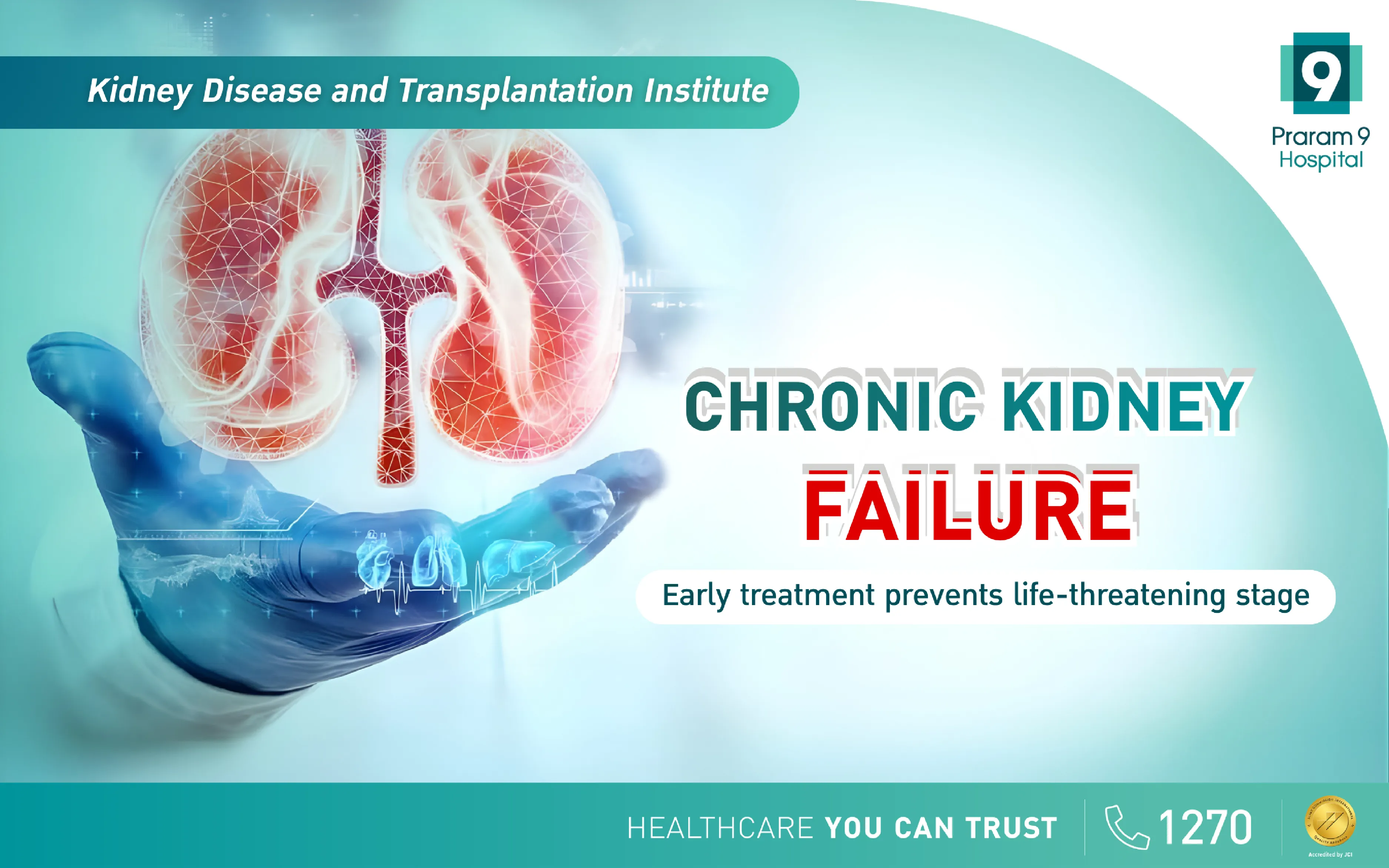
The kidneys have the function of removing waste and excess water in the blood from the body in order to maintain balance of water, minerals, and reduce toxicity in the bloodstream. But when the kidneys cannot perform their function normally for a long period, it will result in the condition “chronic kidney failure,” which may lead to severe complications, causing various systems in the body to fail and becoming life-threatening.
Key Takeaways
- Chronic kidney failure is when the kidneys cannot perform the function of excreting waste and maintaining the balance of water and minerals in the blood, which affects the function of many body systems.
- The causes of chronic kidney failure are often from complications of other diseases that affect the kidneys, and may also come from other causes that make the kidneys work harder than normal and deteriorate faster.
- Treatment of chronic kidney failure is renal replacement therapy to help reduce toxicity, remove excess water and waste in the bloodstream, allowing body systems to function normally.
What is chronic kidney failure?
Chronic kidney failure (Chronic Kidney Disease: CKD) is a condition in which the kidneys cannot perform the function of excreting waste and maintaining the balance of water and minerals in the blood normally for a continuous period longer than 3 months, causing accumulation of waste in the bloodstream, affecting the function of various systems in the body and causing severe complications that may be life-threatening.
When chronic kidney failure progresses to stage 5 or the end stage, the kidneys will no longer be able to function normally, and if the glomerular filtration rate (GFR) is lower than 15 milliliters/minute/1.73 square meters, symptoms from waste accumulation often begin, and it is necessary to receive treatment with renal replacement therapy to help reduce toxicity, remove excess water and waste in the bloodstream.
Whether kidney function is normal or not can be observed from the creatinine level in the blood. Learn about creatinine, read more at: Creatinine
What causes chronic kidney failure?
The causes of chronic kidney failure are often from complications of other diseases that affect the kidneys, for example:
- Diabetes mellitus
- Nephritis
- Hypertension
- Cardiovascular disease
- Immune system disorders
- Polycystic kidney disease
- Kidney stones
In addition, there are other causes that lead to chronic kidney failure, such as long-term use of NSAIDs pain relievers or consumption of high-sodium diets, which can increase the workload of the kidneys in excreting waste and minerals from the body. The kidneys having to workหนัก for a long time will increase the risk of deterioration and eventually develop into chronic kidney failure.
Symptoms of chronic kidney failure
When the kidneys cannot function normally and result in chronic kidney failure, it will affect many systems in the body and show the following symptoms:
- Abnormal urination, such as foamy urine from protein leakage in urine, decreased urination or more frequent urination than normal from kidneys not being able to function fully, dark or very cloudy urine, or blood may be found in the urine
- Swelling of the face or feet from fluid retention in the body
- Easily fatigued, weakness
- High blood pressure
- Weight loss or weight gain
- Loss of appetite, nausea, vomiting
- Itching of the body
- Pale body, anemia
- Risk groups that must be cautious of chronic kidney failure
Those classified as risk groups must be cautious of chronic kidney failure, including:
- Elderly people aged 60 years and above; as age increases, kidney function decreases naturally
- Those with underlying diseases, especially diseases that affect kidney function, such as diabetes mellitus, hypertension, heart disease, immune system disorders, etc.
- Those with a history of using nephrotoxic drugs, such as herbal drug sets or NSAIDs pain relievers continuously for a long time
- Those with family members with kidney disease have a higher chance of developing chronic kidney failure than those without family members with kidney disease
- Those with a history of recurrent urinary tract infections may affect kidney function
- Those with risk behaviors such as smoking, consuming highly seasoned food, drinking very little water, etc.
Treatment of chronic kidney failure
Treatment of chronic kidney failure focuses on reducing toxicity, removing excess water, and waste in the bloodstream that the kidneys can no longer eliminate. The treatment approaches are as follows:
Dialysis
Dialysis is a method that helps the body remove waste from the bloodstream and maintain the balance of water and minerals by simulating kidney function. There are 2 main methods:
- Hemodialysis using an artificial kidney machine; this method takes about 4 hours per session, and patients must undergo it at least 2–3 times per week at a hospital or dialysis center
- Peritoneal dialysis can be done at home by filling dialysis solution into the abdominal cavity and draining it according to the scheduled time; patients must do this every day, 4–6 times per day
Kidney transplantation
Kidney transplantation is a method of transplanting a healthy donor kidney to function in place of the deteriorated kidney, or using an automated dialysis machine (Automated PD) to help improve patients’ quality of life, without needing frequent dialysis. If health after kidney transplantation is well maintained and there are no post-transplant complications, patients will be able to have a longer life than patients who receive dialysis alone.
Can chronic kidney failure be prevented?
Chronic kidney failure is a degenerative condition that can occur. These methods are for prevention and slowing the deterioration of the kidneys, reducing the chance of chronic kidney failure in the future:
- Reduce consumption of strongly flavored foods and processed foods because they are high in sodium, causing the kidneys to work hard
- Be cautious in using certain medications continuously for a long time, such as NSAIDs pain relievers and herbal medicines, because they cause faster kidney deterioration
- Eat a balanced diet, drink sufficient water every day, and exercise regularly
- Refrain from smoking and drinking alcohol
- Undergo annual health check-ups
- In cases of underlying diseases, control the condition well
In conclusion, chronic kidney failure can be prevented by maintaining good health, avoiding risk behaviors that make the kidneys workหนัก, and undergoing annual health check-ups at least once per year. If kidney abnormalities are detected early, treatment can be received in a timely manner, allowing patients to have healthy kidneys for a long time.
Treat chronic kidney failure, reduce complications, extend lifespan and quality of life for patients
Chronic kidney failure is a serious disease that may be life-threatening if not treated. Currently, treatment for patients with chronic kidney failure can be done by supportive care to allow the body to remove waste, water, and excess minerals from the blood through dialysis, to prevent accumulation of waste leading to failure of various systems in the body. In addition, there is another treatment method, kidney transplantation, which helps extend lifespan and improve quality of life for patients. Although continuous self-care is required, it is considered an effective long-term option.
At the Kidney Institute, Praram 9 Hospital, treatment and care for patients with chronic kidney failure are provided with consideration of patients’ quality of life, through cooperation from specialist physicians at the Kidney Institute, professional nurses, and support teams. We work together as a multidisciplinary team for the best treatment efficiency.
For more information
Facebook : Praram 9 Hospital International & Expats
Line : @Praram9Hospital
Tel. 1270
Frequently asked questions about chronic kidney failure
1. What complications can occur from chronic kidney failure?
Complications from chronic kidney failure include pulmonary edema, pericarditis, heart failure, peripheral neuropathy, or osteoporosis, etc.
2. How is chronic kidney failure different from acute kidney failure?
Chronic kidney failure occurs gradually; kidney function gradually decreases until it can no longer function, which takes several months for disease progression. In contrast, acute kidney failure occurs very rapidly within a few days or a few weeks. If appropriate treatment is received, there is a chance that kidney function can recover to near normal.
References
Chronic Kidney Disease (CKD). (2023, September 11). National Kidney Foundation. https://www.kidney.org/kidney-topics/chronic-kidney-disease-ckd
Mayo Clinic Staff. (2023, September 6). Chronic kidney disease. Mayo Clinic. https://www.mayoclinic.org/diseases-conditions/chronic-kidney-disease/symptoms-causes/syc-20354521
Chronic kidney disease. (2023, March 22). NHS. https://www.nhs.uk/conditions/kidney-disease/
About the Author