Health Articles
Knowledge
What causes dizziness? Warning signs to pay attention to and ways to treat it
JAKRAPONG VONGSAENGNAK,M.D.
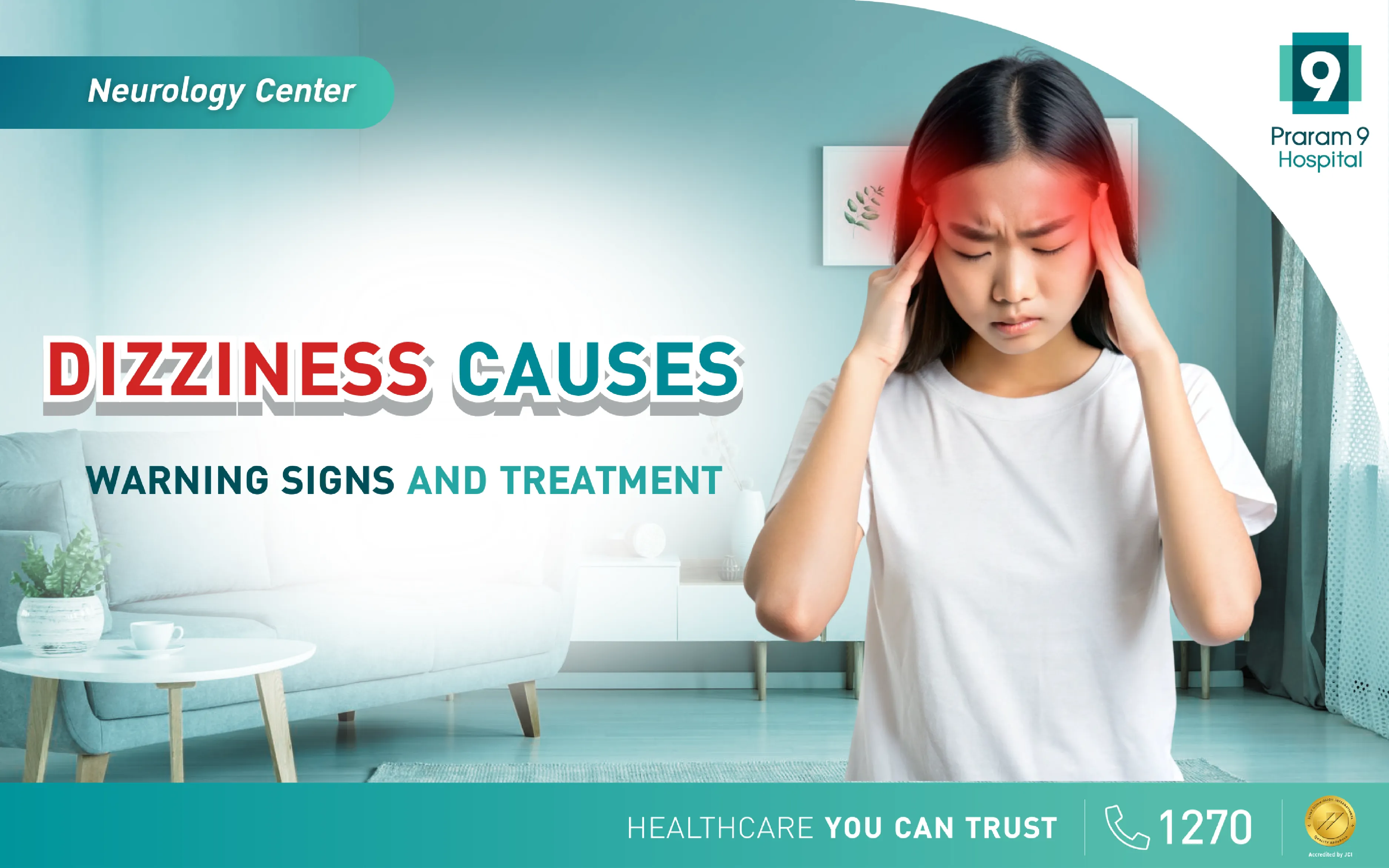
Many people have probably experienced dizziness frequently, feeling as if the head is light or the brain is dull, making daily life inconvenient. Medically, dizziness is not a disease but a warning sign that may come from many factors. Therefore, many people often wonder what exactly causes headache and dizziness, and how to relieve dull dizziness so that it improves. In this article, we provide basic information and initial guidelines that should be known about dizziness.
Key Takeaways
- Dizziness has many types. Ten people with the same dizziness symptoms may have completely different causes. Therefore, trying to describe the sensation of dizziness that occurs is important.
- The causes of dizziness come from many factors such as brain fatigue, dehydration, low blood pressure, stress, insufficient rest, or side effects from certain medications.
- Warning signs that require urgent medical attention: if dizziness occurs together with serious abnormal symptoms such as numbness in the hands, chest tightness, slurred speech, weakness of the limbs, difficulty swallowing, or symptoms similar to paralysis, you should consult a doctor immediately to find the cause and receive proper treatment.
- This article is only basic introductory knowledge. If there are abnormalities or any doubts, you should consult a specialist doctor for proper treatment and better quality of life.
What is dizziness (Dizziness)?
Dizziness (Dizziness) is a symptom in which the patient feels that the head is not clear, feels dazed or confused, or has a feeling of heaviness in the head or a dull head. It often occurs from various factors, both physical and mental, such as dehydration, insufficient rest, stress, or may be a side effect from certain medications that affect the brain.
How many types of “dizziness” are there?
Because feelings are difficult to explain in words, sometimes there may be no words that can describe the symptoms that occur. Medical science has attempted to classify dizziness into 4 main types as follows:
- Vertigo: the patient may feel that they themselves are spinning or that the surroundings are clearly spinning. There may be nausea and vomiting. It may be related to sudden movement or change in position. Closing the eyes may improve it but the sensation will still be present.
- Lightheadedness: a floating feeling, similar to being disconnected from the surrounding environment. There may be a buzzing sensation in the head.
- Presyncope: feeling faint, dim vision, unclear vision, feeling blurred. There may be sweating, palpitations, or a rapid heartbeat.
- Dysequilibrium: difficulty maintaining balance, may feel unsteady, similar to balancing on a boat with waves, or a sensation similar to an earthquake.
Classifying the type of dizziness is important because each type has different diagnostic and treatment approaches. If not distinguished, symptoms may worsen, treatment may not resolve the issue, and it may interfere with daily life. However, one person may have overlapping types of dizziness. If unsure, consult a doctor for proper treatment.
What are the causes of dizziness?
Dizziness may seem minor, but if it occurs frequently or there is a feeling of an unclear brain leading to loss of concentration, it may reflect some abnormalities that should be noted, especially in patients who have repeated dizziness or feel dizzy all the time. The causes that may lead to dizziness include:
- Low blood sugar level: in people who fast for a long time or diabetic patients whose blood sugar drops rapidly (Hypoglycemia), it may cause dizziness along with other symptoms such as hand tremors, sweating, and fatigue.
- Brain Fog Syndrome: this condition causes patients to feel short attention span, slow thinking, easily confused, and often comes with a dull head sensation similar to dizziness. It is associated with insufficient rest, chronic stress, or certain underlying diseases.
- Dehydration: a dehydrated body reduces blood volume, resulting in low blood pressure and making dizziness more likely, especially in very hot weather or after heavy exercise.
- Low blood pressure: when blood pressure drops rapidly, it results in insufficient blood flow to the brain, especially when changing positions (Orthostatic Hypotension), such as standing up too quickly.
- Stress and anxiety: emotional conditions that affect the autonomic nervous system, causing dizziness along with other symptoms such as palpitations or shortness of breath.
- Insufficient rest: lack of sleep or poor-quality sleep results in fatigue and can cause dizziness.
- Side effects from medications: some medications such as antihypertensive drugs, antidepressants, or antihistamines may affect the central nervous system and cause dizziness.
- Anemia: having too few red blood cells results in insufficient oxygen supply to the body, causing fatigue and chronic dizziness.
This does not include other neurological abnormalities such as Vestibular Neuritis, Benign Paroxysmal Positional Vertigo, Meniere’s disease, Epilepsy, Vertebrobasilar Insufficiency, Vestibular Migraine, etc.
How to relieve dizziness by yourself
When dizziness occurs, sometimes it can be relieved by yourself without medication. For those who want to relieve dizziness initially, adjusting behavior and self-care can help improve symptoms. The methods to relieve dizziness are as follows:
Sit or lie down to reduce symptoms
When dizziness occurs, slowly sit or lie down to allow the body to rest and regain balance. If possible, lie flat on a bed in a quiet and dark room to reduce external stimuli and help the symptoms subside quickly.
Stop activities that trigger dizziness
Avoid activities that require rapid head movement such as standing up immediately, turning the head quickly, or sudden bending or tilting. If movement is necessary, do it slowly and carefully to prevent worsening symptoms and reduce the risk of accidents from instability.
Get sufficient and regular rest
Good quality and sufficient sleep is very important because sleep deprivation or too little sleep is a major cause of fatigue and leads to dizziness. Therefore, you should go to bed at regular times and avoid factors that disturb sleep so that the body can fully recover.
Avoid caffeine and alcoholic beverages
Beverages containing caffeine and alcohol can affect blood circulation, cause dehydration, and trigger dizziness more easily. Avoiding these beverages helps the body maintain balance and reduce the risk of symptoms.
Drink enough water to balance the body
Dehydration is one of the main causes of dizziness. Drinking enough clean water throughout the day, at least 2–3 liters per day, helps maintain blood volume balance, improves blood flow to the brain, and helps relieve symptoms.
What type of dizziness should see a doctor?
If dizziness occurs together with certain abnormal warning signs, you should urgently consult a doctor for diagnosis because it may indicate a serious condition that requires treatment. Types of dizziness that should see a doctor include:
- Having neurological abnormalities such as limb weakness, numb hands, slurred speech, unsteady walking, or symptoms similar to paralysis
- Chest pain or chest tightness, which may be a sign of heart or vascular abnormalities
- Severe headache or symptoms that progressively worsen
- Loss of consciousness or frequent fainting sensation
- Abnormal vision such as double vision or blurred vision
- High fever or stiff neck
- Severe nausea and vomiting until unable to eat
- No other accompanying symptoms but dizziness persists for a long time and interferes with daily life
However, treatment approaches and medication depend on the disease causing the dizziness.
Frequent dizziness is a signal that the body needs care
Dizziness is a signal from the body that should be paid attention to. Understanding the differences between this symptom and vertigo, including possible causes, will help us take care of ourselves and relieve symptoms correctly.
If you or someone close to you has severe dizziness or other abnormal symptoms affecting daily life, you should not ignore it and should consult a doctor as soon as possible for accurate diagnosis and appropriate treatment planning. You can contact the Neurology Center, Praram 9 Hospital, which is ready to provide treatment by specialist doctors and complete medical equipment.
For more information
- Facebook: Praram 9 Hospital International & Expats
- Line: @Praram9Hospital
- Tel. 1270
Frequently Asked Questions about dizziness
1. What vitamin deficiency causes dizziness?
If the body lacks vitamin B12, it is one of the important causes of dizziness or dull headache because this vitamin plays an important role in the function of the central nervous system and the health of red blood cells. Another important vitamin is vitamin D, as it is an important part of the function of calcium crystals in the inner ear and the stability of the nervous system. If the body lacks vitamin D, it may cause calcium deposits to dislodge in the inner ear, leading to vertigo.
2. How can dizziness be prevented?
Dizziness can be prevented by adjusting behavior and maintaining body balance, such as getting enough sleep, exercising regularly, drinking enough water, and avoiding stress. These activities are simple and effective ways to prevent dull dizziness and help reduce the chance of dizziness in daily life.
References
Timothy C. Hain, MD. (2023, March 31). Outline of Causes of Dizziness, Imbalance and Hearing Disorders. Dizziness and Balance. https://dizziness-and-balance.com/disorders/outline.htm
MedlinePlus. (n.d.). Dizziness and Vertigo. https://medlineplus.gov/dizzinessandvertigo.html
Muncie HL, Sirmans SM, James E. (2017). Dizziness: approach to evaluation and management. Am Fam Physician. https://pubmed.ncbi.nlm.nih.gov/28145669/