Health Articles
Knowledge
What is Electromyography (EMG) and Nerve Conduction Study?
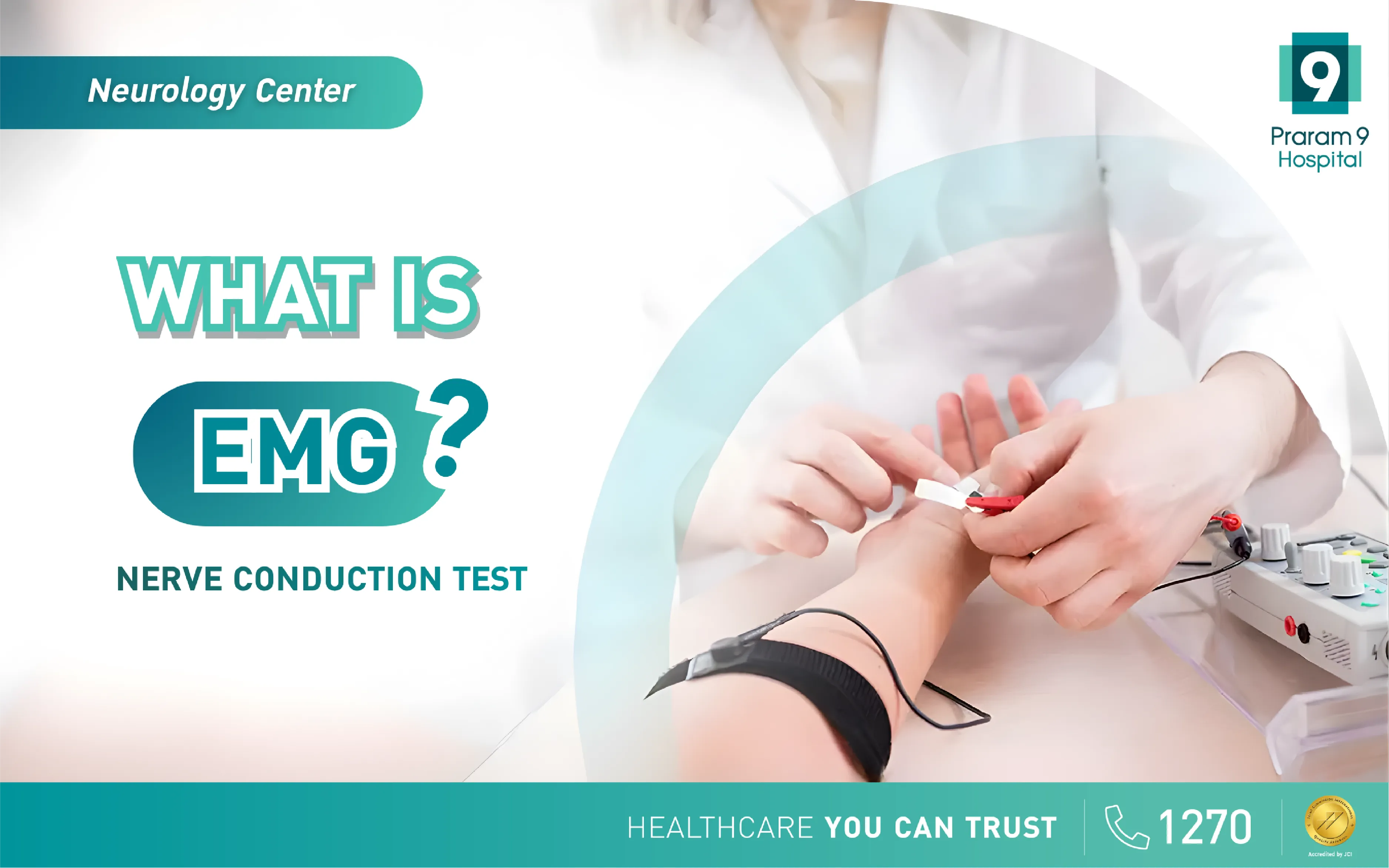
EMG examination is one of the medical methods used to analyze the functioning of muscles and nerves to determine whether they are related, which helps physicians accurately diagnose abnormalities of the peripheral nervous system and muscles. What diseases can this test diagnose? How should one take care before and after the test? Are there side effects? This article has the answers.
Key Takeaways
- EMG is an examination to assess the functioning of muscles and nerves to determine whether they are functioning in a normal relationship.
- EMG examination helps accurately diagnose diseases related to the peripheral nervous system and muscles.
- EMG is a safe examination with very few side effects. Most commonly, only bruising or mild pain at the examination site is found, and symptoms resolve on their own within a few days.
What is Electrodiagnosis?
Electrodiagnosis is a process that uses electricity to evaluate the functioning of nerves and muscles in detail, to examine whether any part is abnormal and how it relates to the patient’s symptoms. This helps physicians accurately diagnose diseases of the peripheral nervous system and muscles.
There are two main commonly used methods: Nerve Conduction Study (NCS) and Electromyography (EMG). These two tests are often performed together to obtain complete and accurate diagnostic results, which can be used to plan appropriate treatment for each individual.
What is EMG?
EMG (Electromyography) is an examination to assess the functioning of muscles and the nerves that control those muscles. The physician uses a small needle (needle electrode) inserted into the muscle to record the electrical signals generated by the muscle. This helps the physician understand the causes of symptoms such as muscle weakness or numbness in the hands and feet.
The EMG machine displays results through an oscilloscope screen and sound signals. The electrical waveforms obtained vary depending on whether the muscles and nerves are functioning normally or have abnormalities.
Normal EMG signals
- When the needle is inserted into the muscle at rest (no contraction), there will be no electrical signal, known as electrical silence. When the muscle contracts, a signal called Motor Unit Potential appears, which has a simple pattern of 2–3 phases (biphase or triphasic), with an amplitude of approximately 200 microvolts – 5 millivolts, a duration of approximately 5–15 milliseconds, and a frequency of approximately 5–20 times/second.
Abnormal EMG signals
- MUP signals are excessively complex, such as having more than 3 phases (polyphasic motor unit potential or polyphasic MUP). The waveform may have width, amplitude, or frequency different from normal, or there may be spontaneous electrical activity when the muscle is not contracting.
When is EMG needed and what does it diagnose?
EMG is a medical examination used to diagnose abnormalities of the peripheral nervous system and muscles. It is often performed in patients with symptoms such as muscle weakness, numbness in the hands or feet, nerve pain, or radiating pain along the limbs. Conditions or diseases commonly diagnosed with EMG include:
- Myopathy
- Neurological diseases
- Radiculopathy
- Neuromuscular junction disorders
- Motor neuron diseases
What diseases can EMG detect?
EMG examination can help diagnose a variety of diseases related to the nervous system and muscles, for example:
- Muscle diseases such as myositis or muscular dystrophy; nerve entrapment such as carpal tunnel syndrome causing hand numbness
- Diseases related to nerve roots such as herniated disc compressing nerve roots, cervical spondylosis, or spinal degeneration causing radiating pain, numbness, or muscle weakness in the arms and legs. In severe cases, physicians may use additional examinations to increase diagnostic accuracy and assist in treatment planning, including consideration of spinal surgery if necessary
- Peripheral neuropathy, commonly presenting with numbness in the hands and feet, which may be caused by chronic diseases such as diabetes or vitamin deficiency
- Neuromuscular junction disorders such as myasthenia gravis, causing abnormal transmission of signals from nerves to muscles, resulting in muscle weakness, ptosis, blurred vision, double vision, or difficulty swallowing and breathing
- Motor neuron diseases such as ALS (Amyotrophic Lateral Sclerosis)
How to prepare before EMG?
Preparation before EMG is an important step to ensure the most accurate and smooth examination results, with the following simple practices:
- Inform the physician about medications: All medications being taken should be reported, especially anticoagulants, as they may affect safety. Patients with pacemakers or electrical devices in the body must inform the physician in advance
- Avoid lotions or skin creams: Do not apply lotion or cream to the area to be examined, as it may interfere with electrical conduction and affect accuracy
- Wear comfortable and loose clothing: Clothing should not be too tight, should be easy to remove, and no jewelry should be worn on the examination day
- No need to fast: EMG is a relatively safe examination that can be performed in both children and adults. There is no need to abstain from food or water before the test, except in some cases where caffeine beverages and smoking should be avoided for approximately 2–3 hours before the test
How to take care after EMG?
Although EMG is a safe test, most patients can return to normal activities immediately after the examination. However, there may be minor side effects that can be managed as follows:
- There may be bruising or redness from the needle, which is normal and will resolve within 1–2 days
- There may be mild muscle soreness at the examined area; pain relievers can be taken to alleviate symptoms
- If there is pain, swelling, redness, fever, or persistent bleeding, consult a physician immediately
EMG is a test for diagnosing diseases related to the nervous system and muscles
EMG is an examination to assess the functioning of muscles and nerves. It can help diagnose various diseases such as herniated disc compressing nerve roots, cervical degeneration, myositis, or myasthenia gravis. This test has high safety and can be performed in both children and adults.
If you have abnormalities suspected to be related to the nervous system or muscles, you can receive consultation at the Neurology Center, Praram 9 Hospital, for diagnosis by neurologists with standard equipment. There is also a Rehabilitation Medicine Center and Physical Therapy Unit, which help patients receive treatment and restore health to normal as soon as possible.
For more information
- Facebook: Praram 9 Hospital International & Expats
- Line: @Praram9Hospital
- Tel. 1270
Frequently Asked Questions about EMG
1. Is EMG painful?
In general, EMG causes pain similar to an injection, as a small needle is inserted into the muscle to record electrical signals, and there may be slight tingling when electrical stimulation is applied. The pain is tolerable. Muscles should not be tensed; relaxation helps the examination proceed more easily. The procedure takes approximately 60–90 minutes (depending on the number of muscles tested) to complete.
2. Are there side effects of EMG?
EMG is a safe examination with very few side effects. The most common are slight bruising or redness at the needle insertion site, along with muscle soreness for about 2–3 days, which is usually mild and resolves on its own, with no long-term side effects.
Rare side effects include pneumothorax in cases where needle examination is performed in chest muscles. Patients may experience chest tightness and difficulty breathing, but this complication can be managed. In addition, patients taking anticoagulants may have a higher risk of bleeding than general individuals and should inform the physician before the examination for safety.
References
EMG (Electromyography). (2023, February 10). Cleveland Clinic. https://my.clevelandclinic.org/health/diagnostics/4825-emg-electromyography
Electromyography (EMG). (n.d.). Johns Hopkins Medicine. https://www.hopkinsmedicine.org/health/treatment-tests-and-therapies/electromyography-emg
Electromyography (EMG) test. (n.d.). Aurora Health Care. https://www.aurorahealthcare.org/services/neuroscience/emg-test-electromyography