Health Articles
Knowledge
Get to know ‘heart surgery’: how many types of surgical treatment for heart disease are there?
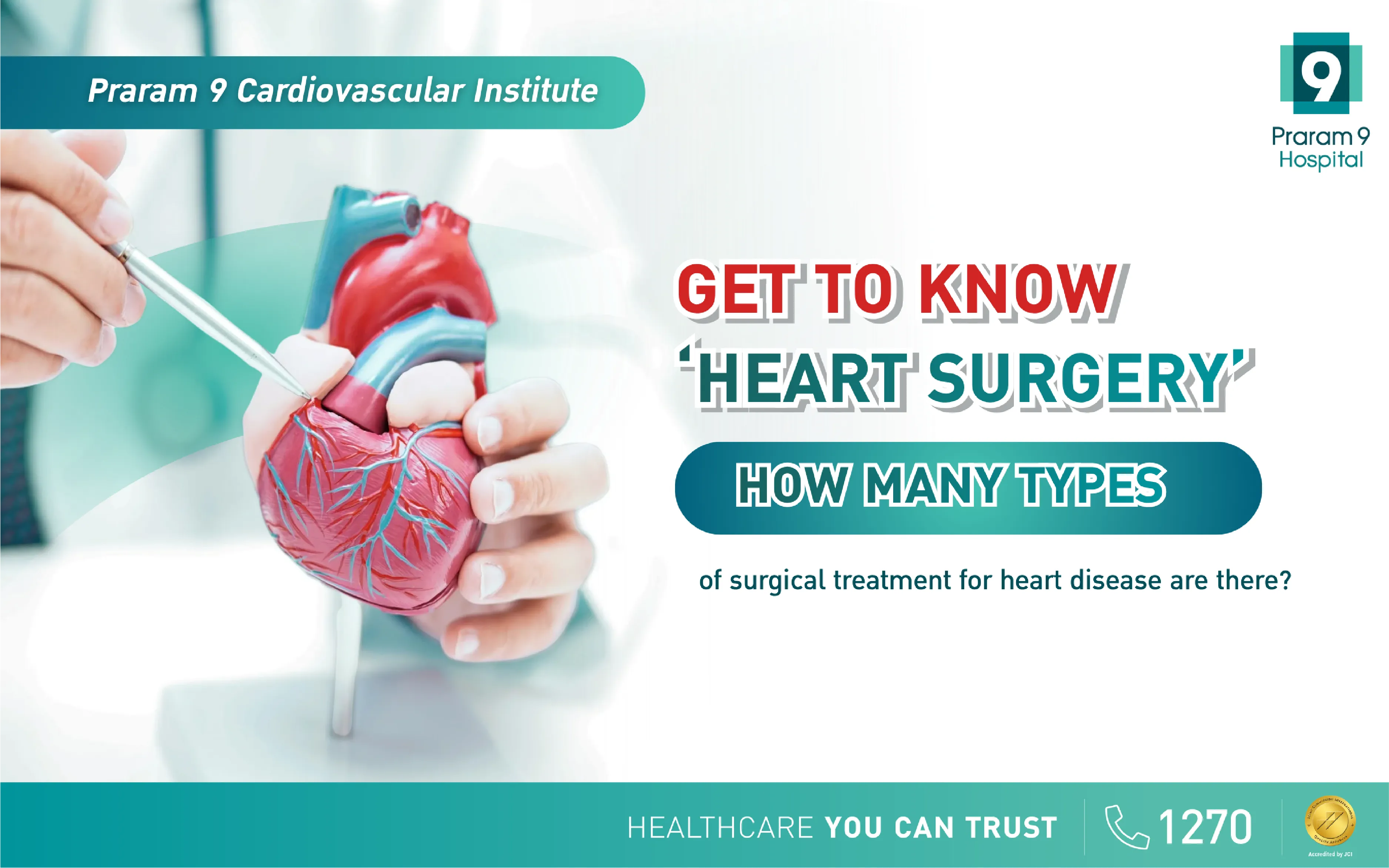
Heart surgery is an important treatment method for heart and vascular diseases for those who have abnormal heart conditions, which helps improve heart function and reduce the risk from various severe conditions. The selection of a heart surgery method depends on the condition and severity of the disease, resulting in many techniques and technologies of heart surgery being developed to effectively restore heart health.
Key Takeaways
- Heart surgery is a surgery to treat and correct abnormalities in heart function, and also helps restore the function of the heart and blood vessels.
- There are mainly 3 types of heart surgery methods: open-heart surgery (Open-Heart Surgery), catheter-based heart surgery (Catheter based Surgery), and minimally invasive heart surgery (Minimally Invasive Surgery). Which method the doctor chooses depends on the symptoms, characteristics, and severity of the disease.
- Preparation before heart surgery should include abstaining from smoking, abstaining from alcohol, stopping medications and supplements, controlling underlying diseases, and strictly following the doctor’s recommendations.
- Self-care after heart surgery: patients must take care of the wound, avoid activities that require heavy exertion, and regularly observe abnormal symptoms in the body to prevent the severity of complications that may occur.
What is heart surgery? What types of heart disease require surgery?
Heart surgery (Cardiac Surgery) is a medical process used to treat abnormalities of the heart in order to restore the function of the heart and blood vessels. There are various types of heart surgery methods, focusing on repairing or modifying the structure of the heart.
Examples of heart diseases that may require heart surgery for treatment include coronary artery disease (Coronary Artery Disease), which is caused by blockage of the coronary arteries; congenital heart disease (Congenital Heart Disease); or valvular heart disease such as valve regurgitation or valve stenosis. These heart diseases are common and mostly require treatment with heart surgery.
How many types of heart surgery are there?
Each type of heart disease may not always require heart surgery, depending on the symptoms, characteristics, and severity of the disease, which must always be considered by a doctor first. The basic heart surgery methods include:
Open-Heart Surgery
Also called traditional heart surgery (Traditional Heart Surgery), it is a bypass heart surgery method that requires opening the upper part of the chest bone, therefore requiring general anesthesia before entering the surgical process. It is divided into two types:
- On-Pump Bypass Surgery is a heart surgery that uses a heart-lung bypass machine (Heart–Lung Bypass Machine) to pump blood in place of the heart, allowing the doctor to perform the surgery more precisely.
- Off-Pump Bypass Surgery is a heart surgery that does not use a heart-lung bypass machine, so the doctor does not need to stop the heart during the surgery. Off-pump surgery helps reduce the risk of certain complications such as cerebral hypoxia or blood clots. The doctor will consider selecting the appropriate treatment method for each patient.
This traditional heart surgery method is often chosen when repair or replacement of heart valves is required, and is also used for heart transplantation (heart replacement). The surgical wound is approximately 8–10 inches long in the middle of the chest, and drainage tubes may need to be placed after surgery.
Open-Heart Surgery is often used to treat patients with coronary artery disease, especially those whose bodies no longer respond to medication, often having fat blockage within the blood vessels, which increases the risk of heart attack in the future.
Catheter-based heart surgery (Catheter based Surgery)
It is a heart surgery technique that does not require opening the chest, but uses a small catheter inserted through blood vessels to the heart to repair the problematic part, such as balloon angioplasty (Balloon Angioplasty), transcatheter aortic valve implantation (TAVI), or for treating arrhythmias.
Catheter-based heart surgery takes about 2–4 hours. The patient must receive intravenous anesthesia beforehand, so there is no pain during the surgery, but after recovery there may be slight discomfort at the wound and inside the chest. This method helps reduce risk and shorten recovery time, and is suitable for patients who cannot undergo major surgery.
Minimally Invasive Surgery
It is a surgery that uses instruments and an internal camera to reduce wound size and shorten recovery time. The doctor makes small incisions about 3–4 inches long in various parts of the body (mostly on the side of the torso at the ribs).
There are many types of minimally invasive heart surgery depending on the equipment used, such as endoscopic surgery, transvascular heart surgery, or robotic-assisted surgery. These surgeries help the body experience fewer side effects than other methods, but also require a very high level of physician expertise.
Indications for undergoing heart surgery: what should be known beforehand?
Heart surgery is a treatment method that doctors recommend in cases where treatment with medication and other methods cannot effectively control symptoms. The main indications that require heart surgery include:
- Congenital heart surgery (Congenital Heart Surgery) is used in cases where patients have heart abnormalities from birth, such as septal defects, abnormal positioning of blood vessels, or abnormal heart enlargement, causing the circulatory system and heart to function abnormally.
- Valve replacement (Valve Replacement) is suitable for patients with valve regurgitation, valve stenosis, or severe valve dysfunction causing damage that cannot be treated by other methods. The doctor may choose to replace the valve with an artificial valve.
- Coronary artery bypass grafting (Coronary Artery Bypass Grafting - CABG) is used in cases where patients have multiple narrowed or blocked coronary arteries with severe stenosis, or cannot be corrected by percutaneous coronary intervention (PCI). Bypass surgery helps increase blood flow to the heart muscle and reduces the risk of acute myocardial infarction.
- Aortic aneurysm surgery (Aortic Aneurysm Surgery) is for patients with an aortic aneurysm or rupture, which may cause severe internal bleeding and be life-threatening. Surgery helps strengthen the vessel wall and prevent future vascular damage.
- Pacemaker implantation (Pacemaker Implantation) is suitable for patients with arrhythmia, slow heart rate, or abnormal heart function. The pacemaker helps control the heart rhythm to be normal and helps the circulatory system function efficiently.
What are the risks and complications of heart surgery?
Although heart surgery is an effective treatment method, there are risks and complications that may occur, including:
- Excessive bleeding, which may result from the surgery itself or abnormal blood clotting.
- Risk of infection, such as surgical wound infection or bloodstream infection, which is more common in patients with underlying diseases such as diabetes.
- Arrhythmia, especially atrial fibrillation, which may require medication to control symptoms after surgery.
- Blood clots, which may lead to stroke, paralysis, or pulmonary embolism.
- Pneumonia, which may occur from prolonged use of a ventilator after surgery.
- Heart failure, in some cases the heart may not be able to fully function again because it stopped for too long.
- Possibility of recurrent vessel narrowing, especially in patients undergoing bypass surgery; if risk factors such as smoking or high blood lipids remain, the condition may recur.
- Problems with artificial heart valves; in valve replacement surgery, there may be valve leakage or blood clots forming on the artificial valve.
- Cerebral hypoxia; some patients may experience memory loss or temporary confusion after surgery because the heart stopped for a period or due to insufficient circulation during surgery.
How to prepare before undergoing heart surgery?
- Undergo a physical examination, chest X-ray, electrocardiogram (ECG), and dental and oral health check before surgery.
- Always inform the doctor of personal health information, especially current medications and supplements being taken.
- Abstain from food and water for at least 8 hours before surgery or as advised by the doctor.
- Abstain from smoking and alcohol for at least 1–2 weeks before surgery.
- Get sufficient sleep before surgery.
Postoperative practices after heart surgery: how to take care of yourself safely
- Maintain strict cleanliness of the wound and be careful not to let the wound get wet or moist according to the doctor’s advice.
- Regularly observe the body and the surgical wound; if the wound is swollen, red, or has pus discharge, see a doctor immediately.
- Avoid lifting heavy objects or activities that require much exertion for at least 1 month or as advised by the doctor.
- Walk lightly or move the body gently during the day to promote good blood circulation.
- Take only medications prescribed by the doctor; do not take other medications without permission.
- Avoid smoking and alcohol after surgery because they may delay wound healing.
- Choose to eat foods that are beneficial to health and recovery of the surgical wound.
Heart surgery: a treatment for heart and vascular diseases—the earlier, the lower the risk!
Heart and vascular diseases are serious conditions that should not be overlooked. If treated promptly, it helps reduce the risk of complications and increases the chance of recovery. Heart surgery is one of the effective and highly suitable treatment methods, but it must also be under close supervision of a specialized doctor.
If anyone has heart health problems, the Heart and Vascular Institute, Praram 9 Hospital is ready to provide care by specialized physicians in cardiovascular diseases, with experience in assessment, planning, and appropriate treatment, so that patients receive correct and effective treatment.
For more information
Facebook : Praram 9 Hospital International & Expats
Line : @Praram9Hospital
Tel. 1270
Frequently asked questions about heart surgery
How many hours does heart surgery take?
The duration of heart surgery depends on the type of surgery. Generally, it takes about 3–6 hours, but if it is a complex surgery such as valve replacement or multi-site surgery, it may take longer.
How many days is recovery after heart surgery?
Patients usually need to stay in the hospital for about 7–10 days, depending on health condition and type of surgery. After returning home, it may take 6–12 weeks for full recovery, and patients must strictly follow the doctor’s advice.
References
Natalie, P. (2024, August 8). Understanding Open-Heart Surgery. Healthline. https://www.healthline.com/health/open-heart-surgery
Off-Pump Bypass Surgery. (2022, May 2). Cleveland Clinic. https://my.clevelandclinic.org/health/treatments/17289-off-pump-bypass-surgery
Off-Pump Coronary Artery Bypass Surgery. (n.d.). Johns Hopkins Medicine. https://www.hopkinsmedicine.org/health/treatment-tests-and-therapies/offpump-coronary-artery-bypass-surgery
Minimally Invasive Surgery. (2023, October 29). Cleveland Clinic. https://my.clevelandclinic.org/health/treatments/17289-off-pump-bypass-surgery