Health Articles
Knowledge
Getting tired easily, feeling unable to breathe fully, may be a warning sign of heart disease!
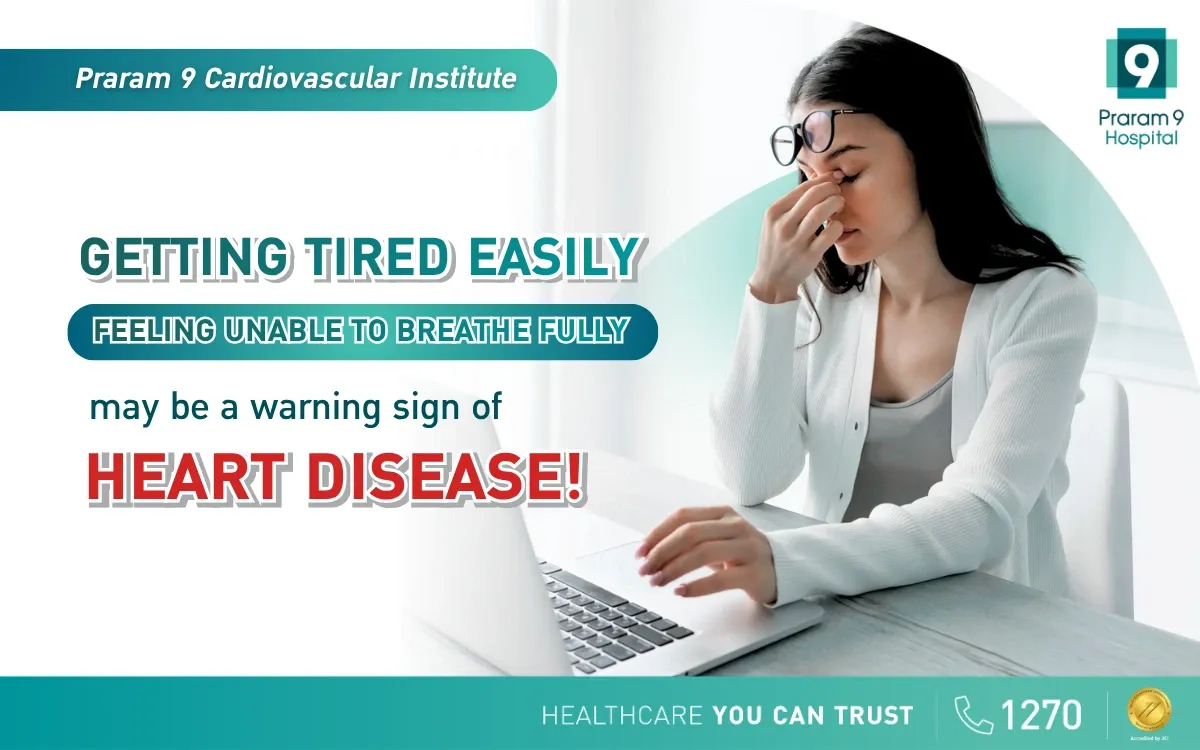
Fatigue after exertion is considered normal and can occur in daily life. However, if you begin to “get tired easily” without a known cause, such as walking a short distance and needing to stop to rest, feeling unable to breathe fully, not taking a full breath, or feeling chest tightness as well, these symptoms should not be overlooked, because they may be early warning signs of heart disease that should receive detailed diagnostic evaluation.
This article will therefore take everyone to understand more about what getting tired easily is, what symptoms it includes, what causes it, along with recommending diagnostic approaches and ways to maintain long-term health.
Key Takeaways
- “Getting tired easily” is when the body feels weak or uses more energy than normal in performing activities, even if they are light activities.
- Fatigue together with chest tightness, palpitations, lightheadedness, or dizziness may indicate abnormalities of the body and may be warning signs of the cardiovascular system.
- Treatment approaches for fatigue depend on the identified cause, which may involve treating the underlying cause or adjusting behavior and self-care.
What is getting tired easily? What is considered getting tired easily?
“Getting tired easily” is a condition of feeling short of breath, fatigued, weak, or using less effort than usual but feeling exhausted, such as walking up a small number of stairs and feeling tired, or even lying still and having difficulty breathing. Generally, people with good health can perform these activities without feeling very tired.
However, if feeling tired faster than usual without a clear cause, such as not exerting much effort, not having insufficient rest, or not being in a recovery period from illness, this symptom should be given importance and not be overlooked, because getting tired easily may be a sign of an underlying disease.
What are the symptoms of getting tired easily?
Getting tired easily does not only mean feeling tired after exercise or heavy work, but is a condition in which the body feels abnormally weak or easily short of breath even when performing activities at a level that was previously manageable, such as:
- Feeling short of breath even when walking a short distance
- Rapid breathing, not being able to take a full breath
- Getting up from bed and needing to stop to rest
- Fatigue, lack of strength
- Speaking for a long time and feeling tired, unable to keep up with breathing
Some people may have fatigue together with chest tightness, palpitations, lightheadedness, or dizziness. In some cases, there may also be leg swelling, inability to lie flat, or chronic cough. These symptoms are all signs that should not be overlooked, especially if they occur repeatedly and affect daily life. These symptoms may reflect abnormalities of the body that should receive prompt detailed diagnostic evaluation and health examination by a physician.
What causes getting tired easily?
Getting tired easily is one of the symptoms commonly found in people of all ages. Some people may begin to notice that they cannot perform activities as before, feeling short of breath even when walking short distances, needing to rest more often, or not feeling refreshed even after sufficient rest.
Many people often wonder what causes getting tired easily. This symptom may arise from multiple factors, both related to physical diseases and other factors not directly related to disease.
Causes from diseases
- Heart disease: People with heart failure, coronary artery disease, abnormal heart valves, arrhythmia, or coronary artery disease often show symptoms of getting tired easily, especially during exertion, which is a sign that should be evaluated by a specialist physician.
- Respiratory system diseases: such as chronic obstructive pulmonary disease (COPD), asthma, pneumonia, fluid in the lungs, or lung cancer
- Anemia and chronic blood loss: Red blood cells function to transport oxygen to various parts of the body. If there is an insufficient amount, it may cause reduced oxygen delivery to the body and increased fatigue more than normal
- Endocrine and metabolic diseases: such as uncontrolled diabetes, thyroid dysfunction, or malnutrition
Causes not from diseases
- Insufficient rest: Poor quality sleep or too little sleep may be a main cause of daily fatigue
- Stress: Stress, anxiety, or depression affect both physical and mental energy, causing easy fatigue even without much physical exertion
- Nutritional deficiency: Especially iron, vitamin B, or protein; if the body does not receive enough, it may cause fatigue, tiredness, and lack of energy
- Excessive exercise: Although exercise is beneficial to health, exercising too heavily or not appropriate to the body condition may cause accumulated fatigue
- Side effects of medications: Some medications such as antihypertensive drugs, sedatives, or antihistamines may cause drowsiness, lethargy, or fatigue, which can lead to getting tired easily
How is getting tired easily diagnosed?
Getting tired easily can result from many causes, including those related to the heart, lungs, blood, or even emotional problems. Identifying the true cause therefore requires correct diagnosis in order to plan appropriate treatment.
Generally, physicians will start with medical history taking and initial physical examination, such as checking blood pressure, heart rate, respiration, and observing other signs related to fatigue. Then additional tests may be considered as follows:
- Blood tests: to assess anemia, kidney function, liver function, and hormones
- Chest X-ray: to detect abnormalities of the lungs
- Electrocardiogram (EKG) and echocardiogram: to evaluate heart function
- Exercise stress test: for those at risk of heart disease
- Pulmonary function test: to help diagnose respiratory diseases such as asthma or chronic obstructive pulmonary disease (COPD)
- Sleep study: if sleep apnea is suspected
In some cases, physicians may order additional specialized tests such as brain examination or mental health assessment if fatigue is suspected to be related to stress or depression
Treatment of getting tired easily
How to treat getting tired easily: treatment approaches mainly depend on the identified cause and can be broadly divided as follows
Treat the underlying cause
When the physician diagnoses that fatigue is caused by a disease or abnormality, treatment will focus on correcting the underlying cause to help improve symptoms, as follows:
- Heart disease: treated with vasodilator medications, stent placement, or surgery
- Lung disease: treated with bronchodilators, steroids, or oxygen therapy
- Anemia: treated with iron, vitamins, or blood
- Endocrine diseases: adjust medications to control hormones
- Sleep apnea: use continuous positive airway pressure (CPAP)
Behavior modification and self-care
Although medical treatment plays an important role, consistent self-care can also reduce fatigue, with general recommendations as follows:
- Get sufficient rest
- Eat a complete and nutritious diet
- Exercise appropriately and regularly
- Avoid smoking, alcohol, and addictive substances
- Reduce stress with relaxing activities
Mental health care
In cases where fatigue is related to stress, anxiety, or depression, consultation with a psychiatrist or specialist should be considered to find appropriate ways to cope with emotional problems
Getting tired easily, do not wait until symptoms worsen
“Getting tired easily” is a symptom that should not be overlooked, because it may be a warning sign of important diseases such as heart disease, lung disease, or anemia. Proper examination and treatment by a specialized medical team will help diagnose the cause and provide targeted care
Praram 9 Cardiovascular Institute is ready to provide diagnostic services and care for problems related to fatigue and inability to take a full breath, with a team of specialized cardiologists, modern medical equipment, and attentive care at every step, so that you can return to having a good quality of life and live confidently again
For more information
Facebook : Praram 9 Hospital International & Expats
Line : @Praram9Hospital
Tel. 1270
Frequently asked questions about getting tired easily
1. How is the severity of fatigue classified?
Fatigue can be classified by severity according to the activities that trigger symptoms, such as:
- Mild: fatigue during heavy exertion such as running or intense exercise
- Moderate: fatigue from general activities such as climbing stairs or walking moderate distances
- Severe: fatigue even at rest or during light activities such as talking or getting up from a chair
2. If there is no underlying disease but suddenly getting tired easily, should it be a concern?
It should be a concern to some extent, especially if fatigue occurs suddenly, is unusually severe, or is accompanied by other symptoms such as chest pain, palpitations, rapid heartbeat, or dizziness. Medical evaluation should be sought immediately to determine the cause, as it may be an early warning sign of heart disease.
References
Fatigue. (2023, April 13). Cleveland Clinic. https://my.clevelandclinic.org/health/symptoms/21206-fatigue
Elaine K. Luo, M.D. (2023, April 18). Causes of Fatigue and How to Manage It. Healthline. https://www.healthline.com/health/fatigue
Wilson, J., Morgan, S., van Driel, M., & Magin, P. J. (2014, July 7). Fatigue – a rational approach to investigation. Australian Family Physician. https://www.racgp.org.au/afp/2014/july/fatigue