Health Articles
Knowledge
Controlling diet well can reduce blood lipids, strengthen the heart, and stay away from NCDs
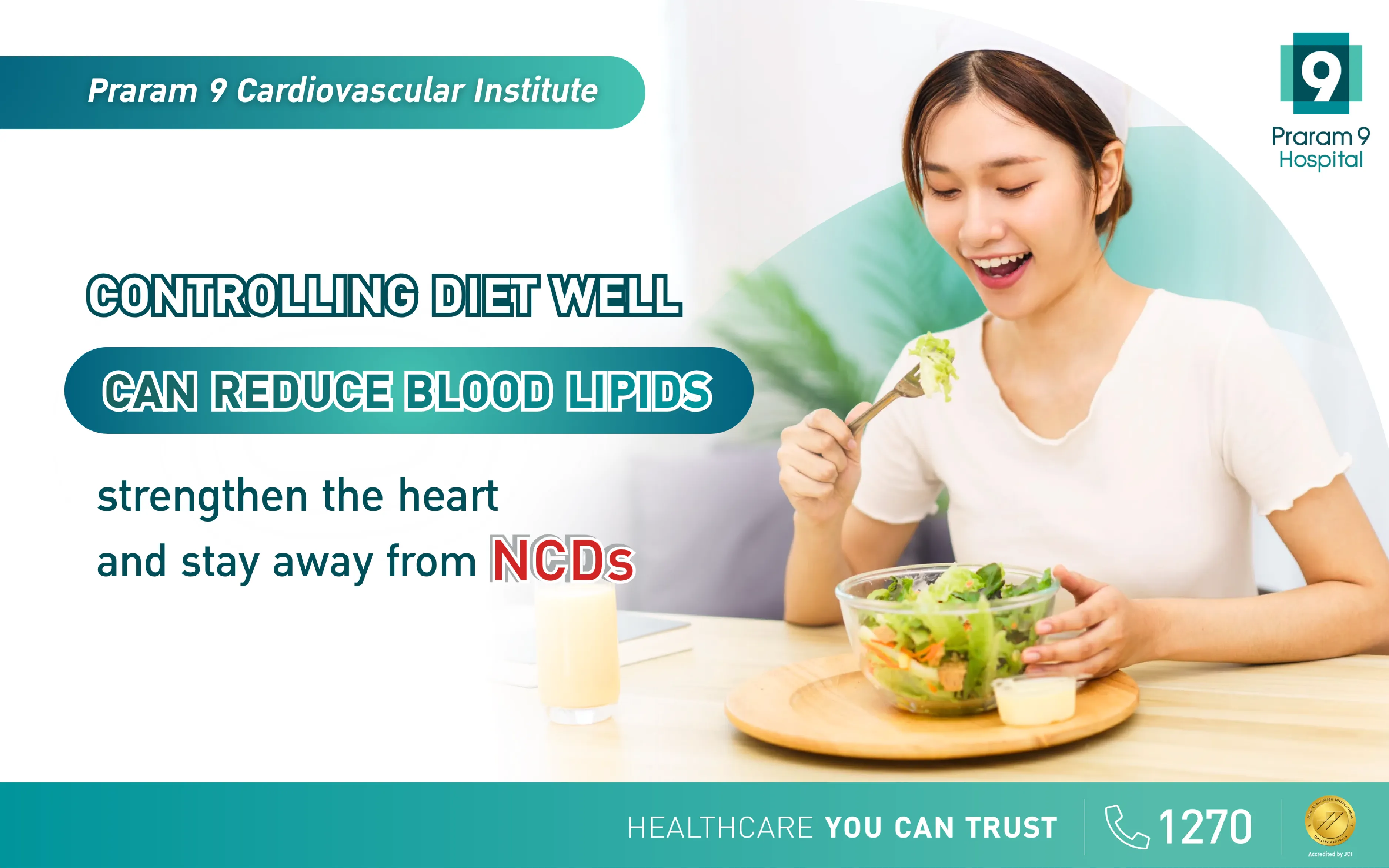
Humans need to receive fat to use as energy, maintain body temperature, and it is also important for vitamin absorption and hormone production for the body to function normally. However, if there is excessive fat accumulation, it may lead to hyperlipidemia, which is one of the causes of NCDs. Therefore, reducing blood lipids is important, not only in patients but also in health-conscious individuals, to prevent serious diseases in the long term.
Blood lipids, especially LDL-cholesterol or “bad fat,” are an important risk factor for coronary artery disease and cerebrovascular disease. Although some medications play an important role in lowering blood lipids, especially in patients with very high lipid levels or high risk of complications, behavioral modification can also significantly reduce lipid levels and reduce the risk of complications as well. This article provides information about the dangers of high blood lipids along with clear practical steps, suitable for the general public who want to reduce lipids without relying on medication or want to reduce blood lipids by themselves before starting medication.
Key Takeaways
- High blood lipids is a condition in which blood lipid levels are higher than normal, causing poor blood circulation, increasing the chance of fat adhering to blood vessel walls, and leading to cardiovascular diseases.
- Reducing blood lipids is important both in individuals with high blood lipids and healthy individuals, as it effectively reduces the risk of dangerous diseases caused by lipids.
- Reducing blood lipid levels by oneself can be done by behavioral modification, including choosing to eat beneficial foods, exercising appropriately, controlling weight to be within the normal range, and avoiding smoking and alcohol consumption.
High blood lipids, a warning signal of NCDs that must be monitored!
High blood lipids is a condition in which blood lipid levels are higher than normal, which may mean high cholesterol levels, high triglyceride levels, or both. This results in hardening, narrowing, and blockage of blood vessels, causing poor blood circulation, and becomes one of the causative factors of NCDs such as heart disease, diabetes, obesity, cerebrovascular disease, etc., which mostly result from inappropriate behaviors, whether eating unhealthy food, smoking, drinking alcohol, lack of exercise, or accumulated stress.
Therefore, to reduce blood lipid levels, which are an important factor in the occurrence of these diseases, dietary control and healthy behavioral modification are methods of reducing blood lipids by oneself that everyone should practice, which will effectively help prevent and reduce the risk of NCDs.
5 techniques to reduce blood lipids, reduce risk of serious diseases, and build good health by oneself
Whether you are a patient with high blood lipids or a health-conscious person, being careful not to have high blood lipids and reducing blood lipids is something that should be done, which can be practiced with these techniques:
1. Exercise to accelerate fat burning, reduce accumulation of blood lipids
Exercise is a rapid method to reduce blood lipids that helps promote the energy metabolism system, enabling the body to burn accumulated fat, reduce bad fat (LDL), increase good fat (HDL), and also helps increase blood circulation and effectively reduce the risk of fat adhering to blood vessel walls.
Regular exercise, especially aerobic forms, helps reduce triglyceride levels and bad fat, and also slightly increases good fat levels. It is recommended to exercise at least 150 minutes/week for moderate aerobic or 75 minutes/week for vigorous aerobic (or a combination), along with strength training 2 days/week for clear results in reducing blood lipids.
2. Control weight, reduce blood lipids
People who are overweight often have high accumulated blood lipid levels. Controlling weight to be within the normal range helps reduce the risk of myocardial ischemia and other diseases caused by high blood lipids. When blood lipid levels are normal, the cardiovascular system can function efficiently.
Reducing body weight by 5–10% or reducing 0.5–1 kg/week (by reducing energy intake about 500–750 kcal/day) affects the reduction of LDL levels and is a practice guideline that is safe for overall health. In addition, it has been found that dietary control combined with weight loss helps reduce LDL levels better than dietary control alone.
3. Avoid foods high in fat and sodium
Processed foods and junk food are often rich in carbohydrates, saturated fat, trans fat, and sodium, which greatly contribute to high blood lipids. In addition, sodium in these foods also causes hypernatremia, which not only leads to high blood pressure and edema but also increases the risk of kidney disease, cardiovascular disease, and even heart failure, especially in those with fat accumulation on blood vessel walls, which often results in poor circulation.
For this reason, reducing fat in blood vessels must be done together with reducing sodium levels in the blood to control blood pressure and protect the cardiovascular system to function efficiently.
4. Avoid foods cooked by frying
Fried foods often absorb oil, causing the fat content in food to be higher than the body’s requirement. Importantly, oil exposed to high heat, especially repeated use of oil, is also a cause of hypertension, heart disease, and cancer. Therefore, fried foods should be avoided, and consuming foods prepared by boiling or steaming without oil is more beneficial to health.
5. Avoid smoking and alcohol consumption
Smoking reduces good fat (HDL) levels and increases bad fat (LDL) levels in the blood, causing high blood lipid levels. Alcohol consumption can increase triglyceride levels, increase blood pressure, and stimulate vascular inflammation, all of which can damage blood vessels and increase the risk of cardiovascular diseases. Therefore, reducing and quitting smoking and alcohol helps reduce the chance of vascular damage and prevents cardiovascular diseases.
Get enough sleep and manage stress appropriately
Quality sleep (7–9 hours for adults) and stress management (relaxation activities, meditation) help regulate hormones related to metabolism, which affect blood lipid levels.
For patients with very high blood lipid levels (such as LDL > 190 mg/dL), patients with cardiovascular disease, or those for whom physicians consider that behavioral modification alone may not effectively reduce blood lipid levels, lipid-lowering medications may be required together with behavioral modification to achieve faster results in reducing blood lipid levels.
Want to reduce blood lipids, what kind of food helps?
Food is an important factor in controlling blood lipid levels. Choosing to eat good and beneficial foods helps reduce the accumulation of blood lipids effectively. Therefore, foods to reduce blood lipids are recommended to be consumed appropriately for good health and sustainable distance from NCDs.
Foods high in fiber, reduce cholesterol, antioxidant
- Oats: a high-fiber food source that helps reduce cholesterol absorption in the intestine, preventing high blood lipids.
- Green leafy vegetables: rich in fiber, vitamins, and minerals, help reduce blood lipid levels and nourish the circulation system to function better.
- Sour fruits: rich in fiber, vitamin C, antioxidants that help promote vascular function and reduce the chance of vascular damage from fat accumulation.
- Chia seeds and flax seeds: contain fiber and omega-3 fatty acids, help reduce blood lipid levels, trap fat in the intestine, and stimulate excretion.
Many studies conclude that consuming fiber, especially soluble fiber, helps reduce LDL levels in the blood, but it should be consumed continuously for best effectiveness.
Foods with good fat, reduce risk of cardiovascular disease
- Olive oil: rich in unsaturated fat, helps increase good fat and reduce bad fat in the blood.
- Almonds and nuts: contain polyunsaturated fatty acids and high fiber, help reduce blood cholesterol levels.
- Avocado: contains unsaturated fatty acids, increases good fat, reduces bad fat in the blood, reducing fat accumulation on vessel walls.
- Low-fat fish: rich in omega-3 fatty acids beneficial to the cardiovascular system, help reduce blood lipids, improve circulation, and lower blood pressure.
Healthy beverages, improve circulation, reduce fat accumulation in vessels
- Clean water: helps reduce blood viscosity, allowing better circulation and reducing fat accumulation in vessels.
- Green tea: rich in catechins that help reduce cholesterol, reduce triglycerides, reduce lipid levels, and are antioxidants that reduce inflammation and strengthen blood vessels.
- Tomato juice: rich in lycopene that helps reduce cholesterol, reduce vascular inflammation, and prevent vascular damage.
- Pomegranate juice: high in antioxidants, helps reduce vascular inflammation and can effectively reduce bad fat levels in the blood.
For those who want to start taking care of their health, examples of meals beneficial for reducing blood lipids are as follows:
- Breakfast: oats + low-fat milk/plant milk + fruit + flax seeds
- Lunch: vegetable salad with avocado, fish (or beans/tofu), brown rice
- Dinner: grilled fish + boiled vegetables + a small portion of baked potatoes
- Snack: a small portion of nuts, fresh fruit
Meals can be adjusted in every meal to obtain a variety of nutrients.
Reduce blood lipids for good health, start with ourselves
Excessively high blood lipids can cause NCDs, which often arise from inappropriate lifestyle behaviors. For good health, reducing risk, and staying away from disease, it can start with reducing blood lipids through behavioral modification, such as choosing beneficial foods, exercising appropriately, controlling weight within the normal range, avoiding smoking and alcohol consumption, and getting sufficient rest. However, if you have medical conditions, it is recommended to consult a physician or nutritionist before adjusting diet or starting intense exercise for safety.
If high blood lipids are detected and there are early warning signs of cardiovascular disease, it is recommended to undergo diagnostic examination to find the cause and receive prompt treatment. At the , services are provided by cardiovascular specialists 24 hours a day, along with modern equipment and technology, so that patients can access fast and most effective treatment.
For more information
Facebook : Praram 9 Hospital International & Expats
Line : @Praram9Hospital
Tel. 1270
Frequently asked questions about reducing blood lipids
1. How high is dangerous for blood lipids?
Total cholesterol level greater than 240 mg/dL and LDL level higher than 160 mg/dL.
2. With high blood lipids, what vitamins should be taken?
Vitamins B, C, and E
References
Hellicar, L. (2022, November 30). Does smoking cause high cholesterol? MedicalNewsToday. https://www.medicalnewstoday.com/articles/does-smoking-cause-high-cholesterol
Mayo Clinic Staff. (2022, September 2). Top 5 lifestyle changes to improve your cholesterol. Mayo Clinic. https://www.mayoclinic.org/diseases-conditions/high-blood-cholesterol/in-depth/reduce-cholesterol/art-20045935
Thorpe, M. (2025, May 2). 10 Natural Ways to Lower Your Cholesterol Levels. Healthline. https://www.healthline.com/nutrition/how-to-lower-cholesterol
Prevention and Treatment of High Cholesterol (Hyperlipidemia). (2024, February 19). American Heart Association. https://www.heart.org/en/health-topics/cholesterol/prevention-and-treatment-of-high-cholesterol-hyperlipidemia